Kerala’s majestic Mandirs are not merely places of worship but the living, breathing soul of a civilisation that has fiercely guarded its Sanatana traditions against the tides of time. These sacred spaces serve as the ultimate guardians of a rich cultural heritage, where ancient customs and modern life intersect in a display of profound faith and regional pride.
From the divine protocol that halts modern aviation to honour the deities, to the breathtaking glow of thousands of traditional lamps, these rituals signify a deep-rooted commitment to preserving the sacred identity of the land. They stand as a testament to a society that prioritises its spiritual legacy above all else, ensuring that the timeless bond between the devotee and the divine remains unbroken and vibrant in a rapidly changing world.
This report chronicles 14 extraordinary Mandir rituals that stand as the living soul of Kerala’s ancient cultural identity. These traditions represent a timeless bond between the divine and the devotee, preserving the sacred heritage of the land for future generations.
The Sovereignty of Faith: Trivandrum Airport Halts for the Royal Arattu Procession
In April 2026, the world will once again witness a profound display of spiritual sovereignty as the Thiruvananthapuram International Airport suspends all flight operations to honour the Sree Padmanabhaswamy Mandir’s Painkuni Arattu. This centuries-old tradition dictates that the murtis of Bhagwan Padmanabha, Narasimha, and Krishna be taken in a majestic royal procession to Shanghumugham Beach for a sacred sea bath. In a remarkable victory for cultural preservation, this divine protocol has remained non-negotiable since the airport’s inception in 1932. The sight of the airport tarmac yielding to priests, caparisoned elephants, and traditional guards serves as a powerful reminder that the ancient spiritual laws of the land take precedence over modern infrastructure, upholding the glory of the Kingdom of Travancore’s tutelary deity.
Kuthiyottam: Preparing the Next Generation as Symbolic Warriors of the Devi
During the Malayalam month of Kumbham, the Chettikulangara Devi Mandir and various shrines across South Kerala become the training grounds for Kuthiyottam, a ritual that transforms young boys into symbolic warriors of Maa Durga. Representing the wounded soldiers of the Maa, boys under the age of 12 undergo a rigorous seven-day penance characterised by strict discipline, restricted diets, and a thousand prostrations. This intense spiritual conditioning culminates in a grand finale where their bodies are symbolically pierced with silver wires as they join the Mandir procession. This ritual is a cornerstone of regional identity, instilling early values of sacrifice, devotion, and physical endurance in the youth, ensuring they remain deeply connected to the martial and spiritual heritage of the Great Mother.
Shoolam Kuthu: The Piercing Devotion of the Warriors of Bhagwan Muruga
The festival of Thaipooyam in South Kerala brings to life the fierce and awe-inspiring ritual of Shoolam Kuthu, where devotees carry the kavadi with a sacred vel (spear) pierced through their cheeks or tongues. Commemorating the moment Maa Parvathi armed Bhagwan Muruga with the divine spear to annihilate evil, this act of intense penance follows 41 days of rigorous spiritual preparation. Far from mere physical pain, the ritual is a pursuit of purification and spiritual strength, demonstrating the devotee’s absolute surrender to the divine. It is a striking manifestation of the warrior spirit of the Hindu faith, where the body is mastered by the soul to seek release from worldly negativity and attain spiritual elevation.
Agni Kavadi: The Miraculous Fire-Walk of the Faithful at Perunguzhi
At the Sree Rajarajeswari Devi Mandir in Thiruvananthapuram, the night sky is illuminated by the intense embers of Agni Kavadi, a ritual where devotees walk across burning coals to honour Bhagwan Muruga. Performed in a state of divine ecstasy after weeks of fasting, this fire-walk is a testament to the miraculous power of unshakeable faith. As the rhythm of traditional drums and the scent of incense fill the air, even teenagers brave the heat to fulfil sacred vows, emerging from the fire unharmed. This ritual stands as a living proof of the protective grace of the deity, reinforcing the belief that the elements themselves yield to those who approach the divine with a pure heart and total devotion.
Kollemcode Thookkam: Invoking Divine Protection for the Nation’s Infants
The Meena Bharani festival at the Sree Bhadrakali Mandir witnesses the unique and heart-stirring ritual of Kollemcode Thookkam, where infants are offered to the Goddess for her lifelong protection. During this ceremony, selected devotees known as thookkakkars are fastened to a 30-foot-high wooden beam on a chariot, carrying babies securely wrapped in cloth as they are lifted toward the heavens. This majestic procession around the temple is a sacred plea for the well-being and longevity of the next generation. Rooted in deep cultural values, the ritual highlights the community’s collective prayer for Goddess Bhadrakali’s blessings, ensuring that the smallest members of society are consecrated under the watchful and protective gaze of the Divine Mother.
Garudan Thookkam: Devotees Embody the Divine Bird to Appease the Great Mother
In the sacred precincts of the Arayankavu and Elamkavu Mandirs, the ancient ritual of Garudan Thookkam stands as a breathtaking tribute to the loyalty of Garuda toward Bhagwan Vishnu and Maa Kali. Dressed in vibrant red costumes and elaborate headgear, devotees transform themselves into the symbolic form of the divine bird, recreating the legendary moment when Garuda quenched the Goddess’s thirst. Suspended from majestic chariot-like structures and accompanied by the thunderous rhythm of the chenda melam, these performers dance through the night in an act of total surrender. This ritual is a profound manifestation of the “Garuda” spirit—an eternal protector and devotee—reminding the faithful of the power of blood-bond and divine service that remains the bedrock of Kerala’s spiritual identity.
Arattupuzha Pooram: The Divine Assembly of Deities in ‘Bhooloka Vaikuntham’
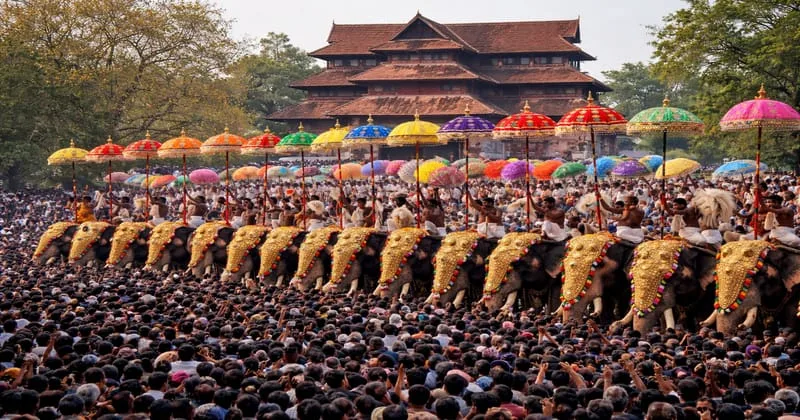
Known as the “Mother of all Poorams,” the Arattupuzha Pooram transforms the Thrissur landscape into a celestial realm where 23 deities congregate in a rare and majestic assembly. Described as Bhooloka Vaikuntham (Vaikuntha on Earth), this centuries-old festival centres around the ceremonial arrival of Bhagwan Sastha. The sight of 23 caparisoned elephants and multiple deities gathering during the Kooti Ezhunnallippu represents a glorious celebration of divine unity and regional pride. This massive congregation across the paddy fields is not just a festival but a grand proclamation of the state’s cultural sovereignty, concluding with the sacred arattu that purifies the land and reinforces the eternal presence of the gods in the lives of the people.
Njangattiri Aanayoottu: Honouring the Living Ganesha Through Sacred Rejuvenation
During the holy month of Karkidakam, the Njangattiri Bhagavathi Mandir observes Aanayoottu, a ritual that prioritises the health and well-being of the elephant- venerated as the living manifestation of Bhagwan Ganesha. In a world often focused on spectacle, this ceremony emphasises nourishment and care, as elephants are fed a specially prepared Ayurvedic feast. Beginning with a Mahaganapathi Homam, the ritual sees the temple priest offer the first feed to the youngest elephant, symbolising a cycle of protection and prosperity. This tradition highlights the deep-seated Hindu value of Jiva Daya (compassion for all living beings), proving that in our civilisation, even the most powerful creatures are served with humility and devotion to remove obstacles from the path of the nation.
Laksha Deepam: A Century-Old Legacy of One Lakh Lamps at Sree Padmanabhaswamy Mandir
Occurring only once every six years, the Laksha Deepam is a spectacular spiritual milestone that illuminates the Sree Padmanabhaswamy Mandir in a golden glow of one lakh lamps. Initiated 275 years ago by the legendary Maharaja Marthanda Varma, this ritual marks the grand conclusion of the 56-day Murajapam. As thousands of ghee and oil lamps reflect in the waters of the Padmatheertham tank, the temple stands as a beacon of Sanatana light against the darkness. This tradition is a majestic reminder of the royal spiritual legacy of the Travancore dynasty, where the King serves as the Padmanabha Dasa (servant of the Bhagwan), ensuring that the divine flame of Dharma continues to burn brightly for generations to come.
Attukal Pongala: The World’s Largest Congregation of Women in Divine Service
The Attukal Pongala is a historic and record-breaking display of Stree Shakti (Feminine Power), where millions of women transform the city of Thiruvananthapuram into a massive open-air hearth to honour Goddess Attukal Bhagavathy. Cooking the sacred rice offering in earthen pots, these women undergo a spiritual penance that culminates in a collective blessing by the temple priests. This ritual, which holds the Guinness World Record for the largest religious gathering of women, is a powerful assertion of the pivotal role women play as the custodians of faith and tradition in our society. It is a vibrant, smoky, and soul-stirring testament to the unshakeable devotion that binds the daughters of the land to the Great Mother, Kannaki.
Nayoottu: Honouring the Sacred Guardians at Parassini Madappura Sree Muthappan Mandir
In the heart of Kannur, the Parassini Madappura Sree Muthappan Mandir stands as a bastion of inclusive, folk-based devotion where the divine is worshipped through the unique daily rituals of Thiruvappana and Vellattam. A defining feature of this sacred space is the ritual of Nayoottu, where dogs, venerated as the loyal companions of Sree Muthappan, are accorded the highest honour. Every morning and evening, these sacred animals are fed a traditional offering of dried fish, boiled black beans, and tea, with the first prasadam always being served to a dog before any devotee. This tradition beautifully illustrates the deep-seated spiritual bond between the deity and his faithful guardians, reflecting a localised devotional heritage that respects all forms of life as part of the divine order.
Padayani: The Martial Spirit and Visual Splendour of Bhadrakali’s Victory
Padayani, or the “Row of Warriors,” is a majestic ritual theatre art form that brings the spirit of Central Travancore to life in a vivid display of strength and chivalry. Performed at night in temples dedicated to Goddess Bhadrakali, this ritual commemorates her historic victory over the demon Darikan. Evolving from the martial traditions of Kalaripayattu, Padayani is a grand act of thanksgiving and purification, lasting between 7 and 28 days. Through its dramatic masks and epic storytelling, the ritual wards off evil forces and celebrates the triumph of Dharma over Adharma. It serves as a powerful reminder of our warrior ancestors’ dedication to the Great Mother, preserving a legacy of valour that remains etched in the soul of the land.
Kalamezhuthu: Invoking the Divine Through Sacred Natural Art and Song
The ancient ritual of Kalamezhuthu is a sublime manifestation of artistic devotion, where the image of a deity is hand-drawn on the temple floor using five natural powders—white, green, black, yellow, and red. Primarily observed in North and Central Kerala, this ritual invokes the presence of the deity, acting as a gateway for spiritual purification and the removal of obstacles. Accompanied by the soul-stirring hymns of Kalampattu, the ceremony reaches its peak when the sacred drawing is ceremonially swept away by the oracle, and the blessed powders are distributed to the faithful. This practice is a living testament to our indigenous traditions, where the ephemeral nature of the art serves to reinforce the eternal and omnipresent power of the divine.
Thrissur Pooram: The Unrivalled Spectacle of Kerala’s Cultural Sovereignty
Centred around the historic Sree Vadakkumnathan Mandir, Thrissur Pooram is the grandest celebration of Kerala’s spiritual and cultural identity. This iconic festival is defined by the ceremonial meeting of the Paramekkavu and Thiruvambady deities, brought to life through majestic processions of caparisoned elephants and the thunderous rhythms of Panchavadyam. The world-renowned Kudamattam-the competitive display of colourful ornamental umbrellas atop elephants-stands as a breathtaking showcase of artistic precision and community pride. From the opening Pooram Purappadu to the emotional Upacharam Cholli Piriyal farewell, the festival is a vibrant proclamation of Sanatana Dharma’s enduring glory, uniting millions in a shared celebration of divinity, music, and tradition.
These 14 extraordinary rituals serve as a powerful testament to Kerala’s role as a fortress of ancient Hindu heritage. From the divine sovereignty that commands the skies over Thiruvananthapuram to the martial fervour of the Padayani warriors, each tradition is a living link to a glorious past that refuses to be erased by modernity.
These practices are not merely spectacles; they are profound acts of faith, discipline, and communal identity that reinforce the sacred bond between the land and its deities. By fiercely preserving these unique customs, be it through fire-walks, sacred art, or the honouring of living beings, Kerala continues to uphold the light of Sanatana Dharma. This unyielding commitment ensures that the state remains a vibrant spiritual heartland, where the divine presence is felt in every beat of the drum and every flame of the Mandir lamp.