Stanford (California): RSS Sarkaryavah Dattatreya Hosabale on Friday told a Silicon Valley gathering that while the democratisation of knowledge is essential in the modern era, it must be anchored in the touchstones of economy, equality and ethics, cautioning that unregulated access and dissemination without these guiding principles could exacerbate existing social and economic disparities.
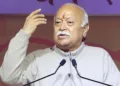
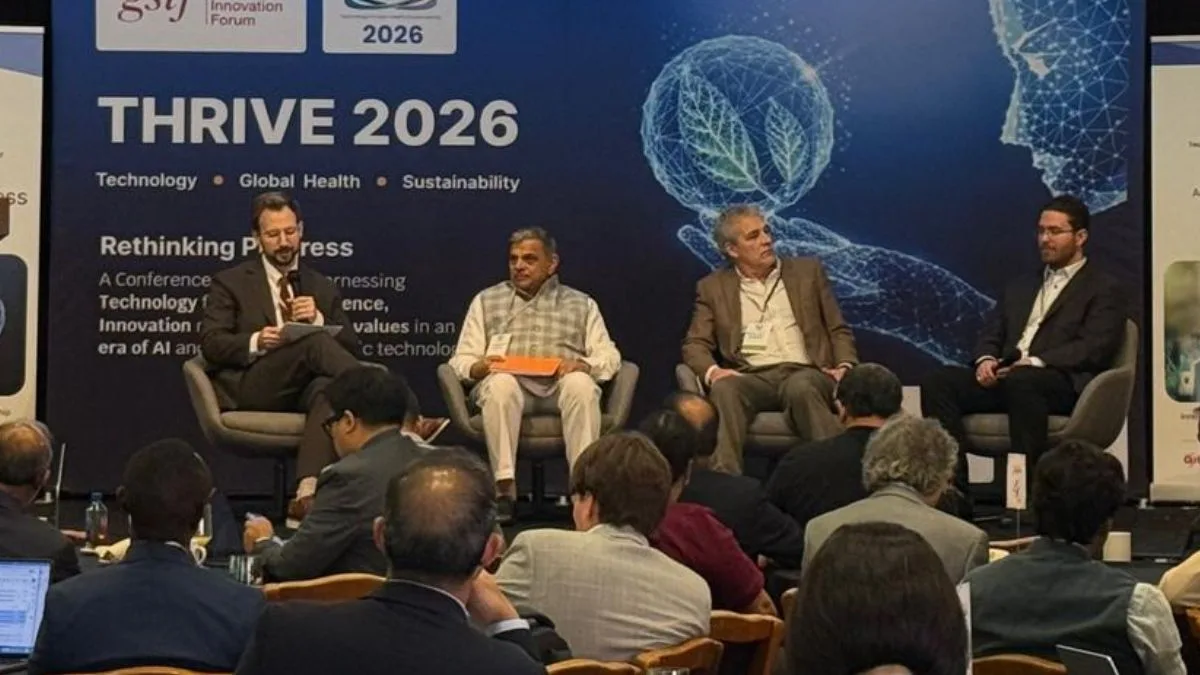
“Democratisation of knowledge is critical but touchstones for that should be Economy, Equality and Ethics,” RSS Sarkaryavah said. He was speaking at the Thrive 2026 conference at the prestigious Stanford University. Hosabale said scientific advancement must be evaluated not just through economic outcomes but through a broader lens of “economy, equality and ethics”.
“Where technology advances, society tends to become more unequal,” he said, linking disparities in access to education and technology with widening gaps in income, opportunity and quality of life.
India’s civilisational knowledge systems treat science and spirituality as interconnected
During a deep dive into civilizational leadership alongside experts like Microsoft’s Ben Olsen and Stanford neuroscientist Dr. William Hurlbut, he highlighted how Indian philosophical traditions bridge the gap between scientific inquiry and spiritual wisdom. The session was moderated by Hudson Institute Senior Fellow Bill Drexel.
He also said that India’s civilisational knowledge systems treat science and spirituality as interconnected. He also used the platform to urge the Indian diaspora to remain loyal to their host nations while retaining cultural links with India, and flagged rising geopolitical tensions and social fractures as key global challenges
He said he had come “to share some knowledge of my civilisation… and also learn something from across the world.” He described Indian traditions as rooted in both empirical and transcendental inquiry. “The roots have been sensory and super sensory, the culture, perception and reasoning based, but also that we see beyond the limits of human knowledge,” he said.
Hosabale described early Indian inquiry as deeply cosmological. “It is full of cosmic inquiry,” he said, referring to traditions that explored “the relation between the microcosm and macrocosm.”
He connected unequal access to education with wider disparities in economic growth, educational outcomes, and overall quality of life. He warned that rapid technological growth could widen inequality if not carefully managed. “Where technology advances, the society tends to become more unequal,” he said. He linked disparities in access to education with broader gaps in “economic growth, education, quality of life.” He said.
“Today’s world is also passing through very critical times”
He also touched on geopolitical and societal concerns, saying “today’s world is also passing through very critical times”, citing religious conflict, global power imbalances and weakening social cohesion. Warning against extremism and erosion of family structures, he said, “If families are healthy, the society is healthy, nation is healthy.”
RSS Sarkaryavah added that the governments must take a balanced approach. “The governance today has to take into consideration these very cities,” he said, urging policymakers to address both innovation and social impact.
He outlined a three-pronged framework for evaluating technology—“economy, equality and ethics”—stating that innovations which disrupt social balance, exploit nature, or lack ethical grounding should be reassessed.
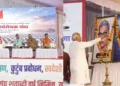
The session, organised by the Global Science Innovation Forum, brought together scholars and technologists to deliberate on the intersection of science, ethics, and civilisational knowledge systems.