

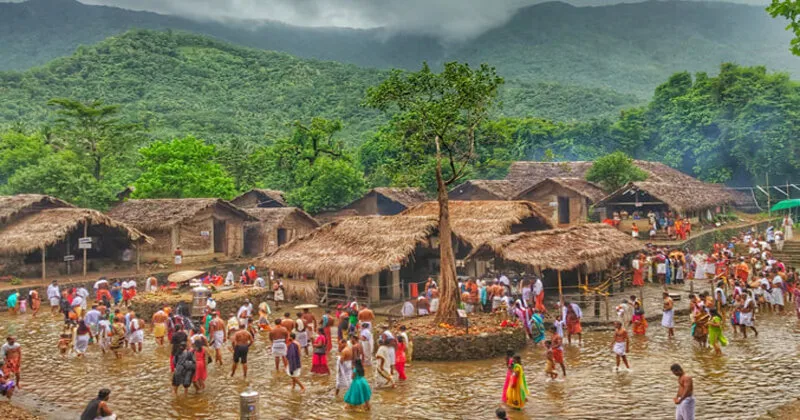
Kannur: Nestled deep within the dense, unspoiled forests of northern Kerala, Kottiyoor Mandir stands as one of India’s most spiritually profound and culturally distinctive pilgrimage centres dedicated to Bhagwan Shiva. Far removed from urban life, this site is not defined by grand architecture or elaborate structures, but by its raw, elemental sanctity, where nature itself becomes the Mandir.
Kottiyoor Mandir is located along the serene banks of the Bavali River in Kannur district. What makes this Mandir truly unique is its deep integration with the surrounding forest ecosystem. The sacred area is divided into two parts: Ikkare Kottiyoor (on this side of the river) and Akkare Kottiyoor (on the opposite side).
Ikkare Kottiyoor has a permanent structure, but Akkare Kottiyoor, the main and holiest site, is a temporary shrine reconstructed each year from natural materials such as bamboo, wood, and leaves. This deliberate absence of permanent construction reflects a profound spiritual belief that divinity is beyond physical form and permanence.
The Site of Daksha Yaga
Kottiyoor Mandir holds immense importance in Hindu tradition as the site associated with the legendary Daksha Yaga. According to ancient belief, King Daksha conducted a grand yajna at this location but chose not to invite Bhagwan Shiva and Sati. Despite this, Sati attended the ritual and was deeply hurt by the insult. Unable to bear the humiliation, she sacrificed herself in the sacred fire. When Bhagwan Shiva learned of her death, his grief turned into immense fury. He created Veerabhadra, who destroyed the yajna and punished Daksha. This powerful episode symbolises the consequences of arrogance and the triumph of divine justice. Devotees believe that the spiritual intensity of this event still permeates the land of Kottiyoor.
Kottiyoor Vysakha Mahotsavam: A Living Ritual Tradition
The spiritual core of Kottiyoor Mandir is most vividly experienced during the annual Kottiyoor Vysakha Mahotsavam, a 28-day festival held during May–June.
This Mahotsavam is a rare example of an ancient Vedic ritual tradition that continues to be practised in its original form. Thousands of devotees gather to participate in ceremonies that are conducted strictly according to age-old customs.
Key aspects of the festival include:
Reconstruction of the Sacred Shrine: The main altar at Akkare Kottiyoor is built using only natural materials, maintaining the authenticity of ancient practices.
Holy River Rituals: Devotees take ritual baths in the Bavali River before offering prayers.
Traditional Ceremonies: Pandits perform yajnas and other rituals with strict adherence to tradition.
The simplicity of the festival—without modern infrastructure or permanent structures—creates an atmosphere of deep spiritual immersion.
Kottiyoor Mandir represents more than a place of worship; it embodies a deeper spiritual philosophy. The temporary nature of the shrine at Akkare Kottiyoor serves as a reminder of the transient nature of the material world.
The Mandir stands for:
Harmony with Nature: Worship takes place in the midst of forests and flowing water.
Simplicity in Devotion: The absence of grandeur highlights purity and sincerity in worship.
Spiritual Detachment: The lack of permanent structures reflects the idea that the divine is not confined to physical forms.
Kottiyoor Mandir is also a remarkable example of a living tradition. Ritual responsibilities are shared among various communities, each with defined roles passed down through generations. This structured participation preserves both cultural heritage and ritual authenticity. The Mandir brings together devotees from different regions and backgrounds, creating a shared spiritual experience rooted in tradition and collective faith.
Situated in Kannur district, Kottiyoor Mandir is accessible by road from towns such as Kannur, Iritty, and Thalassery. Reaching Akkare Kottiyoor during the festival involves crossing the river and walking through forest paths, making the journey itself a part of the spiritual experience.
Visitors often describe the pilgrimage as deeply transformative. The natural surroundings, the sound of the river, and the sight of rituals performed in their most authentic form create a rare sense of peace and connection.
In a rapidly changing world, Kottiyoor Mandir remains a place where ancient traditions continue to thrive, offering a powerful reminder that true spirituality lies beyond structures—in nature, in faith, and in the enduring connection between the devotee and Bhagwan.