
Today marks the birth anniversary of Dr B. R. Ambedkar. Remembering Ambedkar truly means understanding his ideas in their original spirit. Unfortunately, by projecting him through distorted lenses and ideological filters, India has often misrepresented his vision and message. As a result, several fundamental problems continue to persist in our national life. The real solution to such problems lies in reintegrating the authentic thought of Ambedkar into the social and intellectual mainstream.
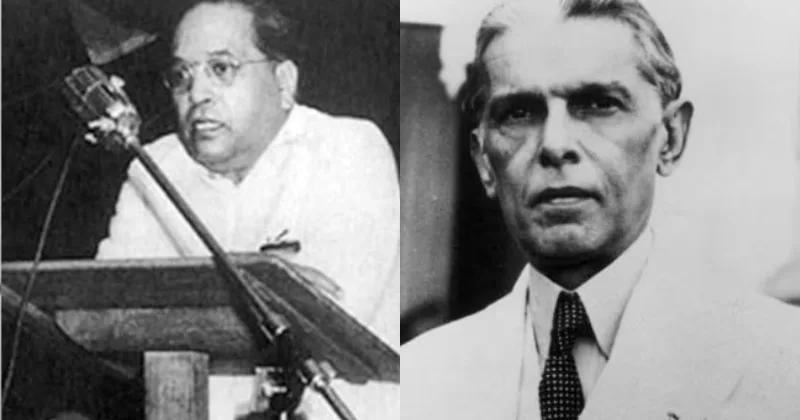
After India was partitioned and Pakistan came into existence, Muhammad Ali Jinnah made certain remarks regarding the states of India. Ambedkar’s response to Jinnah stands out as a powerful and exemplary expression of nationalism.
Dr Ambedkar thundered:
“Once you demanded Pakistan and divided India, you no longer retain any right to speak about India. Like the British, you too are now foreigners to us. Use your intellect in the legislative assemblies of Pakistan.”
He further warned that if any princely states or provinces that hesitated or refused to join India imagined that they could survive independently outside the Indian Union, they were merely “wandering in a fool’s paradise.” No state could sustain an independent existence outside India, nor could it achieve development in isolation. Their prosperity and very survival, he emphasized, would be strengthened only within the unity of India.
Such clarity of thought demonstrates Ambedkar’s deep commitment to preserving India’s unity. During the deliberations of the Constituent Assembly of India, he ensured that while powers were distributed between the Centre and the states, stronger legislative authority remained with the Union. At the same time, he incorporated provisions in the Constitution ensuring that no state could secede from the Indian Union.
Speaking at a meeting in Hyderabad on May 24, 1950, Ambedkar observed that the Constitution of India grants its citizens some of the most extensive fundamental rights. However, in the interest of national stability and sovereignty, the Constitution also places certain reasonable restrictions on these rights. The nation, he reminded citizens, stands above all individuals, and this fundamental principle must always be recognized.
In his essay titled “National Frustration,”Ambedkar made a critical observation about Islamic political thought. He wrote that the brotherhood of Islam does not necessarily extend to the whole of humanity but is primarily limited to those within the religious community. According to him, the loyalty of a Muslim ruler often lies not with the country he inhabits but with his religious commitment.
In that context, he argued that for many Muslims, India’s independence was not necessarily the ultimate objective but a means toward the establishment of a Muslim state. Because of this religious orientation, he believed it could become difficult for some Muslims to regard India as their motherland. Therefore, Ambedkar urged the oppressed classes to participate actively and firmly in India’s struggle for freedom.
He also wrote that when fighting against a foreign empire, all domestic political divisions and organizations should temporarily be set aside so that the entire nation could unite against colonial rule.
Rejection of the American Presidential and Federal Model
Ambedkar pointed out that India was already fragmented into more than 540 princely states before Independence. To prevent the country from fragmenting again, it was essential that the Constitution contain provisions to safeguard national unity. For this reason, he rejected both the American-style presidential system and an excessively decentralized federal structure that granted extreme autonomy to states.
“Though We Are the Most Oppressed, We Are Ready to Fight Foreign Rule”
Speaking at the All India Kisan Sabha conference on December 25, 1938, Ambedkar declared:
“Although we are among the most oppressed people, if the Congress truly resolves to fight the foreign empire, we are ready to join that struggle. I am even prepared to dissolve the Independent Labour Party and deploy our entire organization in support of the work of the Indian National Congress.”
However, he observed that the Congress had not fully committed itself to a decisive struggle against imperialism. Instead, he argued, it often appeared to protect entrenched interests. Under such circumstances, he warned, joining the Congress would amount to political suicide for his followers, as it could compromise their rights and freedoms.
Ambedkar’s consistent message was clear: whenever the question of defending the nation arises, all barriers must be transcended and narrow political interests must be set aside. This unwavering national commitment only deepens the respect one holds.