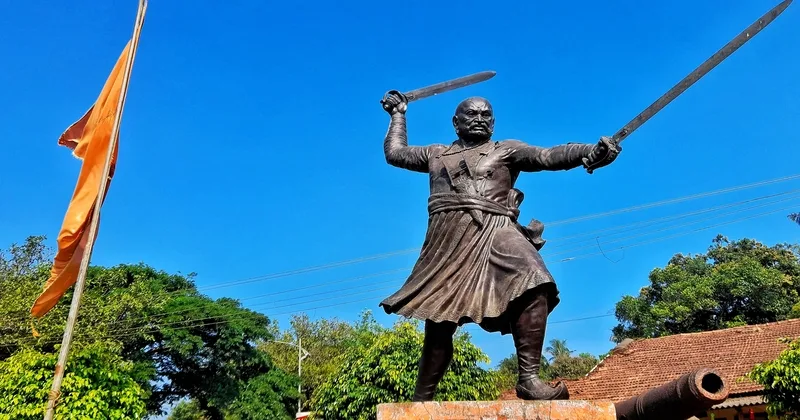
Every year on July 13, India remembers the supreme sacrifice of Veer Baji Prabhu Deshpande, one of the greatest warriors of the Maratha Empire. His fearless stand at Pavankhind in 1660, where he and a small band of Mavla soldiers held back a vastly larger enemy force to ensure the safe escape of Chhatrapati Shivaji Maharaj, remains one of the finest examples of courage, loyalty, and self-sacrifice in Indian history.
वीर बाजी प्रभु देशपांडे जी के का बलिदान दिवस पर कोटि कोटि नमन ।
13 जुलाई 1660, पावन खिंड का वह ऐतिहासिक दिन जब बाजी प्रभु देशपांडे और उनके 300 मावलों ने 12,000 मुगलिया सैनिकों की विशाल सेना को रोककर स्वराज्य के इतिहास में अमर बलिदान और अद्भुत पराक्रम की गाथा लिख दी।
जब छत्रपति… pic.twitter.com/eTzGD0D758
— Vishva Hindu Parishad -VHP (@VHPDigital) July 13, 2026
The Historic Battle of Pavankhind
The events that made Baji Prabhu Deshpande immortal took place on July 13, 1660, during one of the most critical moments in the history of the Maratha struggle for Swarajya.
After escaping the siege of Panhala Fort, Chhatrapati Shivaji Maharaj set out towards Vishalgad Fort. The escape was extremely risky, as the pursuing forces of the Bijapur Sultanate, led by Siddi Masud, vastly outnumbered the Marathas. Realising that Shivaji Maharaj needed time to safely reach Vishalgad, Baji Prabhu volunteered to stay behind with a small contingent of around 300 Mavla warriors. They took position at a narrow mountain pass then known as Ghod Khind, where the terrain prevented the enemy from using its numerical strength effectively.
A Battle Against Impossible Odds
For several hours, Baji Prabhu and his Mavlas fought relentlessly against thousands of advancing enemy soldiers. Armed with swords, spears, and unmatched determination, they resisted repeated assaults despite suffering heavy casualties. Baji Prabhu had made a solemn vow: he would continue fighting until he heard the cannon fired from Vishalgad, signaling that Shivaji Maharaj had safely reached the fort.
Even after sustaining multiple grievous injuries, he refused to retreat. Only when the distant cannon echoed through the hills did he know that his mission had succeeded. Having fulfilled his duty to Swarajya, Baji Prabhu succumbed to his wounds on the battlefield.
From Ghod Khind to Pavankhind
In recognition of the extraordinary sacrifice made by Baji Prabhu Deshpande and his fellow Mavlas, Chhatrapati Shivaji Maharaj renamed Ghod Khind as Pavankhind, meaning the “Sacred Pass.”
The new name stands as a lasting tribute to the warriors whose blood sanctified the battlefield and secured the future of Swarajya.
Baji Prabhu Deshpande occupies a revered place in Indian history as a symbol of unwavering loyalty, courage, and devotion to duty. His sacrifice ensured the survival of Chhatrapati Shivaji Maharaj, allowing the Maratha movement to continue its struggle for self-rule and eventually establish a powerful kingdom. His story has inspired generations through literature, folklore, theatre, and cinema, reminding Indians that the defense of one’s nation and ideals often demands the highest personal sacrifice.
On July 13 every year, tributes are paid across Maharashtra and India to Veer Baji Prabhu Deshpande. His martyrdom is remembered not merely as a military episode but as a timeless lesson in patriotism, leadership, and selfless service. More than three and a half centuries later, the heroic stand at Pavankhind continues to inspire millions, ensuring that the name of Veer Baji Prabhu Deshpande remains forever etched in the annals of Indian history.