
Ambedkar to Jinnah: No Right to Speak on India After Partition
June 30, 2026
  • Read Ecopy
  • Circulation
  • Advertise
  • Careers
  • About Us
  • Contact Us
Android AppiPhone AppArattai
Organiser
  • ‌
  • Bharat
    • Assam
    • Bihar
    • Chhattisgarh
    • Jharkhand
    • Maharashtra
    • View All States
  • World
    • Asia
    • Europe
    • North America
    • South America
    • Africa
    • Australia
  • Editorial
  • International
  • Opinion
  • RSS @ 100
  • More
    • Op Sindoor
    • Analysis
    • Sports
    • Defence
    • Politics
    • Business
    • Economy
    • Culture
    • Special Report
    • Sci & Tech
    • Entertainment
    • G20
    • Azadi Ka Amrit Mahotsav
    • Vocal4Local
    • Web Stories
    • Education
    • Employment
    • Books
    • Interviews
    • Travel
    • Law
    • Health
    • Obituary
  • Subscribe
    • Subscribe Print Edition
    • Subscribe Ecopy
    • Read Ecopy
  • ‌
  • Bharat
    • Assam
    • Bihar
    • Chhattisgarh
    • Jharkhand
    • Maharashtra
    • View All States
  • World
    • Asia
    • Europe
    • North America
    • South America
    • Africa
    • Australia
  • Editorial
  • International
  • Opinion
  • RSS @ 100
  • More
    • Op Sindoor
    • Analysis
    • Sports
    • Defence
    • Politics
    • Business
    • Economy
    • Culture
    • Special Report
    • Sci & Tech
    • Entertainment
    • G20
    • Azadi Ka Amrit Mahotsav
    • Vocal4Local
    • Web Stories
    • Education
    • Employment
    • Books
    • Interviews
    • Travel
    • Law
    • Health
    • Obituary
  • Subscribe
    • Subscribe Print Edition
    • Subscribe Ecopy
    • Read Ecopy
Organiser
  • Home
  • Bharat
  • World
  • Operation Sindoor
  • Editorial
  • Analysis
  • Opinion
  • Culture
  • Defence
  • International Edition
  • RSS @ 100
  • Magazine
  • Read Ecopy
Home Politics

“Who is Jinnah to Speak About India?” — Dr Ambedkar’s Thundering Rebuke

On the birth anniversary of Dr B. R. Ambedkar, his sharp and unapologetic response to Muhammad Ali Jinnah after Partition highlights his unwavering commitment to India’s unity and sovereignty. His words not only rejected external interference but also laid the foundation for a strong constitutional framework that prioritised national integrity above all.

Prafulla KetkarPrafulla Ketkar
Apr 14, 2026, 11:30 am IST
in Politics, Bharat, Opinion
Follow on Google News
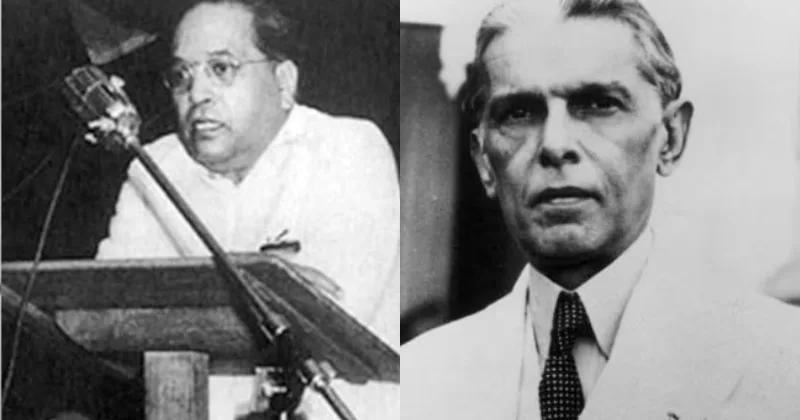
Dr BR Ambedkar (left); Mohd Ali Jinnah (right)

Dr BR Ambedkar (left); Mohd Ali Jinnah (right)

FacebookTwitterWhatsAppTelegramEmail

Today marks the birth anniversary of Dr B. R. Ambedkar. Remembering Ambedkar truly means understanding his ideas in their original spirit. Unfortunately, by projecting him through distorted lenses and ideological filters, India has often misrepresented his vision and message. As a result, several fundamental problems continue to persist in our national life. The real solution to such problems lies in reintegrating the authentic thought of Ambedkar into the social and intellectual mainstream.

After India was partitioned and Pakistan came into existence, Muhammad Ali Jinnah made certain remarks regarding the states of India. Ambedkar’s response to Jinnah stands out as a powerful and exemplary expression of nationalism.

Dr Ambedkar thundered:

“Once you demanded Pakistan and divided India, you no longer retain any right to speak about India. Like the British, you too are now foreigners to us. Use your intellect in the legislative assemblies of Pakistan.”

He further warned that if any princely states or provinces that hesitated or refused to join India imagined that they could survive independently outside the Indian Union, they were merely “wandering in a fool’s paradise.” No state could sustain an independent existence outside India, nor could it achieve development in isolation. Their prosperity and very survival, he emphasized, would be strengthened only within the unity of India.

Such clarity of thought demonstrates Ambedkar’s deep commitment to preserving India’s unity. During the deliberations of the Constituent Assembly of India, he ensured that while powers were distributed between the Centre and the states, stronger legislative authority remained with the Union. At the same time, he incorporated provisions in the Constitution ensuring that no state could secede from the Indian Union.

Speaking at a meeting in Hyderabad on May 24, 1950, Ambedkar observed that the Constitution of India grants its citizens some of the most extensive fundamental rights. However, in the interest of national stability and sovereignty, the Constitution also places certain reasonable restrictions on these rights. The nation, he reminded citizens, stands above all individuals, and this fundamental principle must always be recognized.

In his essay titled “National Frustration,”Ambedkar made a critical observation about Islamic political thought. He wrote that the brotherhood of Islam does not necessarily extend to the whole of humanity but is primarily limited to those within the religious community. According to him, the loyalty of a Muslim ruler often lies not with the country he inhabits but with his religious commitment.

Also Read: When Dr Ambedkar Visited an RSS Shakha on January 2,1940 at Karad, Maharashtra, what he had to say about the Sangh

In that context, he argued that for many Muslims, India’s independence was not necessarily the ultimate objective but a means toward the establishment of a Muslim state. Because of this religious orientation, he believed it could become difficult for some Muslims to regard India as their motherland. Therefore, Ambedkar urged the oppressed classes to participate actively and firmly in India’s struggle for freedom.

He also wrote that when fighting against a foreign empire, all domestic political divisions and organizations should temporarily be set aside so that the entire nation could unite against colonial rule.

Rejection of the American Presidential and Federal Model

Ambedkar pointed out that India was already fragmented into more than 540 princely states before Independence. To prevent the country from fragmenting again, it was essential that the Constitution contain provisions to safeguard national unity. For this reason, he rejected both the American-style presidential system and an excessively decentralized federal structure that granted extreme autonomy to states.

“Though We Are the Most Oppressed, We Are Ready to Fight Foreign Rule”

Speaking at the All India Kisan Sabha conference on December 25, 1938, Ambedkar declared:

“Although we are among the most oppressed people, if the Congress truly resolves to fight the foreign empire, we are ready to join that struggle. I am even prepared to dissolve the Independent Labour Party and deploy our entire organization in support of the work of the Indian National Congress.”

However, he observed that the Congress had not fully committed itself to a decisive struggle against imperialism. Instead, he argued, it often appeared to protect entrenched interests. Under such circumstances, he warned, joining the Congress would amount to political suicide for his followers, as it could compromise their rights and freedoms.

Ambedkar’s consistent message was clear: whenever the question of defending the nation arises, all barriers must be transcended and narrow political interests must be set aside. This unwavering national commitment only deepens the respect one holds.

Topics: Ambedkar JayantiDr BR AmbedkarIndian historyPartition of IndiaMuhammad Ali JinnahB R Ambedkar
Prafulla Ketkar
Prafulla Ketkar
Prafulla Ketkar, is the Editor, Organiser (Weekly) since 2013. He has a experience of over 20 years in the fields of research, media and academics. He is also Advisory Committee School of Journalism, Delhi University. He has been writing on issues related to International politics and foreign policy, with special reference to China and Democracy, Hindutva, and Bharatiya Civilisation. He was also a member of the Editorial team of the recently published Complete Works of Pt Deendayal Ji in 15 Volumes. He has 2 books, 29 academic articles, 2 entries in Encyclopedia of India and numerous articles to his credit. [Read more]
ShareTweetSendShareSend
✮ Subscribe Organiser YouTube Channel. ✮
✮ Join Organiser's WhatsApp channel for Nationalist views beyond the news. ✮
Previous News

‘Temple wealth is devotees’ offering, not raised by showing Indians as poor’: Hindu Aikya Vedi counters Church on FCRA

Next News

Baisakhi 2026: History and significance of the harvest festival

Related News

16th-century Vijayanagara inscription found in Seshachalam forest

Historic Discovery in Tirupati: Two Vijayanagara-era inscriptions reveal secrets of 16th-century mandir administration

India’s history is not merely a tale of foreign domination but also a remarkable story of resilience, resistance & civilisational continuity

Indian History: Not just foreign rule, but a timeless story of resistance, self-respect and civilisational resilience

Tarabai Bhonsale

Tarabai Bhonsale: The fearless Maratha queen who defied Aurangzeb and preserved swarajya against all odds

Maharana Pratap

How Maharana Pratap turned Haldighati into a symbol of eternal resistance

Maharana Pratap

Maharana Pratap and the Immortal Struggle of Haldighati: Eternal symbols of self-respect, freedom & indomitable courage

The terracotta dice that challenges historical assumptions and highlights India's millennia-old civilisational heritage

How a 4,500-year-old terracotta dice is reviving the debate on India’s civilisational continuity & Vedic heritage

Load More

Latest News

President Droupadi Murmu paid tribute to the heroes of the Santhal rebellion on the occasion of Hul Diwas

Hul Diwas: President Murmu pays tribute to heroes of Santhal rebellion, says their sacrifice will inspire forever

A representative image

Escalating unrest and civilian casualties in Pakistan Occupied Jammu and Kashmir: A 15 year overview

A representative image

Twelve years of pension reforms: Over 3.28 lakh PPOs issued through Bhavishya platform

Representative image made using AI

Religious festival or display of violence? 12 incidents of killings and attempts to kill Hindus during Muharram

A representative image

Nirbhay Chetna: Govt launches world’s largest gender sensitisation drive for women, targets 17.5 lakh representatives

A representative image made from AI

From Digital Consumer to Technology Powerhouse: How India is building technologies that are shaping Viksit Bharat 2047

Representative image

FCRA Amendment Bill 2026: Why evangelical groups are rattled over India’s oversight on foreign funding

Sir Dinshaw Maneckji Petit Birth Anniversary: Remembering Bombay's Textile Pioneer

Birth Anniversary of Sir Dinshaw Petit: The visionary who built Bombay’s textile empire

Guru Hargobind ji

Remembering Guru Hargobind Ji on Prakash Parv: Visionary who united spirituality with the sword of justice

Security personnel along with the miscreants and arma and ammunitions that have been seized in assam

Manipur: Huge cache of arms and ammunitions recovered: Security forces intensify operations

Load More
  • Privacy
  • Terms
  • Cookie Policy
  • Refund and Cancellation
  • Delivery and Shipping

© Bharat Prakashan (Delhi) Limited.
Tech-enabled by Ananthapuri Technologies

  • Home
  • Search Organiser
  • Bharat
    • Assam
    • Bihar
    • Chhattisgarh
    • Jharkhand
    • Maharashtra
    • View All States
  • World
    • Asia
    • Africa
    • North America
    • South America
    • Europe
    • Australia
  • Editorial
  • Operation Sindoor
  • Opinion
  • Analysis
  • Defence
  • Culture
  • Sports
  • Business
  • RSS @ 100
  • Entertainment
  • More ..
    • Sci & Tech
    • Vocal4Local
    • Special Report
    • Education
    • Employment
    • Books
    • Interviews
    • Travel
    • Health
    • Politics
    • Law
    • Economy
    • Obituary
  • Subscribe Magazine
  • Read Ecopy
  • Advertise
  • Circulation
  • Careers
  • About Us
  • Contact Us
  • Policies & Terms
    • Privacy Policy
    • Cookie Policy
    • Refund and Cancellation
    • Terms of Use

© Bharat Prakashan (Delhi) Limited.
Tech-enabled by Ananthapuri Technologies