Baisakhi 2026: History and significance of the harvest festival
June 30, 2026
  • Read Ecopy
  • Circulation
  • Advertise
  • Careers
  • About Us
  • Contact Us
Android AppiPhone AppArattai
Organiser
  • ‌
  • Bharat
    • Assam
    • Bihar
    • Chhattisgarh
    • Jharkhand
    • Maharashtra
    • View All States
  • World
    • Asia
    • Europe
    • North America
    • South America
    • Africa
    • Australia
  • Editorial
  • International
  • Opinion
  • RSS @ 100
  • More
    • Op Sindoor
    • Analysis
    • Sports
    • Defence
    • Politics
    • Business
    • Economy
    • Culture
    • Special Report
    • Sci & Tech
    • Entertainment
    • G20
    • Azadi Ka Amrit Mahotsav
    • Vocal4Local
    • Web Stories
    • Education
    • Employment
    • Books
    • Interviews
    • Travel
    • Law
    • Health
    • Obituary
  • Subscribe
    • Subscribe Print Edition
    • Subscribe Ecopy
    • Read Ecopy
  • ‌
  • Bharat
    • Assam
    • Bihar
    • Chhattisgarh
    • Jharkhand
    • Maharashtra
    • View All States
  • World
    • Asia
    • Europe
    • North America
    • South America
    • Africa
    • Australia
  • Editorial
  • International
  • Opinion
  • RSS @ 100
  • More
    • Op Sindoor
    • Analysis
    • Sports
    • Defence
    • Politics
    • Business
    • Economy
    • Culture
    • Special Report
    • Sci & Tech
    • Entertainment
    • G20
    • Azadi Ka Amrit Mahotsav
    • Vocal4Local
    • Web Stories
    • Education
    • Employment
    • Books
    • Interviews
    • Travel
    • Law
    • Health
    • Obituary
  • Subscribe
    • Subscribe Print Edition
    • Subscribe Ecopy
    • Read Ecopy
Organiser
  • Home
  • Bharat
  • World
  • Operation Sindoor
  • Editorial
  • Analysis
  • Opinion
  • Culture
  • Defence
  • International Edition
  • RSS @ 100
  • Magazine
  • Read Ecopy
Home Bharat

Baisakhi 2026: History and significance of the harvest festival

Celebrated with vibrant fervour across Punjab and by Sikh communities worldwide, Baisakhi marks not just the harvest of the rabi crop but also a defining moment in Sikh history

Ashok MotwaniAshok Motwani
Apr 14, 2026, 11:50 am IST
in Bharat, Culture, Punjab
Follow on Google News
FacebookTwitterWhatsAppTelegramEmail

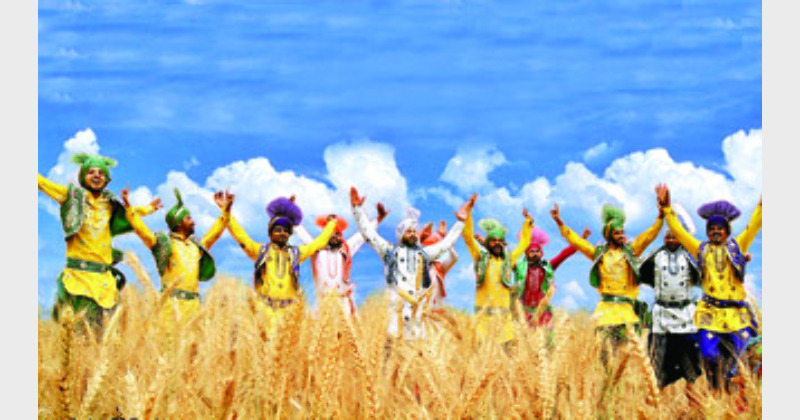
Baisakhi is one of the major festivals of Sikhs and is celebrated with great enthusiasm and gaiety in the State of Punjab and throughout the world where there is a significant Sikh population. For the large farming community of Punjab, Baisakhi marks the harvest of rabi crops, and they celebrate the day by performing joyful bhangra and gidda dances.

For the Sikh community, Baisakhi festival has tremendous religious significance as it was on a Baisakhi Day in 1699 that Guru Gobind Singh, the tenth Sikh Guru, laid the foundation of Panth Khalsa-the order of the ‘Pure Ones’.

What do people do during Baisakhi?

As the festival has tremendous importance in the Sikh religion, major activities of the day are organised in Gurdwaras. People bathe in the holy river to mark the auspicious occasion. After the Baisakhi ardas, congregants receive specially prepared Kara prasad, or sweetened semolina, followed by a guru ka langar, or community lunch.

Also Read: “Who is Jinnah to Speak About India?” — Dr Ambedkar’s Thundering Rebuke

Later in the day, people of the Sikh faith take part in a Baisakhi procession led by the Panj piaras. The procession moves through the major localities of the city, accompanied by the rendition of devotional songs by the participating men, women and children. On Baisakhi, farmers thank god for the bountiful crop and pray for good times ahead. Cries of “Jatta aai Baisakhi”, rent the skies as men and women break into the Bhangra and Gidda dance to express their joy.

How does the Indian diaspora celebrate Baisakhi?

Baisakhi has become one of the most popular celebrations in Canada. In nearly every major Canadian city, this special occasion is celebrated with great enthusiasm. In a sense, Baisakhi has become a mainstream event in this country. Sikhs around the world, including in Canada, gather to mark Baisakhi. The festival is marked by prayers and celebrations at various local Gurdwaras, but Sikhs in Canada also gather to celebrate Baisakhi with colourful parades or “nagar kirtans” in all major cities. The parades are followed by a decorated float carrying the Sikh scripture Sri Guru Granth Sahib. Sikhs follow the float in procession, singing hymns, demonstrating the Sikh martial art of gatka, and distributing free food to Sikhs and non-Sikhs alike.

For Canadian Sikhs, Baisakhi is a special time to celebrate and share their faith with their friends and neighbours. Although Nagar Kirtans have been held in Canada since the early 1900s, in recent years they have become massive events in many cities, drawing tens of thousands of participants. Everyone is welcome to attend Khalsa Day Parades, and the celebrations attract Canadians from every religious and cultural background.

The Nagar Kirtans in Metro Vancouver, held in Vancouver on April 14 and in Surrey on April 22, brought out more than 300,000 people between them a few years ago. People from other communities join the South Asian community to celebrate the birth of the Khalsa (the Pure Ones). Every year, free food and drinks are provided to attendees along the Nagar Kirtan routes in Canadian cities. In addition, Baisakhi is celebrated throughout the Metro Vancouver area by various organisations and schools. Schools buzz with Baisakhi-related activities. Impressive cultural performances are done by the students and teachers.

Overall, it’s a commendable way of fostering more pride amongst students in their cultural heritage in the Canadian context. Programs, activities and gestures like these go a long way toward creating a positive image of the community and fostering cross-cultural understanding. Organisers of such special events at the national, regional, or local level deserve thanks and appreciation from us Indians.

Gregorian Calendar Reforms affecting Indian festivals

Unlike other Indian festivals, which fall on dates as per the Hindu Calendar, Baisakhi is a festival that is celebrated according to the Christian Calendar (Gregorian Calendar), which has been the unofficial global standard for decades.

In the Julian and modified Julian Calendar that existed before 1582 AD, Makar Sankranti and Baisakhi used to fall on January 1 and April 13, respectively. On February 24, 1582, Pope Gregory issued a papal bull, Inter Gravissimas, establishing what is now called the Gregorian Calendar reform. The Gregorian Calendar is currently in use in all Westernised countries. Few of the Gregorian reforms were:

Shifting of New Year’s Day from March 25 to January 1. Ten days were omitted from the calendar, and it was decreed that the day following  October 4, 1582 (which is October 5, 1582, in the old calendar) would henceforth be known as October 15, 1582.

The rule for leap years was changed. In the Julian Calendar, a year is a leap year if it is divisible by 4. In the Gregorian Calendar, a year is a leap year if either;

(i) It is divisible by 4 but not by 100

(ii) It is divisible by 400. In other words, a year which is divisible by 4 is a leap year unless it is divisible by 100 but not by 400 (in which case it is not a leap year). Thus the years 1600 and 2000 are leap years, but 1700, 1800, 1900 and 2100 are not.

The position of the extra day in a leap year was moved from the day before February 25 to the day following February 28.

The other was to delete 10 days in 1582. Accordingly, October 4, 1582 was followed not by October 5 but by October 15. Thus the Christian calendar was advanced by 10 days in 1582.

Until 1582, the festival of Baisakhi was celebrated on April 1 which was also the Lunar New Year as per the Indian calendar. In 1583 however, April 1 preceded Baisakhi by 10 days and hence the festival was shifted again to April 11.

As a result, the Christian Calendar gained another 3 days, bringing the total to 13 days, the difference between April 1 and the Baisakhi day. That explains why Baisakhi falls on April 13 or 14 nowadays.

The above explanation also applies to Makar Sankranti, which now falls on January 13/14 and was originally celebrated on January 1.

Topics: Baisakhi festivalJatta aai BaisakhiHarvestHarvest festivalSikhsSikh communityBaisakhifestivals of Sikhs
ShareTweetSendShareSend
✮ Subscribe Organiser YouTube Channel. ✮
✮ Join Organiser's WhatsApp channel for Nationalist views beyond the news. ✮
Previous News

“Who is Jinnah to Speak About India?” — Dr Ambedkar’s Thundering Rebuke

Next News

Corporate Jihad in Nashik at TCS: Another way for Jihadists to hurt Constitution, Hindus and humanity

Related News

Akal Takht panel declares Punjab CM Bhagwant Mann ‘anti-Guru’

Akal Takht declares Bhagwant Mann ‘anti-Guru’, summons Punjab cabinet over controversial Sikh legislation

Remembering Shaheed Bhai Mani Singh: They cut him joint by joint, he lives in every Sikh prayer

Constitutional Clarity vs. Ideological Noise: Supreme Court draws the line on scheduled caste status

Punjab: Civilisational wisdom amid contemporary challenges

350th Shaheedi Samagam of Hind-Di-Chadar Shri Guru Tegh Bahadur: Grand events held in Nagpur, Nanded & Navi Mumbai

Representative image

Pongal 2026: From harvest to harmony – Understanding the meaning & celebrations of the festival

Load More

Latest News

President Droupadi Murmu paid tribute to the heroes of the Santhal rebellion on the occasion of Hul Diwas

Hul Diwas: President Murmu pays tribute to heroes of Santhal rebellion, says their sacrifice will inspire forever

A representative image

Escalating unrest and civilian casualties in Pakistan Occupied Jammu and Kashmir: A 15 year overview

A representative image

Twelve years of pension reforms: Over 3.28 lakh PPOs issued through Bhavishya platform

Representative image made using AI

Religious festival or display of violence? 12 incidents of killings and attempts to kill Hindus during Muharram

A representative image

Nirbhay Chetna: Govt launches world’s largest gender sensitisation drive for women, targets 17.5 lakh representatives

A representative image made from AI

From Digital Consumer to Technology Powerhouse: How India is building technologies that are shaping Viksit Bharat 2047

Representative image

FCRA Amendment Bill 2026: Why evangelical groups are rattled over India’s oversight on foreign funding

Sir Dinshaw Maneckji Petit Birth Anniversary: Remembering Bombay's Textile Pioneer

Birth Anniversary of Sir Dinshaw Petit: The visionary who built Bombay’s textile empire

Guru Hargobind ji

Remembering Guru Hargobind Ji on Prakash Parv: Visionary who united spirituality with the sword of justice

Security personnel along with the miscreants and arma and ammunitions that have been seized in assam

Manipur: Huge cache of arms and ammunitions recovered: Security forces intensify operations

Load More
  • Privacy
  • Terms
  • Cookie Policy
  • Refund and Cancellation
  • Delivery and Shipping

© Bharat Prakashan (Delhi) Limited.
Tech-enabled by Ananthapuri Technologies

  • Home
  • Search Organiser
  • Bharat
    • Assam
    • Bihar
    • Chhattisgarh
    • Jharkhand
    • Maharashtra
    • View All States
  • World
    • Asia
    • Africa
    • North America
    • South America
    • Europe
    • Australia
  • Editorial
  • Operation Sindoor
  • Opinion
  • Analysis
  • Defence
  • Culture
  • Sports
  • Business
  • RSS @ 100
  • Entertainment
  • More ..
    • Sci & Tech
    • Vocal4Local
    • Special Report
    • Education
    • Employment
    • Books
    • Interviews
    • Travel
    • Health
    • Politics
    • Law
    • Economy
    • Obituary
  • Subscribe Magazine
  • Read Ecopy
  • Advertise
  • Circulation
  • Careers
  • About Us
  • Contact Us
  • Policies & Terms
    • Privacy Policy
    • Cookie Policy
    • Refund and Cancellation
    • Terms of Use

© Bharat Prakashan (Delhi) Limited.
Tech-enabled by Ananthapuri Technologies