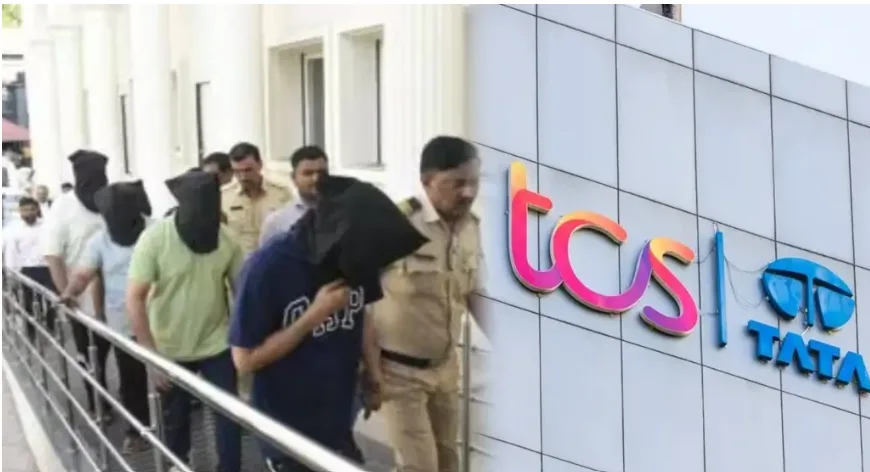
Tata Consultancy Services (TCS) has issued its first official response days after allegations of sexual harassment and coercive religious practices emerged from its Nashik BPO unit. The statement comes amid mounting scrutiny and public debate over the nature and scale of the accusations.
In its response, the company reiterated its institutional stance, stating, “TCS has a long-standing zero-tolerance policy towards harassment and coercion of any form. We have always ensured the highest standards of safety and well-being of our employees at the workplace.”
The wording of the statement, however, remained focused on policy assurances, without delving into the specific nature of the allegations that have surfaced.
TCS further stated that it had acted promptly upon becoming aware of the issue. According to the company, the employees under investigation have been suspended pending the outcome of an internal inquiry.
“As soon as we were made aware of the matter in Nashik, we took swift action. The employees being investigated have been suspended pending an enquiry. We are cooperating with the local law enforcement authorities, and any further action will be based on the conclusion of this investigation,” the statement added.
The company’s response seeks to underline procedural action and cooperation with authorities, positioning the matter within the framework of an ongoing investigation.
The controversy stems from allegations that a group of employees at the Nashik BPO unit engaged in sustained misconduct over several years. According to initial reports, six employees, identified as Asif Ansari, Shafi Sheikh, Shah Rukh Qureshi, Raza Memon, Tausif Attar, and Danish Sheikh have been arrested in connection with the case.
All six individuals reportedly held team leader positions, raising questions about internal oversight mechanisms within the workplace hierarchy.
The allegations include sexual harassment, coercion, and attempts to pressure women employees into adopting specific religious practices. Claims have also emerged suggesting that victims were subjected to sustained psychological pressure within the workplace environment.
Another dimension of the case involves the response of internal management structures. Reports indicate that concerns raised by victims were not immediately escalated in a manner expected under corporate compliance norms.
In particular, allegations have surfaced regarding the conduct of a human resources manager, who is accused of downplaying complaints and advising employees to remain “calm.” Such responses, if substantiated, could raise serious questions about workplace grievance redressal mechanisms and the enforcement of internal safeguards.
The incident has brought renewed focus on how large corporations handle sensitive complaints involving harassment and coercion. While TCS has emphasised its zero-tolerance policy and highlighted swift administrative action, the broader issue revolves around the effectiveness of implementation at the ground level.
Corporate policies, while comprehensive on paper, depend heavily on internal reporting systems, managerial accountability, and timely intervention. The Nashik case underscores the importance of ensuring that these mechanisms function without delay or dilution.
The matter is currently under investigation by local law enforcement authorities, with TCS stating that it is extending full cooperation. Further action, both administrative and legal, is expected to depend on the findings of the inquiry.
As the investigation progresses, the case is likely to remain under close watch, given its implications for workplace safety, corporate governance, and employee protection standards in large organisations.
The statement issued by TCS marks its first formal response to a serious and complex controversy. While the company has highlighted its policies and immediate actions, the unfolding investigation will determine the full scope of accountability.
The case has once again placed the spotlight on the gap that can exist between corporate assurances and on-ground realities, making it a significant development in the ongoing discourse around workplace safety and institutional responsibility in India.