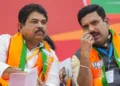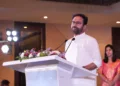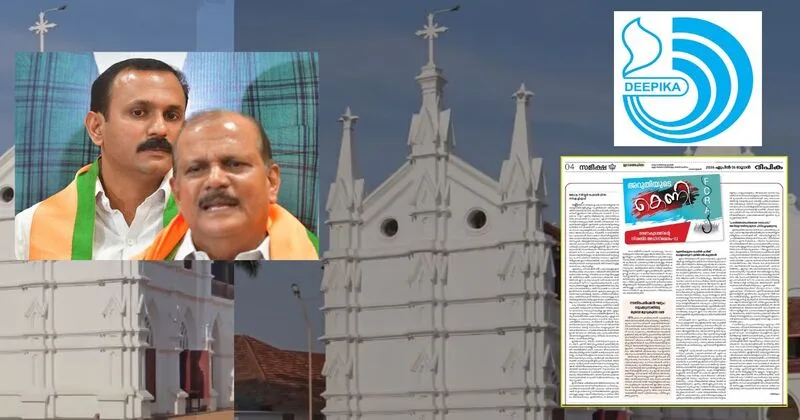
Kottayam: Following the Keralam Assembly elections held on April 9, serious allegations have emerged that sections of the Catholic Church, including bishops and its mouthpiece Deepika, actively worked to support the Congress–Muslim League-led UDF on the eve of the polls. BJP leaders Shaun George and P. C. George have publicly accused the Church of political interference and attempting to influence voters across key constituencies.
BJP State Vice President Shaun George contested from the Pala Assembly constituency in Kottayam district, while P. C. George, an eight-time MLA, sought a mandate from the Poonjar constituency as a BJP candidate. Allegations have also surfaced from the Kanjirappally constituency, where Union Minister George Kurian contested, claiming that bishops mobilised support for Congress through various convent networks. Similar accusations have been raised against bishops in Thrissur district. Investigations have also highlighted a series of editorials and articles published in Deepika, the mouthpiece of the Syro-Malabar Catholic Church, particularly focusing on the Foreign Contribution Regulation Act(FCRA). These writings are consistently targeted the BJP and Sangh Parivar organisations under the guise of FCRA-related criticism.
March 27 Editorial: ‘FCRA as a tool for minority targeting’
An editorial published on March 27, titled “FCRA as a Tool for Minority Targeting”, sharply criticised the central government. The article begins by stating: “Many of the moves of the BJP-led central government stem from a belief that it alone has the authority to ‘teach minorities a lesson’. The latest among these is the introduction of the FCRA (Foreign Contribution Regulation) Amendment Bill in the Lok Sabha”.
The editorial goes on to describe the BJP as “actors of neutrality engaged in covert operations” and controversially compares the Sangh Parivar to “religious extremists in Pakistan who carry out killings in the name of blasphemy”. It further argues: “A Hindu Rashtra is not required for minorities to be reduced to second-class citizens”. The piece also claims that India is currently in “an era where the rich become richer and the poor become poorer, driven by crony capitalism”.
Referring to political opposition, the editorial notes: “The Congress has warned that granting the government sweeping powers without constitutional safeguards is dangerous.” It also alleges “misuse of anti-conversion laws in BJP-ruled states”, stating: “It is evident daily who is being targeted under these laws”. The editorial concludes with a warning: “The Constitution exists to assure minorities that they are not alone in this country. But the erosion of democratic character by governments could reduce it to a mere spectacle”.
April 7 Editorial: Pre-poll critique of BJP and governance
Another editorial published on April 7, just two days before the election, reiterates concerns over the FCRA amendments. It states: “Christian churches have pointed out that the FCRA amendment primarily targets minorities, including themselves, based on past experiences with BJP government policies.”The editorial accuses Sangh Parivar groups of defaming Christian institutions: “There is an attempt to brand Christian churches as fraudulent by Sangh Parivar forces.” It also raises questions about corruption, asking: “Was it not the Supreme Court that exposed the BJP’s anti-corruption narrative in the electoral bonds case?”
Further allegations include: “Sangh Parivar groups are surrounding Christians, assaulting them, demanding police action, filing cases, and even imprisoning them. There was never a time before when cases were filed merely for possessing the Bible”. The editorial also claims restrictions on religious freedom: “It has become difficult to travel in religious attire in North India. Even Christmas and Easter must be conducted according to the dictates of communal organisations”.
On governance and elections, it questions institutional neutrality: “Does the Election Commission fear the ruling party? Has any action been taken against voter list manipulation or hate speeches by senior BJP leaders?” It further alleges selective demolitions: “In BJP-ruled states, how many houses demolished by bulldozers belonged to minorities?”
Quoting AICC General Secretary K. C. Venugopal, the editorial states: “Those who targeted Muslims through Waqf are now targeting Christians through FCRA.” It concludes: “The campaign against Christians did not begin with FCRA. It is part of a long-standing strategy by Sangh Parivar, intensified through laws and mobilisation”.
April 9 Editorial: Linking global conflict to domestic politics
On the day of polling, April 9, Deepika carried an editorial on the Iran conflict, which also drew parallels with India’s internal political climate. It stated: “If international wars are markets for weapons and domination, internal religious fanaticism and anti-minority actions are unconstitutional and illicit exercises of power.” Additionally, the newspaper had been publishing a series of articles during March–April under the title “The Silent occupation of Government “, further criticising the central government.
Amid these developments, allegations have also surfaced that certain priests engaged in direct vote mobilisation in favour of the Congress. It is against this backdrop that BJP leaders Shaun George and P. C. George have publicly criticised the Church’s alleged political involvement, intensifying the debate over religion and electoral politics in Keralam.
Criticism by Shaun George and P. C. George intensifies row
In the wake of the controversy, BJP leaders Shaun George and P. C. George have mounted a strong and direct criticism of Deepika and sections of the Church leadership, accusing them of political bias and interference in the electoral process. Shaun George alleged that Deepika had deviated from its responsibility as a Church publication by engaging in political activity and shaping narratives favourable to the Congress–Muslim League-led UDF. He stated: “A church-run publication must safeguard the interests of the Church and its faithful, not those of external investors.” Questioning editorial independence, he added: “We, the children of the Church, have every right to know whether investors are influencing editorial policy”.
He further criticised the newspaper’s stance on the FCRA debate, asserting: “The FCRA bill was introduced on matters affecting national security. It is not about religion. Campaigns demanding amendments in the name of religion cannot be allowed.” He also suggested that if financial constraints were influencing editorial decisions, the faithful should step in to support the publication rather than allowing external influence.
Echoing similar concerns, P. C. George clarified that his criticism was not directed at the Church as an institution but at certain bishops. He remarked: “The Church is not the bishops. Some bishops are working for the Congress. Some are Congress-minded by birth.” Warning against political involvement by clergy, he said: “Those who act politically will be seen as politicians and will lose public respect”.
He also raised specific allegations regarding electoral influence, stating: “Does the Church mean the UDF?” and claiming that instructions had been issued within religious institutions to support UDF candidates. Defending the FCRA law, he questioned opposition to it: “What is the issue if accounts are provided for foreign funds received?” He further noted that Union ministers had clarified that the law would not harm the Christian community.
Criticising Deepika’s coverage, George questioned its credibility, alleging selective reporting during the campaign. He maintained that his remarks were aimed only at certain individuals and reiterated his confidence in securing victory in the Poonjar constituency.