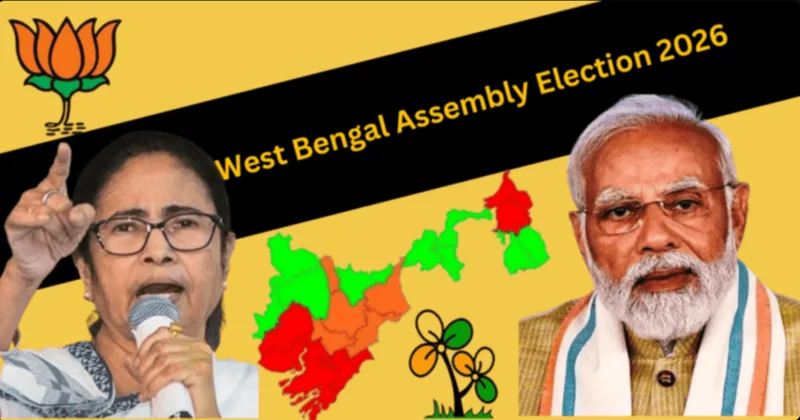
West Bengal is witnessing a significant political churn. Beneath the cultural vibrancy of Bengal—where fish is not just food but an emotion, and century-old eateries continue to thrive across Kolkata—there is a growing dissatisfaction with governance, infrastructure, and political priorities under the leadership of Mamata Banerjee.
What was once projected as the “Maa, Mati, Manush” model is increasingly being questioned by large sections of society, particularly the youth, urban middle class, and sections of women voters.
Governance Deficit and Infrastructure Gaps
Despite being a historic metro city, Kolkata continues to struggle with poor road conditions, traffic congestion, and uneven urban planning. Areas like Salt Lake—especially Sector V, the IT hub—face daily commuting challenges due to inadequate last-mile connectivity. The Metro from Toliganj to Sector V is incomplete due to political issues, and facilitating the Shuttle Bus Service providers who are TMC members.
The expansion of the Kolkata Metro has been slow and marked by delays. The long-pending seamless connectivity between key economic zones has not materialised at the expected pace, affecting lakhs of professionals. Critics argue that administrative inefficiencies and political considerations have slowed infrastructure growth in the state.
Cultural Pride vs Selective Development
West Bengal’s traditional Hindu hotels and legacy Bengali food institutions—many over 100 years old—remain a symbol of pride. However, there is a growing perception that such indigenous businesses are not receiving adequate institutional support compared to newer establishments.
The debate around urban land use, unauthorised settlements, and political patronage has intensified in recent years. Allegations from opposition parties suggest that vote-bank politics has influenced administrative decisions in certain pockets like Gulshan Colony and many other areas, although these claims remain politically contested and require institutional verification.
SIR Drive and the Voter Integrity Debate
One of the most politically significant developments has been the discourse around voter verification through the Special Intensive Revision (SIR) process. BJP leaders have consistently alleged that the drive has helped identify a large number of suspected bogus entries in electoral rolls, including illegal infiltrators from across the border.
The party argues that ensuring a clean voter list is essential for the integrity of democracy in Border States like West Bengal. While official figures and conclusions are subject to verification by the Election Commission of India, the issue has gained traction in public discourse.
For the BJP, this has become a central narrative—positioning itself as a defender of electoral transparency and national security, while accusing the ruling establishment of enabling irregularities for political gain. The TMC, on the other hand, has rejected these allegations, calling them politically motivated.
Shifting Muslim Vote Dynamics: AIMIM and Humayun Kabir Factor
A crucial dimension in West Bengal politics is the Hindu-Muslim electoral equation. Traditionally, a significant portion of Muslim votes has consolidated behind the ruling party. However, emerging political factors may influence this dynamic.
The presence of All India Majlis-e-Ittehadul Muslimeen (AIMIM) in select constituencies has the potential to fragment votes in tightly contested seats. Additionally, leaders like Humayun Kabir have occasionally taken positions that create internal contradictions within the ruling ecosystem, leading to localised shifts in voter sentiment.
While the extent of this impact remains to be seen, BJP strategists believe that even marginal fragmentation in consolidated vote banks could significantly alter electoral results.
Rising BJP Momentum and Silent Voter Base
Under the leadership of Narendra Modi, the BJP has steadily expanded its footprint in West Bengal. The party’s focus on development, national security, and welfare delivery has resonated with sections of the electorate, particularly first-time voters and urban youth.
A notable change observed on the ground is the increased visibility and resilience of the BJP’s grassroots presence. Instances where party symbols and flags remain visible without removal—something that was reportedly difficult in earlier election cycles—are being interpreted by supporters as a sign of growing acceptance and reduced fear.
Perhaps more significant is the emergence of a “silent voter” base—citizens who may not openly express political preferences but are actively engaged in the electoral process. This group could play a decisive role in determining outcomes.
Women, Safety, and Welfare Politics
Women voters remain a key pillar of West Bengal’s electoral landscape. While welfare schemes have ensured a degree of support for the ruling party, concerns around safety, economic opportunities, and long-term empowerment are becoming increasingly prominent.
The BJP has attempted to position itself as an alternative that combines welfare with development and law-and-order assurances, employment, aiming to attract women voters beyond traditional political loyalties.
A Bipolar Contest with High Stakes
The political battlefield in West Bengal has effectively become bipolar. The decline of the Left and Congress has created a direct contest between the ruling party and the BJP. In such a scenario, even small shifts in vote share—whether due to youth preferences, women voters, or fragmentation in traditional vote banks—can produce significant electoral swings.
Winds of Change or Continuity?
West Bengal stands at a decisive moment. The narrative of cultural pride and welfare politics is being challenged by demands for better infrastructure, youth employment, transparent governance, and balanced development.
The BJP is framing the election as a choice between status quo and transformation—highlighting issues like voter integrity, infrastructure gaps, and governance deficits. The ruling party, meanwhile, continues to rely on its grassroots network and welfare delivery model.
As the state moves toward the next electoral battle, one thing is clear: the contest will be intense, the margins could be narrow, and the final verdict may well be shaped by silent voters and shifting ground realities. The voter turnout will be beneficial for the BJP as it seems, along with the presence of silent voters. Whether this results in a political shift or reinforces existing leadership will ultimately be decided by the people of West Bengal.