The rebellion within the Trinamool Congress appears to be taking two separate political directions, exposing the growing divide among leaders who have broken ranks with the party following its defeat in the West Bengal Assembly elections.
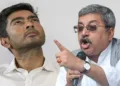
A day after 20 rebel TMC Members of Parliament announced their decision to merge with the Nationalist Citizens Party of India (NCPI), senior rebel leader Ritabrata Banerjee made it clear that the dissident legislators in the West Bengal Assembly would not follow the same path.
Speaking to reporters on June 15, Banerjee said the decision taken by the rebel MPs was their own and did not reflect the position of the Assembly faction.
“Twenty MPs of the Lok Sabha have decided to merge with the National Citizens Party of India. It is their decision. As far as our collective is concerned, we have no such idea. There is no question of merger of TMC MLAs in the Bengal Legislative Assembly with NCPI. As of now, we have the support of 65 rebel MLAs,” Banerjee said.
His remarks underline the emergence of two distinct factions from within the TMC’s dissident camp. The first faction comprises rebel MPs who have chosen to leave the party structure entirely by merging with the NCPI and aligning themselves with the BJP-led National Democratic Alliance (NDA) at the national level. The second faction consists of rebel MLAs led by Ritabrata Banerjee, who appear determined to retain their separate political identity and consolidate their strength within the West Bengal Assembly.
Banerjee also claimed that the rebel camp currently enjoys the support of 65 MLAs and hinted at possible legal action if their names were disclosed publicly.
“We have given a letter to the Speaker. If the names go public, that is a breach of privilege,” he said.
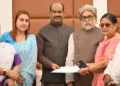
The political developments come amid an unprecedented internal crisis in the Trinamool Congress. On Sunday, a group of dissident MPs met Lok Sabha Speaker Om Birla seeking separate seating arrangements in Parliament. The MPs also formally announced their merger with the NCPI.
Rebel MP Kakoli Ghosh Dastidar later confirmed the decision, stating that the dissident parliamentarians had agreed to merge with the Nationalist Citizens Party of India.
Reports indicate that the NCPI is likely to focus its political activities primarily in West Bengal, Assam and Tripura. The party’s growing prominence has been linked to the entry of the rebel TMC MPs, who are expected to play a key role in shaping its future strategy.
The rebellion gained further attention after several prominent dissident leaders, including Kakoli Ghosh Dastidar, Sudip Bandyopadhyay, Satabdi Roy, Arup Chakraborty, Saayoni Ghosh, Mala Roy, Bapi Halder and Prasun Banerjee, attended a meeting at the residence of Union Minister Bhupender Yadav in Delhi. BJP MP Nishikant Dubey was also present during the discussions.
Following the meeting, the rebel MPs visited the residence of Lok Sabha Speaker Om Birla, signalling their intention to function as a separate parliamentary bloc.
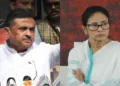
The latest developments are evidence that the anti-Mamata camp is no longer united under a single strategy. While one faction seeks a new political platform through the NCPI and closer engagement with the NDA, the other appears focused on retaining influence within the Assembly and potentially staking claim to a larger role in West Bengal politics.
With rival groups now pursuing different political paths, the Trinamool Congress faces the prospect of a prolonged internal battle that could reshape the opposition landscape in West Bengal in the months ahead.