Dharma Swantantrya Adhiniyam: Safeguarding the fundamental freedom
August 31, 2026
  • Read Ecopy
  • Circulation
  • Advertise
  • Careers
  • About Us
  • Contact Us
Android AppiPhone AppArattai
Organiser
  • ‌
  • Bharat
    • Assam
    • Bihar
    • Chhattisgarh
    • Jharkhand
    • Maharashtra
    • View All States
  • World
    • Asia
    • Europe
    • North America
    • South America
    • Africa
    • Australia
  • Editorial
  • International
  • Opinion
  • RSS @ 100
  • More
    • Op Sindoor
    • Analysis
    • Sports
    • Defence
    • Politics
    • Business
    • Economy
    • Culture
    • Special Report
    • Sci & Tech
    • Entertainment
    • G20
    • Azadi Ka Amrit Mahotsav
    • Vocal4Local
    • Web Stories
    • Education
    • Employment
    • Books
    • Interviews
    • Travel
    • Law
    • Health
    • Obituary
  • Subscribe
    • Subscribe Print Edition
    • Subscribe Ecopy
    • Read Ecopy
  • ‌
  • Bharat
    • Assam
    • Bihar
    • Chhattisgarh
    • Jharkhand
    • Maharashtra
    • View All States
  • World
    • Asia
    • Europe
    • North America
    • South America
    • Africa
    • Australia
  • Editorial
  • International
  • Opinion
  • RSS @ 100
  • More
    • Op Sindoor
    • Analysis
    • Sports
    • Defence
    • Politics
    • Business
    • Economy
    • Culture
    • Special Report
    • Sci & Tech
    • Entertainment
    • G20
    • Azadi Ka Amrit Mahotsav
    • Vocal4Local
    • Web Stories
    • Education
    • Employment
    • Books
    • Interviews
    • Travel
    • Law
    • Health
    • Obituary
  • Subscribe
    • Subscribe Print Edition
    • Subscribe Ecopy
    • Read Ecopy
Organiser
  • Home
  • Bharat
  • World
  • Operation Sindoor
  • Editorial
  • Analysis
  • Opinion
  • Culture
  • Defence
  • International Edition
  • RSS @ 100
  • Magazine
  • Read Ecopy
Home Bharat

Dharma Swantantrya Adhiniyam: Safeguarding the fundamental freedom

Amidst growing debate, Maharashtra’s proposed law is being mischaracterised as restrictive. In reality, it seeks to safeguard freedom of conscience by targeting coercion, fraud, and inducement, ensuring that religious choices remain informed, voluntary, and free from exploitation

Organiser BureauOrganiser Bureau
Apr 2, 2026, 08:30 pm IST
inBharat, Analysis
Follow on Google News
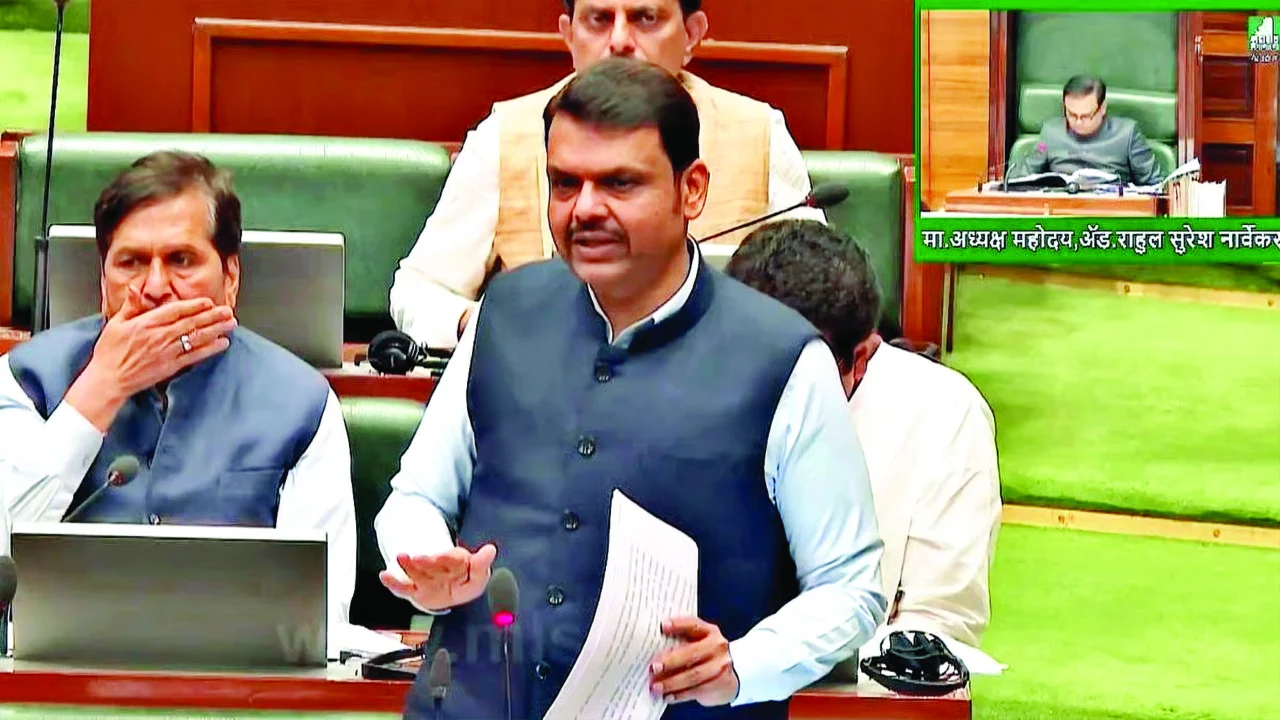
Maharashtra Chief Minister Devendra Fadnavis defends the Maharashtra Freedom of Religion Bill 2026 in the Assembly

Maharashtra Chief Minister Devendra Fadnavis defends the Maharashtra Freedom of Religion Bill 2026 in the Assembly

Facebook
Twitter
WhatsAppTelegramEmail

At a time when public discourse is increasingly shaped by slogans and suspicion, Maharashtra’s proposed Dharma Swatantrya Adhiniyam, 2026 has been hastily labelled by some as an “anti-conversion law.” Such characterisations, while politically convenient, fail to engage with the deeper constitutional logic underlying the legislation.

Far from curtailing religious freedom, the Bill seeks to protect its most essential element: the freedom of conscience. For many families, especially those raising daughters, the issue is not abstract. It is rooted in real anxieties about personal safety, deception in relationships, and the protection of religious identity. When viewed from this perspective, safeguards against forced or fraudulent conversion can serve as an important layer of protection rather than a restriction.

The Bill provides for support to individuals affected by unlawful religious conversion. It entitles the victim to receive maintenance and provides for custody of children. Further, the State Government shall provide rehabilitation assistance to such persons in the prescribed manner.

Protection, Not Prohibition

At its heart, the legislation is a protective framework, not a restrictive one. In many cases, individuals, particularly women, minors, and those in vulnerable circumstances, may be subjected to subtle pressures that are difficult to detect or prove. Conversion in such situations is not an exercise of free will but the result of manipulation, emotional coercion, or misinformation. By prescribing penalties for such conduct, the Bill ensures that religious choice remains voluntary, rather than engineered. Enhanced penalties for offences involving vulnerable groups are therefore not paternalistic, but a recognition of ground realities where power imbalances are stark.

Stringent Penalties, Enhanced Protections

  • The Bill prescribes rigorous punishments to ensure that conversions remain a matter of sincere personal choice
  • A prison term of seven years and a fine of Rs 1 lakh for any conversion achieved through prohibited means such as force, fraud, or allurement
  • Recognising that certain individuals face higher risks of exploitation, the Bill increases the penalty to Rs 5 lakh with prison term of seven years if the victim is a woman, a minor, a person of unsound mind, and SC or ST
  • The simultaneous conversion of two or more persons is treated with the same severity as offences against vulnerable groups, attracting a seven-year jail term and a Rs 5 lakh fine
  • Individuals or institutions previously convicted under this Act who commit another offence face a maximum prison term of 10 years and a fine of Rs 7 lakh

The rationale behind the requirement of a prior 60-day notice is both practical and constitutionally sound. Religious conversion is not just a private act; it often has legal, social, and familial consequences, particularly when linked to marriage. A structured process ensures that such decisions are: Deliberate rather than impulsive, informed rather than induced, and transparent rather than clandestine. The notice period creates a cooling-off window, allowing authorities to verify that the conversion is genuinely voluntary. It also provides an opportunity to detect cases where individuals may be acting under pressure but are unable to seek help themselves. Critics have argued that the notice requirement amounts to state intrusion. Religious conversion, when it intersects with civil rights and legal status, cannot be treated as entirely beyond regulatory oversight.

Necessary Corrective

In cases involving coercion or undue influence, the victim is often in a position of vulnerability, making it difficult to produce evidence. The facilitator, on the other hand, is better placed to demonstrate that due process was followed and consent was genuine. This approach is consistent with victim-centric jurisprudence, where evidentiary burdens are calibrated to address real-world asymmetries.

Indian courts have repeatedly dealt with cases where religious conversion has been used to circumvent legal obligations, particularly in matters of marriage. In Sarla Mudgal and Lily Thomas, the Supreme Court made it clear that conversion cannot be used as a device to evade personal law requirements. The Maharashtra Bill builds on this jurisprudence by ensuring that marriages linked to unlawful conversions do not acquire legal legitimacy.

In the context of “love jihad,” where women are often under intense psychological pressure from partners or their partners’ families, the 60-day window provides a cooling- off period and an opportunity for the State to verify the woman’s voluntary intent away from her “captors.”

Transparency ensures that parents and siblings, who are often the first to notice signs of grooming or coercion, can raise concerns before a deceptive marriage is finalised. Given that many victims of forced conversion are “not in a position to approach the police themselves,” the Bill’s provision allowing blood relatives to lodge an FIR is a crucial safety net.

The Maharashtra Dharma Swatantrya Adhiniyam, 2026 is particularly distinguished by Section 5, which safeguards the rights of children and women in marriages deemed null and void due to unlawful conversion. Under this section: A child born out of such a marriage shall follow the religion practised by the mother prior to the relationship; the child retains succession and inheritance rights to the property of both parents and is entitled to maintenance under the applicable law; and the law provides that custody of the child will remain with the mother unless a court directs otherwise

Safeguards Against Misuse

The State has a constitutional duty not only to protect individual liberty but also to ensure that such liberty is not undermined by coercion or exploitation. This Adhiniyam represents an attempt to strike that balance. It affirms that religious freedom is not merely the absence of restraint, but the presence of genuine choice.

The true test of religious liberty is whether conversions are free, informed, and voluntary. By targeting only those conversions that fall short of this standard, the Maharashtra Bill strengthens—not weakens—the constitutional promise of freedom of conscience. In an increasingly complex social landscape, such legislation is not only justified but necessary.


Topics: Love JihadDharma Swantantrya AdhiniyamSarla Mudgalreligious libertyMaharashtra Bill strengthensMaharashtra’s
Share
Tweet
SendShareSend
✮ Subscribe Organiser YouTube Channel. ✮
✮ Join Organiser's WhatsApp channel for Nationalist views beyond the news. ✮
Previous News

BJP Telangana questions CM Revanth Reddy “frivolous comparison” of Modi and Vijayan during Kerala elections campaign

Next News

US Aircraft Carriers Vs Iran’s Choke Point Strategy

Related News

Model Muskan (L) and accused Imran (R)

Gym Jihad in Delhi? Model Muskan stabbed to death at home; Gym trainer Imran named accused

AI Generated Representative Image

Dimagi Naxals Exposed: The covert ideological network threatening Bharat’s sovereign unity

Arrested accused in the case

Two Hindu minor girls from Jodhpur rescued in Ahmedabad after Aqib Ansari & Syed Ibrahim lured them through gaming apps

Love Jihad case surfaces in Varanasi; Accused Sharukh absconding, FIR Filed

Love Jihad in Varanasi: Accused Shahrukh conceals identity, marries Hindu woman, rapes & forced her to convert to Islam

Koukoor Dargah in Medchal district, Telangana

Telangana: Police arrest Nazar in Medak after wife alleges he posed as an orphan, used fake Hindu name to marry her

Bhopal’s Jumman was arrested for posing as ‘Krish Jain’ on Instagram and luring Hindu woman

Love Jihad in Bhopal: Instagram ‘Krish Jain’ turns out to be Jumman arrested, lured Hindu woman with marriage promise

Load More

Latest News

Students at the Gautam Buddha University, Greater Noida

Mann Ki Baat: PM Modi praises GBU’s mission ShakthiSAT, says dreams of daughters are now taking flight to space

Dutch TikTokker Angelo Bryson, known as Superhuman Unchained, at a pro-Palestine protest.

Dutch TikTokker recently converted to Islam livestreams stabbing three in Amsterdam; Watch video

From Kanchipuram to Kalamkari, India’s traditional textiles reflect its rich regional cultures and centuries-old craftsmanship

From Kanchipuram to Kalamkari: Exploring India’s rich traditional textiles and regional clothing heritage

Punjabi Influencer Abducted, Burnt Alive Near Morinda

Punjab Law and order crisis: Influencer Manjeet Kaur abducted, burnt alive after attack near Morinda

‘Dimagi Naxals’ romanticising Mao, Stalin and Pol Pot

The Swadeshi movement turned Indian enterprise into a powerful force for economic self-reliance, national pride and the struggle for Swaraj

Building Economic Swaraj: How Indian enterprises fought foreign rule and reclaimed national pride

Prime Minsiter Narendra Modi and Uzbekistan President Shavkat Mirziyoyev

India-Uzbekistan Herald New Chapter: Uranium deal, 30-day visa-free entry to Indians & $5bn trade propel bilateral ties

The new FCRA rules seek to curb unchecked foreign funding, strengthen financial accountability, and protect Bharat’s national security

Stopping Unchecked Foreign Money: How new FCRA rules protect Bharat’s security and financial sovereignty

Keralam CM VD Satheeshan, DCC member Chembil Anil (Left to Right)

Keralam Congress infighting surfaces in CM VD Satheeshan’s vehicle blockade; DCC member Chembil Anil arrested, remanded

Indian Logistics Data Bank tracks ten crore containers, transforming freight visibility and strengthening the nation’s logistics network

From Lothal Dockyard to Ten Crore Containers: India’s Logistics Data Bank transforms EXIM freight tracking

Load More
  • Privacy
  • Terms
  • Cookie Policy
  • Refund and Cancellation
  • Delivery and Shipping

© Bharat Prakashan (Delhi) Limited.
Tech-enabled by Ananthapuri Technologies

  • Home
  • Search Organiser
  • Bharat
    • Assam
    • Bihar
    • Chhattisgarh
    • Jharkhand
    • Maharashtra
    • View All States
  • World
    • Asia
    • Africa
    • North America
    • South America
    • Europe
    • Australia
  • Editorial
  • Operation Sindoor
  • Opinion
  • Analysis
  • Defence
  • Culture
  • Sports
  • Business
  • RSS @ 100
  • Entertainment
  • More ..
    • Sci & Tech
    • Vocal4Local
    • Special Report
    • Education
    • Employment
    • Books
    • Interviews
    • Travel
    • Health
    • Politics
    • Law
    • Economy
    • Obituary
  • Subscribe Magazine
  • Read Ecopy
  • Advertise
  • Circulation
  • Careers
  • About Us
  • Contact Us
  • Policies & Terms
    • Privacy Policy
    • Cookie Policy
    • Refund and Cancellation
    • Terms of Use

© Bharat Prakashan (Delhi) Limited.
Tech-enabled by Ananthapuri Technologies