In a major push to protect and recapitulate the established global trade norms under the purview of the World Trade Organisation(WTO), India has strongly rejected the plurilateral investment pact proposed by China. India has asserted that the China-led investment agreement will evade the transparency, fairness and equality of opportunity protocols scripted by WTO to espouse multilateral trade. However, China has argued that the trade pact will enhance transparency and reduce bureaucratic bottlenecks in streamlining global trade and investment.
Investment Facilitation for Development(IFD) of China
The proposed investment deal anchored by China is titled as “Investment Facilitation for Development”(IFD). China aims to infuse this agreement into the WTO framework. The idea was presented at the latest 14th Ministerial Conference of the World Trade Organisation. China claims that this agreement will accelerate investments especially into the least developed and developing countries by reducing bureaucratic hurdles and other administrative hiccups.
China first funneled the idea of Investment Facilitation for Development(IFD) in the year 2017. The countries who are heavily dependent on the Chinese funds for infrastructure development and other causes also supported this IFD system and reiterated that it has to be incorporated into the WTO framework. IFD is a plurilateral agreement, meaning it will be applicable to only those nations who are signatories to the pact. Thus, the deal is not indiscriminately applicable to every member-nation of WTO. Every country in the WTO need not abide by the Chinese IFD pact unless they are signatories to it. It is not a mandatory multilateral agreement.
China also argues that the IFD helps to easily attract global investments into developing countries as the plurilateral agreement focuses on administrative reforms, investment cooperation etc. The IFD will facilitate the insertion of certain legally binding procedures into the WTO framework that will aid for increased and easier inflow of Foreign Direct Investments into the dependent countries. China argues that such a mechanism will help to nurture sustainable & inclusive development.
Apparently, the investment idea presented by China has gathered support from nearly 127 countries who are predominantly least-developed and are dependent on the sovereign wealth funds of China for development. Thus, the China-led group is consistently pushing for the inclusion of IFD into the WTO framework, which will be binding on the signatories to the agreement. This investment pact will indeed give an economic edge and competitive advantage to China in streamlining its investment footprint across the globe, thus consolidating its strategic presence or authority.
IFD erodes foundational principles of WTO: Piyush Goyal
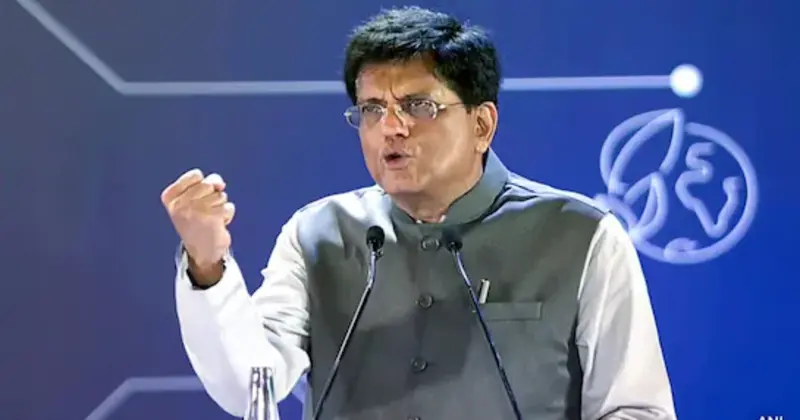
Speaking at the 14th Ministerial Conference of the World Trade Organisation(WTO) in Yaounde, Cameroon Commerce and Industry Minister Piyush Goyal strongly opposed the China-led Investment Facilitation for Development(IFD) agreement. He asserted that the pact is against the macro-economic fundamentals or global trade norms and it is antithetical to the established foundational principles of WTO.
At #WTOMC14, drawing inspiration from Mahatma Gandhi ji's philosophy of Truth prevailing over conformity, India showed the courage to stand alone on the contentious issue of the Investment Facilitation for Development (IFD) Agreement and did not agree to its incorporation into… pic.twitter.com/bbfOtrwCK9
— Piyush Goyal (@PiyushGoyal) March 28, 2026
Incorporation of IFD agreement into the WTO framework erodes the functional limits of WTO, Piyush Goyal added. Taking to his social media, the Commerce Minister asserted that drawing inspiration from Mahatma Gandhi’s philosophy of truth prevailing over conformity, India showed courage to standalone on the contentious issue of the IFD agreement and did not agree to its incorporation into the WTO framework as an Annex 4 agreement.
Annex 4 of the WTO framework mentions the plurilateral trade agreements that are binding on the signatory WTO members only, unlike the mandatory multilateral agreements. Currently, at the ministerial meeting member nations are discussing and deliberating upon the guardrails and legal reforms that have to be inserted before acknowledging any plurilateral agreements. Piyush Goyal further stated, “In view of the systemic issue at hand, India showed openness to have good faith, comprehensive discussions and constructive engagement under the WTO Reform Agenda”. India had opposed the China led investment pact even in the previous WTO ministerial meetings.
India argues that the agreement is against the consensus based norms of WTO. It is against the established mandate of the multilateral trade organisation. India thus always reiterates for a consensus-based, member-driven and inclusive trade ecosystem where few partners gain undue advantage in global trade and investment credentials.