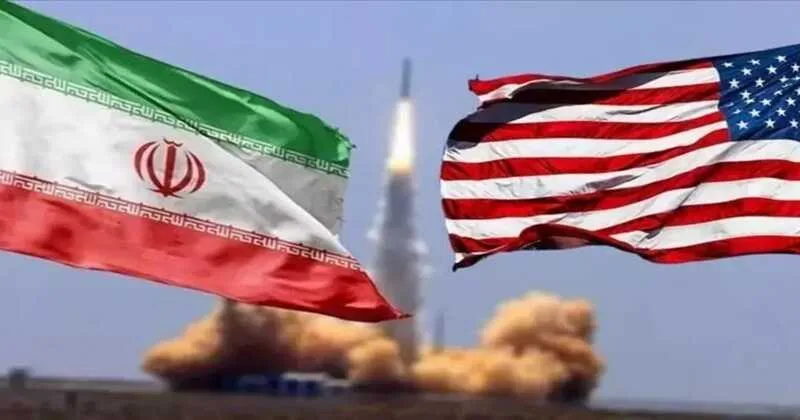
Washington/Tehran: As tensions between the United States and Iran intensify, reports suggest that Washington is considering a bold and risky military plan to seize Iran’s enriched uranium stockpile. According to The Wall Street Journal, citing US officials, President Donald Trump is weighing the option of a specialised ground operation aimed at extracting nearly 400 kilograms of uranium currently held by Iran.
The proposed move is intended to permanently halt Iran’s nuclear programme. However, concerns are mounting within strategic and military circles that such an operation on Iranian soil could expose American troops to significant danger. Critics have also raised doubts about the plan’s justification, arguing that claims about uranium enrichment may serve as a pretext for broader geopolitical objectives.
The core objective of the mission would be to secure approximately 400 kilograms of uranium enriched to 60 per cent purity, a level that has raised alarm in Washington due to its potential use in nuclear weapons development. Reports indicate that US special forces could be deployed to underground nuclear facilities located in Isfahan and Natanz to retrieve the material. Officials suggest that such a military intervention would only be considered if diplomatic efforts fail and Iran refuses to transfer the uranium through negotiations.
High-risk military operation
Military analysts warn that operating deep within hostile Iranian territory presents serious logistical and tactical challenges. US forces may be required to remain on the ground for several days, increasing their vulnerability to missile strikes, drone attacks, and other retaliatory measures by Iran. Successfully completing such a mission would demand not only precision but also the ability to withstand sustained counterattacks. At the same time, there are indications that diplomatic negotiations are still ongoing. Reports suggest that intermediary countries, including Pakistan, are attempting to facilitate a deal for the transfer or neutralisation of Iran’s uranium stockpile. Earlier, President Trump had also hinted at the possibility of targeting Kharg Island, a critical hub for Iran’s oil exports, signalling that economic and strategic assets could also be in focus.
Parallel to these developments, the United States has been significantly increasing its military presence across the West Asia. Observers view this as a clear signal of preparation for a potential ground conflict. The scale of deployment is reportedly the largest in the region since the 2003 Iraq War, with over 57,000 US troops now stationed at bases surrounding Iran.
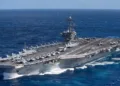
According to US Central Command, the USS Tripoli, an advanced amphibious ready group carrying more than 3,500 personnel, has already arrived in the region. Additionally, thousands of paratroopers from the 82nd Airborne Division have been mobilised. These deployments are widely interpreted by military experts as preparations for possible land-based operations targeting key Iranian assets.
Strategic build-up in the Gulf
US military infrastructure in the Gulf region is now operating at full capacity. Bases in Qatar host around 11,000 troops, Kuwait accommodates approximately 14,000, and Bahrain houses nearly 7,000 personnel. Following the temporary withdrawal of the USS Gerald R. Ford for maintenance, the USS George H.W. Bush Strike Group has been deployed to maintain naval dominance. Meanwhile, the USS Boxer, equipped to carry F-35B stealth fighter jets, has departed from California to reinforce the US presence.
One of the primary strategic targets under consideration is Kharg Island, which serves as Iran’s main oil export terminal. Gaining control over this island could weaken Iran’s grip on the Strait of Hormuz, a critical maritime route through which nearly one-fifth of the world’s oil supply passes. Ensuring uninterrupted passage through this chokepoint is seen as vital to global energy security. Beyond immediate military objectives, there are broader geopolitical implications. Reports indicate that both the United States and Israel may be aiming to exert pressure that could lead to regime change in Iran. Despite the extensive military build-up, concerns remain about the long-term consequences of such an escalation.
Experts warn that a ground invasion could entangle the United States in another prolonged conflict, similar to its experiences in Iraq and Afghanistan. Iran has already issued strong warnings, stating that it will retaliate decisively in the event of any military incursion. Analysts caution that Iran’s use of advanced drones, naval mines, and asymmetric warfare tactics in the Persian Gulf could inflict heavy casualties on US forces.
As diplomatic efforts struggle to gain traction, the situation continues to evolve rapidly, raising fears that the West Asia may once again be on the brink of a major war.