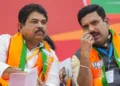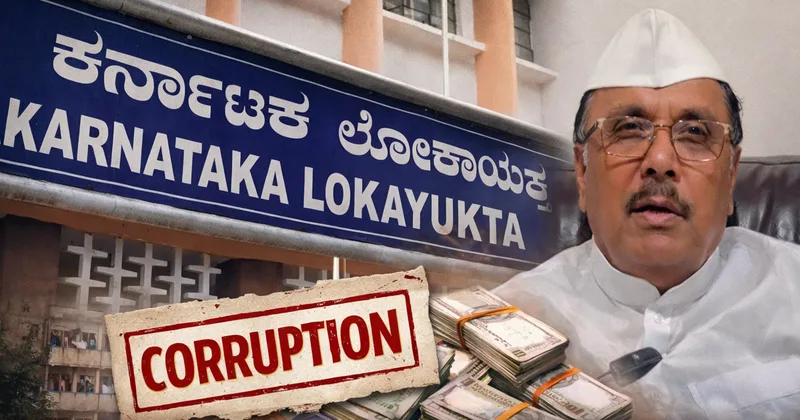
BENGALURU: In a major political and administrative development, allegations made by Aland Congress MLA B. R. Patil regarding corruption in the Rajiv Gandhi Housing Corporation have been substantially proven true, with the Lokayukta probe confirming large-scale irregularities and bribery in house allotments.
The controversy, which initially sparked intense debate within political circles, has now taken a decisive turn after the Lokayukta investigation validated key aspects of Patil’s claims that beneficiaries were being forced to pay money to secure houses under government schemes.
The probe was initiated based on a complaint filed by H.M. Venkatesh of Thirthahalli, who cited an alleged conversation involving Housing Minister B. Z. Zameer Ahmed Khan’s close aide Sarfaraz Khan and MLA Patil. Acting on the complaint, the Lokayukta team launched a detailed investigation into the functioning of the Rajiv Gandhi Housing Corporation.
Lokayukta findings back MLA’s charge
According to official sources, the Lokayukta team submitted its preliminary report on December 6, 2025, confirming procedural violations, manipulation of beneficiary lists, and instances of illegal money collection. The investigation, led by inquiry officer H.J. Tippeswamy, began with searches on November 25, 2025, focusing on records such as applications, beneficiary selection, and fund disbursal processes.
The report clearly indicates that the allegations raised by MLA Patil were not baseless. Instead, the findings point towards a systemic pattern of corruption, especially in Kalaburagi district’s Aland taluk — the very region highlighted by the MLA.
Massive gaps in housing allocation
The probe revealed glaring discrepancies between targets and actual allotments. While 188 houses were targeted in 2022-23 and 758 in 2024-25 for Aland taluk, only a small portion was sanctioned, leaving hundreds of applications pending without justification.
Under the Ambedkar Housing Scheme, out of 292 proposed houses, just 24 were approved. A significant number of applications remained stuck at the gram panchayat level, raising serious concerns about transparency.
Bribery allegations confirmed
One of the most crucial aspects of the Lokayukta report is the confirmation of bribery allegations. Beneficiaries, during questioning, stated that they were asked to pay money to secure housing benefits.
Shantayya reportedly told investigators that a panchayat member demanded ₹15,000 for allotment, which he paid. Similarly, Shashikala also confirmed paying ₹15,000 to a local representative. In other villages, demands ranged from ₹5,000 to ₹25,000, clearly indicating a widespread practice of illegal collection.
The report states, “Collection of money from applicants and deviation from prescribed procedures clearly point towards malpractice in the implementation of the scheme.”
Serious procedural violations
The investigation uncovered multiple irregularities in gram sabha functioning. In several cases:
- Beneficiary lists were incomplete or manipulated
- Names were missing despite serial entries
- Signatures were collected without proper documentation
- Gram sabhas were conducted without proper notice
- In Kavalga gram panchayat, records were found to be poorly maintained, with entire sections left blank. In some instances, beneficiaries were unaware that they had been selected.
Further, lists of selected beneficiaries were not displayed publicly, violating transparency norms.
Administrative negligence and misuse of power
The probe also exposed administrative lapses. In Munalli gram panchayat, outdated income certificates were accepted, and proper verification was not conducted. In another instance, a transferred PDO retained official files, disrupting the administrative process.
Investigators also noted that nodal officers were not invited to gram sabhas, and official announcements were not made, raising questions about the legitimacy of the selection process.
Beyond housing allocation, the report pointed to broader governance failures. “Panchayat officials failed to address basic civic issues like drinking water, sanitation, and street lighting. Gram sabhas were not conducted regularly, and public grievances were ignored,” the report observed.