Washington /Tehran: As the conflict between the United States, Israel, and Iran intensifies across West Asia, a series of military incidents involving American forces has raised questions about transparency, operational control, and the reliability of official US accounts. From aircraft crashes and friendly-fire episodes to fires aboard major warships, the growing list of mishaps has generated conflicting narratives between Washington and its adversaries. While US officials have consistently denied claims made by Iran and its allied resistance groups, the frequency and nature of these incidents have prompted scrutiny over whether the full details of what is happening in the conflict zone are being disclosed.
KC-135 crash in Iraq: Missile strike or accident?
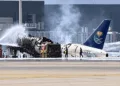
One of the most controversial incidents emerged after Iran’s state media reported that a US military refuelling aircraft had been shot down in western Iraq. According to Iranian sources, a Boeing KC-135 Stratotanker belonging to the United States was struck by a missile fired by resistance groups operating in Iraq. The report cited a spokesperson for Iran’s Central Headquarters of the Holy Prophet (PBUH), who said the aircraft was targeted while refuelling an “aggressor fighter jet.” Iran’s Islamic Revolutionary Guard Corps (IRGC) also issued a statement claiming that the air defence systems of the “Resistance Front” successfully intercepted the aircraft.
The Islamic Resistance in Iraq, an umbrella group of Iran-backed armed factions, claimed responsibility for the attack. In its statement, the group said it shot down the KC-135 “in defence of our country’s sovereignty and airspace.” Iranian media further reported that all six crew members on board were killed.
However, the United States has firmly rejected these claims. US Central Command confirmed that a KC-135 refuelling aircraft had indeed been lost but insisted the crash was not caused by hostile action. In a statement posted on X, the command said the incident occurred in “friendly airspace” during Operation Epic Fury.
According to the US account, two aircraft were involved in the incident. One plane went down in western Iraq, while the second aircraft landed safely. Officials stressed that the loss was not the result of either hostile fire or friendly fire. The stark contradiction between the two narratives, one claiming a missile strike and the other describing a non-combat incident, has left observers questioning what actually happened in the skies over Iraq.
Friendly-Fire Disaster: Kuwaiti jet downs three US fighters
Even as Washington dismissed claims of hostile action in Iraq, it acknowledged another troubling incident that highlighted vulnerabilities within its own coalition operations. According to a report in The Wall Street Journal, three American F-15E Strike Eagle fighter jets were mistakenly shot down by a Kuwaiti aircraft earlier this week. The incident reportedly occurred when a Kuwaiti F-18 Hornet pilot mistakenly launched three missiles toward the US aircraft. The fighters crashed over Kuwait, though the crews were able to eject safely.
The US military confirmed the incident and described it as a “blue-on-blue” episode, a term used for friendly-fire incidents between allied forces. This marked the first loss of American aircraft since Operation Epic Fury began on February 28 with a massive wave of US and Israeli airstrikes on Iran.
The circumstances surrounding the episode have raised serious questions. According to reports, Kuwaiti forces were already on high alert because Iranian drones were penetrating the country’s airspace at the time.
One of those drones had reportedly struck a base at Shuaiba port, killing six US soldiers just a day earlier. Despite such heightened alert conditions, experts say strict identification procedures normally exist to prevent allied aircraft from mistakenly engaging each other. An ex-US Air Force fighter pilot told Air & Space Forces Magazine that the incident was “perplexing,” given the extensive safeguards designed to avoid such catastrophic errors. The episode has fuelled speculation about whether the intense pace of operations in the region is overwhelming command and coordination systems.
Warship fire raises operational concerns
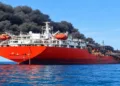
Another incident involving the US Navy has further complicated the narrative surrounding American military operations in the region. Two US sailors were injured after a fire broke out aboard the USS Gerald Ford, the United States’ newest and largest aircraft carrier. The ship is currently deployed in the Red Sea as part of operations linked to the conflict with Iran. According to the U.S. military, the fire started in the carrier’s main laundry area. Officials said the injured sailors were receiving treatment for non-life-threatening injuries and were in stable condition.
The Navy stressed that there was no damage to the ship’s propulsion system and that the carrier remained fully operational. Nevertheless, the incident added to the list of mishaps involving key American military assets in the theatre. With more than 5,000 sailors and over 75 aircraft onboard, including F-18 Super Hornet fighter jets, the Gerald Ford plays a critical role in projecting US power in the region. While the Pentagon described the fire as a routine non-combat accident, critics argue that repeated incidents involving major assets during an ongoing conflict inevitably raise questions about operational stress and preparedness.
Iranian claims target US aircraft carrier, USS Abraham Lincoln
Tensions escalated further when Iran’s Islamic Revolutionary Guard Corps (IRGC) Navy claimed that its ballistic missiles struck the US aircraft carrier USS Abraham Lincoln. According to Iranian media reports cited by international outlets, the attack rendered the carrier non-operational and forced it to retreat from Gulf waters.
Washington swiftly rejected the claim, insisting that the vessel remained fully operational and continued to support Operation Epic Fury. The US version of events also included another dramatic episode in which a US Navy ship reportedly fired on an Iranian vessel that approached too close to the Abraham Lincoln. It remains unclear whether the Iranian vessel was hit or what happened to its crew. As with the KC-135 incident, the two sides presented completely different narratives. Iranian sources framed the event as a successful strike against a major American military asset, while US officials dismissed the claim as inaccurate. The absence of independent verification has left analysts relying largely on statements from either side of the conflict.
Rising casualties and the fog of war
Beyond the individual incidents, the broader conflict has already taken a toll on American forces. According to reports, seven US service members have been killed and around 140 wounded since the conflict began on February 28. One of the deadliest incidents occurred when an Iranian drone struck a US tactical operations centre at Port Shuaiba in Kuwait. The attack reportedly bypassed air defence systems and killed six American soldiers. Iran’s retaliatory operations followed a dramatic escalation earlier in the conflict, when Iran’s Supreme Leader Ayatollah Ali Khamenei was assassinated in a joint US–Israeli strike.
Since then, Iran has launched missile and drone attacks against targets across the Gulf region, including Kuwait. The United States has also dramatically expanded its military campaign, reportedly conducting strikes on more than 6,000 targets inside Iran. As the war widens, however, the number of conflicting reports and unexplained incidents continues to grow. From disputed aircraft crashes and friendly-fire shootdowns to fires aboard major warships, the pattern of events has raised doubts about the clarity of official narratives emerging from the battlefield.
In modern warfare, where information is often as contested as territory, such contradictions are not uncommon. Yet the sheer number of incidents involving U.S. forces within a short period has inevitably fuelled questions about whether the public is receiving the full picture. As Operation Epic Fury continues, the competing claims and counter-claims surrounding these incidents highlight how difficult it can be to separate fact from narrative in a rapidly escalating conflict.