Unequal Land Laws in India: SC advises legislative amendment
July 24, 2026
  • Read Ecopy
  • Circulation
  • Advertise
  • Careers
  • About Us
  • Contact Us
Android AppiPhone AppArattai
Organiser
  • ‌
  • Bharat
    • Assam
    • Bihar
    • Chhattisgarh
    • Jharkhand
    • Maharashtra
    • View All States
  • World
    • Asia
    • Europe
    • North America
    • South America
    • Africa
    • Australia
  • Editorial
  • International
  • Opinion
  • RSS @ 100
  • More
    • Op Sindoor
    • Analysis
    • Sports
    • Defence
    • Politics
    • Business
    • Economy
    • Culture
    • Special Report
    • Sci & Tech
    • Entertainment
    • G20
    • Azadi Ka Amrit Mahotsav
    • Vocal4Local
    • Web Stories
    • Education
    • Employment
    • Books
    • Interviews
    • Travel
    • Law
    • Health
    • Obituary
  • Subscribe
    • Subscribe Print Edition
    • Subscribe Ecopy
    • Read Ecopy
  • ‌
  • Bharat
    • Assam
    • Bihar
    • Chhattisgarh
    • Jharkhand
    • Maharashtra
    • View All States
  • World
    • Asia
    • Europe
    • North America
    • South America
    • Africa
    • Australia
  • Editorial
  • International
  • Opinion
  • RSS @ 100
  • More
    • Op Sindoor
    • Analysis
    • Sports
    • Defence
    • Politics
    • Business
    • Economy
    • Culture
    • Special Report
    • Sci & Tech
    • Entertainment
    • G20
    • Azadi Ka Amrit Mahotsav
    • Vocal4Local
    • Web Stories
    • Education
    • Employment
    • Books
    • Interviews
    • Travel
    • Law
    • Health
    • Obituary
  • Subscribe
    • Subscribe Print Edition
    • Subscribe Ecopy
    • Read Ecopy
Organiser
  • Home
  • Bharat
  • World
  • Operation Sindoor
  • Editorial
  • Analysis
  • Opinion
  • Culture
  • Defence
  • International Edition
  • RSS @ 100
  • Magazine
  • Read Ecopy
Home Bharat

From 1882 to Today: How a colonial law allows Muslims to gift land without registration while Hindus pay taxes

A colonial-era provision in the Transfer of Property Act allows Muslims to gift land without registration or stamp duty, while Hindus must pay and register. The Supreme Court has now asked the petitioner to approach the union government for amendment

WEBDESKWEBDESK
Mar 14, 2026, 09:30 am IST
in Bharat
Follow on Google News
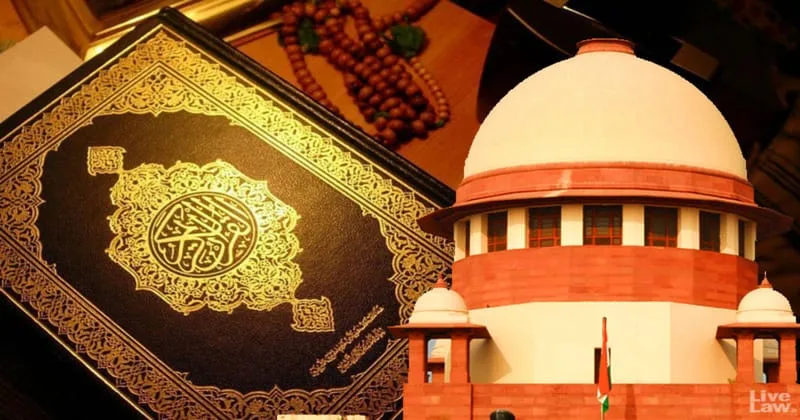
Representative image

Representative image

FacebookTwitterWhatsAppTelegramEmail

New Delhi: In a recent development, the Supreme Court of India highlighted a long-standing legal anomaly regarding land gifts in the country. When a Hindu citizen gifts land to another Hindu, the recipient is legally required to register the transaction and pay stamp duty to the government under Section 123 of the Transfer of Property (TP) Act, 1882. In contrast, a similar transaction between Muslims, under Section 129 of the TP Act, allows a Muslim donor to gift land to another Muslim without registration or payment of stamp duty, in line with Islamic law (Hiba).

Holy Shit😱

I was not aware that such law also exists in India

If Hindu A gifts his land to Hindu B then Hindu B needs to register it and to pay stamp duty to govt (Section 123, TP Act)

But if Muslim A gifts his land to Muslim B then Muslim B doesn't need to register it or pay… pic.twitter.com/HngDjQ0od9

— STAR Boy TARUN (@Starboy2079) March 13, 2026

This law, dating back to British India in 1882, created different rules for different communities—a clear reflection of the colonial policy of “divide and rule.” After independence, the Congress government retained these provisions, allowing the legal distinction to persist for over 140 years.

When a petitioner brought this issue before the Supreme Court seeking uniformity, the Court advised approaching the Union government for amending the law. The suggestion underscores that this is a matter of legislative reform, not judicial discretion.

Also Read: Viral Kumbh Mela star Monalisa marries model Farman Khan in Kerala, sparks debate over eight-year age difference

This legal inconsistency violates the principles of equality and uniformity under the Constitution. While Hindu citizens are taxed and regulated when gifting property, Muslim citizens enjoy exemptions, creating an unequal legal framework based solely on religion. Many view this as a relic of colonial times that continues to perpetuate inequality.

The matter raises serious questions for all political parties in India: why has such a discriminatory provision survived for so long? Law experts suggest that amending the TP Act to ensure that all citizens, irrespective of religion, follow the same rules for land gifts and registration would be a step toward legal equality. Until then, this British-era distinction continues to affect millions of property transactions across the country, often leading to legal ambiguities and debates.


Topics: British Colonial LawLand RegistrationSupreme CourtUniform Civil CodeTransfer of Property ActHindu Land LawMuslim Land LawHiba
ShareTweetSendShareSend
✮ Subscribe Organiser YouTube Channel. ✮
✮ Join Organiser's WhatsApp channel for Nationalist views beyond the news. ✮
Previous News

Iran claims major US setbacks in Operation Epic Fury, Washington denies as conflicting war narratives intensify

Next News

Chhattisgarh: Cabinet approves Freedom of Religion Bill 2026, imposes strict punishments for fraudulent conversions

Related News

BJP Keralam vice president Adv. Shon George (Left)

Keralam: BJP’s Shon George says Supreme Court order vindicates party’s stand on Kerala Waqf Board

Supreme Court on Ram Mandir Fund Case: 'Don't Politicise It'

Ram Mandir Donation Case: Supreme Court rejects political colouring of a criminal case 

Andhra Pradesh-based pastor Chinthada Anand (Left)

Supreme Court dismisses Pastor Anand’s review petition; setback for crypto-Christian SC status claims

CM Dhami Announces Special Agniveer Cell, 10% Reservation in State Jobs for Retired Agniveers

Uttarakhand: CM Dhami unveils first dedicated Agniveer cell, homestay grants and job benefits for ex-servicemen

The Supreme Court has directed the Tamil Nadu government to consult the Union government on setting up Jawahar Navodaya Vidyalayas

Tamil Nadu: Supreme Court asks TVK government to consult Centre on Jawahar Navodaya Vidyalayas

Patiala House Court, remanded law students Prabal Pratap Singh and Chander Bhan to 14 days' judicial custody

Delhi Court sends two law students to 14-day judicial custody over Supreme Court disturbance case

Load More

Latest News

Sonam Wangchuk breaks his fast in front of Union Ministers JP Nadda and Dr Jitendra Singh

Sonam Wangchuk accepts the govt assurance, breaks his fast at Medanta in the presence of JP Nadda and Dr Jitender Singh

RSS leader Sreenivasan (File Photo)

Murder case of RSS karyakarta Sreenivasan: Key absconder PFI leader Muhammadali KP arrested on arrival from Riyadh

Hindu marriage is a sacred sacrament, not a contract; loss of interest is no ground for divorce: Karnataka High Court

CJP violence in Delhi should be probed by CBI: Bharatiya Vichara Kendram

India's new MPMS aims to make the country a global mobile manufacturing leader by combining incentives, localisation and innovation

How Indian Mobile Phone Manufacturing Scheme positions New Delhi to outcompete the world’s rival manufacturing models

Chai-Pakoda Mornings to Biryani Nights: What’s Real Cost of One ‘Cockroach Protester’ & Who Funds the Feast Each Day?

Chai-Pakoda Mornings to Biriyani Nights: What’s Real Cost of One ‘Cockroach Protester’ & Who Funds the Feast Each Day?

The Ahoms developed an elaborate administrative hierarchies extending from the royal court to the village, the hill polities evolved equally sophisticated systems in which chiefs governed alongside councils and assemblies

Pre-colonial northeast | Ashtalakshmi: Where stability meets continuity

From Thumba's humble beginnings to private rocket launches, Atmanirbhar Bharat has transformed ISRO-led reforms into a thriving space ecosystem

From Thumba to the Space Economy: How Atmanirbhar Bharat is powering ISRO’s private space revolution

Vice-President CP Radhakrishnan addressing audience at IIAS virtually

Sardar Patel’s vision for unification meets reverence for motherland

Punjab must learn the lessons from its tragic past

Load More
  • Privacy
  • Terms
  • Cookie Policy
  • Refund and Cancellation
  • Delivery and Shipping

© Bharat Prakashan (Delhi) Limited.
Tech-enabled by Ananthapuri Technologies

  • Home
  • Search Organiser
  • Bharat
    • Assam
    • Bihar
    • Chhattisgarh
    • Jharkhand
    • Maharashtra
    • View All States
  • World
    • Asia
    • Africa
    • North America
    • South America
    • Europe
    • Australia
  • Editorial
  • Operation Sindoor
  • Opinion
  • Analysis
  • Defence
  • Culture
  • Sports
  • Business
  • RSS @ 100
  • Entertainment
  • More ..
    • Sci & Tech
    • Vocal4Local
    • Special Report
    • Education
    • Employment
    • Books
    • Interviews
    • Travel
    • Health
    • Politics
    • Law
    • Economy
    • Obituary
  • Subscribe Magazine
  • Read Ecopy
  • Advertise
  • Circulation
  • Careers
  • About Us
  • Contact Us
  • Policies & Terms
    • Privacy Policy
    • Cookie Policy
    • Refund and Cancellation
    • Terms of Use

© Bharat Prakashan (Delhi) Limited.
Tech-enabled by Ananthapuri Technologies