Nobody in Fort St. George planned to have a theology debate this week. And yet, here it is a speaker who thinks unborn children have more rights than the woman carrying them, a finance minister who credits the Bible for his vocabulary, and a Chief Minister who — as usual — has said absolutely nothing. In a state built on a century of loud, aggressive, unapologetic secularism, that silence is not neutral. It’s a strategy.
The growing visibility of Christian faith and references to Vatican-linked Catholic doctrine has become a subject of increasing public discussion since Christian-born Joseph Vijay assumed political leadership in Tamil Nadu. In recent developments, some members of his Cabinet have also publicly displayed Christian symbols and expressed views that appear to reflect Christian perspectives, both inside and outside the Tamil Nadu Assembly. And the latest deadliest exhibition was by Tamil Nadu Assembly Speaker J.C.D. Prabhakar on August 9.
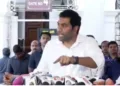
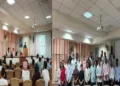
Speaking there, Prabhakar declared, “We have no right to abortion,” and said the Christian community believes abortion should never take place because every child is a gift from God. He cited infant mortality figures and a 2018 Lancet estimate of abortion numbers in India to challenge the Medical Termination of Pregnancy (MTP) Act. India’s legal framework, liberalised in 2021, treats reproductive decisions as matters of health, autonomy and circumstance. The Supreme Court has recognised a woman’s right to bodily autonomy under Article 21. A constitutional office-holder’s public call to halt abortion therefore carries particular weight.
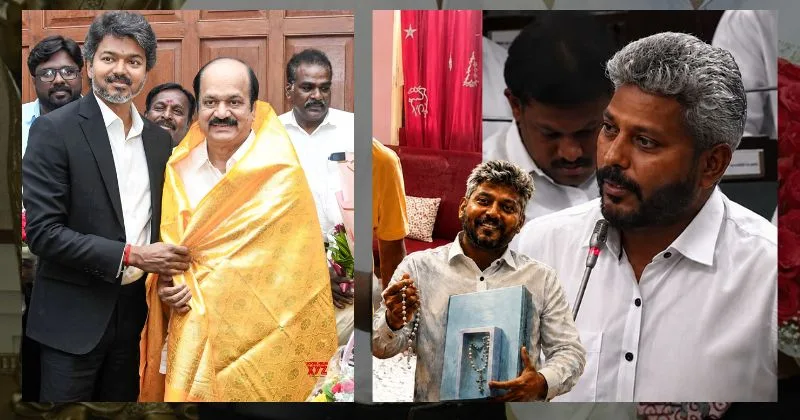
Prabhakar, whose full name is John Christian Devavaram Prabhakar and who has described his wife as an “ardent Catholic,” did not attend merely as a private believer. He appeared as Speaker of the Assembly and indicated he would raise the issue with the Chief Minister. The same action performed under a different religious banner would almost certainly have been condemned as theocratic.
TVK’s Schemes: Designed to Advance Vatican Doctrine? Thaimaaman Thanga Mothiram
Prabhakar’s direct reference to Chief Minister Joseph Vijay’s flagship scheme, Thaimaaman Thanga Mothiram — which promises a gold ring for every baby born in a government hospital — has brought renewed attention to the ideological direction of TVK, a party that has otherwise projected itself as secular.
The reference has triggered debate over whether such pro-natalist measures echo aspects of Catholic doctrine that emphasise protecting life from conception and opposing abortion, adding a new dimension to questions about the growing visibility of Christian themes in the party’s public discourse.
Rosary, ‘Amen’ & Bible: TVK Minister’s Open Christian Identity Takes Centre Stage in Tamil Nadu
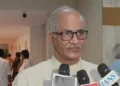
Finance Minister N. Marie Wilson’s recent Assembly remarks added another dimension to the debate. Wilson arrived with a rosary case alongside his Budget papers and began his speech by saying “Amen” and making the sign of the cross. The episode followed criticism from MDMK MLA T.M. Rajendran, who alleged grammatical and pronunciation errors in Wilson’s Tamil and accused him of switching extensively to English. Wilson responded by invoking his faith, saying Christianity had taught him “the language of love, the language of peace, the language of compassion,” and adding, “I am a born Christian.” Chief Minister Joseph Vijay has remained silent throughout.
Bigger Question: When personal faith enters the Assembly, where does individual belief end and constitutional duty begin?
Why this is Alarming for Tamil Nadu?
Vatican teaching holds that human life begins at conception and that direct abortion is a grave moral wrong — a position reaffirmed in documents such as Evangelium Vitae (1995) and the Catechism of the Catholic Church, which regard the unborn as possessing full human dignity from fertilisation and reject elective abortion under almost all circumstances.
In the United States, this doctrine has long anchored the organised pro-life movement, which combined Catholic teaching with evangelical activism to make abortion a defining culture-war issue — culminating in the overturning of Roe v. Wade, the 1973 ruling that had recognised a constitutional right to abortion. The annual March for Life, slogans like “life begins at conception” and “abortion is murder,” and the framing of abortion in theological rather than public-health terms are hallmarks of that model.
When Prabhakar endorsed the same language and said he would raise the matter with the Chief Minister, several observers noted the resemblance. They argue that importing Vatican-aligned, US-style religious framing marks a departure from Tamil Nadu’s traditional approach, which has treated abortion primarily as a matter of public health and constitutional reproductive autonomy under the MTP Act.
Joseph Vijay, TVK and Growing Convergence
None of this happens in a vacuum. This convergence of religious language and political action raises a larger question: is Vijay’s TVK beginning to import elements of America’s culture-war politics into Tamil Nadu? Some of the emerging rhetoric — particularly around abortion, the rights of the unborn, and the role of religious conviction in policymaking — bears similarities to themes long championed by the Christian Right in the United States.
Chief Minister C. Joseph Vijay — the actor who built TVK out of eighty thousand fan clubs before turning them into a political machine — was sworn in this May as the first Christian, Catholic-raised Chief Minister of Tamil Nadu— an event the Church itself called a source of pride amid what it frames as growing pressure on Christians nationally.
It is tempting to compare these developments in Tamil Nadu with the political rise of the Christian Right in the United States. The comparison is based on several developments: government officials who share the Chief Minister’s religion, church-organised rallies attended by sitting legislators, and a finance minister referring to the Bible inside the Assembly.
In the US, the Christian Right did not become politically powerful overnight. Its influence grew over decades as people sympathetic to its beliefs entered school boards, state legislatures and courts. Individually, these developments could be defended as expressions of personal faith. But when viewed together, they became part of a larger political movement.
Tamil Nadu is nowhere near that stage yet. A Speaker attending a rally and a minister referring to the Bible do not by themselves constitute a political movement. However, critics argue that such highly visible actions could be early signs of a broader shift. That is why they are raising questions now, rather than waiting for religiously influenced legislation to emerge.