Majuli: From the river island of Majuli to the corridors of Rashtrapati Bhavan, Riti Doley has woven her way into the national spotlight, turning generations-old craftsmanship into a story of resilience, dignity and determination.
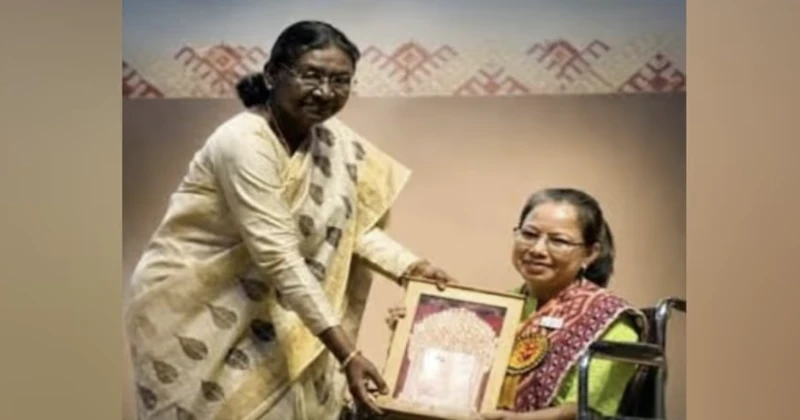
Doley, a weaver from Majuli and a person with disabilities, has received the prestigious National Handloom Award 2025 from the Government of India for her contribution to India’s traditional textile heritage. She was honoured by President Droupadi Murmu in New Delhi on August 7, National Handloom Day, in recognition of her exceptional craftsmanship.
What makes Doley’s achievement particularly remarkable is the work for which she received the honour a silk Gero woven entirely by her own hands.
Her national recognition marks a significant moment not only for her personally, but also for the traditional weaving communities of Assam, whose craftsmanship has been sustained through generations despite the challenges facing the handloom sector.
For Doley, weaving is far more than an inherited occupation. It has become a means of self-reliance, dignity and empowerment.
Her journey demonstrates how traditional skills can provide meaningful opportunities even in the face of physical challenges. Through patience and years of dedicated craftsmanship, she has continued to preserve the distinctive weaving traditions of Majuli while taking Assam’s textile heritage to a national platform.
The silk Gero that earned her the award reflects the painstaking skill required of traditional weavers. Every thread represents hours of labour, technical knowledge and an intimate understanding of the craft passed down through generations.
Her success has consequently become a source of pride for the wider artisan community in Majuli. The presentation of the National Handloom Award on National Handloom Day added further significance to Doley’s accomplishment.
The award recognises artisans whose exceptional work contributes to the preservation and advancement of India’s handloom traditions. For Assam, Doley’s recognition serves as a reminder of the extraordinary cultural wealth embedded in the state’s traditional textiles.
Assam’s handloom traditions are deeply connected to the cultural identity of its communities. In Majuli, weaving remains an important part of the island’s social and cultural fabric, with artisans preserving techniques and designs through generations.
Doley’s achievement places that heritage firmly in the national conversation. Following her recognition in New Delhi, Majuli Deputy Commissioner Ratul Chandra Pathak visited Doley at her residence and conveyed congratulations and best wishes on behalf of the district administration.
The visit stated the significance of the honour for Majuli, where Doley’s success has been celebrated as a collective achievement.