New Delhi: The Jawaharlal Nehru University (JNU) campus is currently witnessing a systematic destruction of the academic future of thousands of students in order to protect the interests of an extremist political minority group in the campus. The unfolding developments have created an atmosphere of deep tension and uncertainty across the university, with academic activities severely disrupted and normal campus life brought to a near standstill.
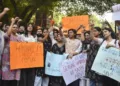
According to reports, the incidents are being led by left extremist organisations such as SFI, AISA, etc. These groups are accused of forcibly closing various schools on the campus, preventing both teachers and students from attending classes, and unleashing violence in the process. What began as a protest has now escalated into a prolonged standoff, affecting not only the immediate participants but also thousands of ordinary students who wish to continue their studies without interruption.
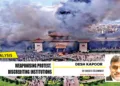
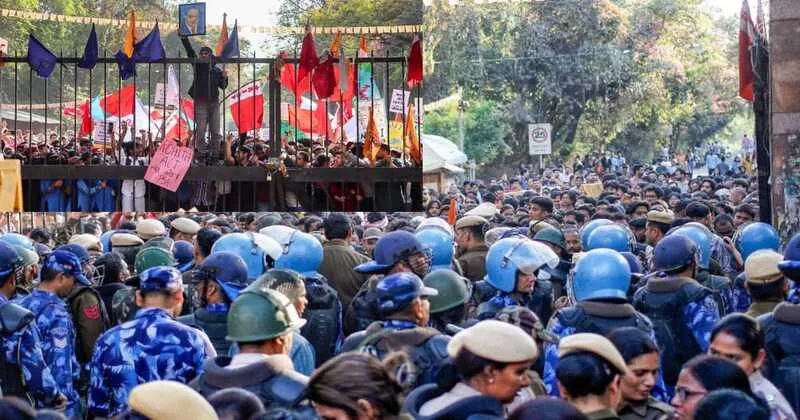
In response to the deteriorating situation, more than 200 police personnel and bomb squads have been deployed on and around the campus to ensure the safety of students and staff. On February 26, a large police force was deployed following a march by left extremist organisations to the main gate in the afternoon. The presence of such heavy security underlines the seriousness of the situation and the administration’s concern over possible escalation.
Police sources indicate that left -Islamists extremist groups from campuses such as Jamia, Delhi University, and Aligarh have also joined the protest. Following these developments, checks were tightened at all four gates of the campus, and public roads surrounding the university were closed. These measures, while intended to maintain law and order, have caused significant inconvenience to students, teaching and non-teaching staff, as well as civilians residing in nearby areas.
The protest has further escalated into incidents, including a march to a police station. Following the violence that took place during the protest on February 26, the police arrested 14 left-wing extremist students and sent them to judicial custody. The arrests marked a significant turning point in the ongoing agitation and signalled a tougher stance by the authorities. Those arrested include JNUSU President Aditi Mishra, Vice President Gopika, Joint Secretary Danish Ali, former president Nitish Kumar, AISA National President Neha, Rahul Raj, Neha, Manikant Patel, Gowri Kolal, Ansh Pillai, Varkey Parakkal, Ranvijay Singh, Vicky Kumar, Shyam Sasi, and Vishnu Tiwari, a freelance journalist. They were picked up from Jawaharlal Nehru University on Thursday evening after a long march and were produced before the duty magistrate at Patiala House Court at around 9 am on Friday.
Impact on campus life and ordinary students
In short, the campus has become a tense environment. The ongoing situation is pushing ordinary students, as well as canteen and daba operators and other service providers on campus, into a crisis. Many students who are not part of the protest claim that their academic routines have been severely disrupted, and they are finding it difficult to focus on their studies amidst constant uncertainty. Canteen and daba operators have voiced serious concerns about the economic impact of the continuing strike. “We pay the salaries of the cooking workers and meet other expenses with our monthly income. If such strikes and shut down by the organizations continues, it will put us in a crisis,” said one such operator on campus. Their livelihood depends entirely on the regular functioning of the university, and prolonged closure threatens their ability to sustain their operations.
Students and teachers have also expressed apprehension that the learning environment on campus is gradually being lost. Many claim that it has become difficult to even sit outside the schools and carry out academic work due to the charged atmosphere. Academic discussions, library use, and research activities have all been adversely affected. Foreign students, too, have expressed surprise at the intensity and scale of the agitation. For many of them, JNU represents a premier academic institution in India known for intellectual debate and scholarly engagement. The present unrest has come as a shock, raising concerns about safety and stability within the campus.
Library vandalism, inquiry and expulsion of five leaders
The present tensions are also linked to earlier incidents on campus. According to official orders of the university, on November 21, 2025, students dismantled the facial recognition-based access control system installed in the library as part of campus security and digitisation measures. Public property worth approximately Rs 20 lakh was destroyed, and the system was damaged beyond immediate repair. The investigation revealed that the left extremist students cut electrical wires with scissors, dismantled protective panels, and forcibly removed cameras from the gates. The vandalism was not limited to property damage; two women security personnel were reportedly injured while attempting to prevent the destruction.
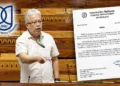
Following complaints filed by the acting librarian and the chief security officer, the university constituted a procedural inquiry committee to examine the matter. After reviewing evidence, statements, and security reports, the committee concluded that the students’ actions amounted to serious misconduct under the JNU disciplinary code. Based on these findings, the students involved were expelled. Those expelled left extremists include JNUSU president Aditi Mishra, vice president Gopika Babu, general secretary Sunil Yadav, joint secretary Danish Ali and former JNUSU president Nitish Kumar
The investigation report observed that the vandalism was not spontaneous but pre-planned. According to the committee, the students came equipped with tools specifically designed to break the equipment. The act was classified as involving violence, coercion, intimidation, and deliberate destruction of university property. On the basis of the findings, JNU ordered the expulsion of five students for the winter and monsoon semesters of 2026. The vandalism has been widely criticised as a disgrace to the country, particularly given that it occurred in one of India’s premier universities. Common students and teachers argue that such barbaric acts undermine the institution’s reputation and the broader ideals of academic freedom and responsibility.
Alleged personal interest of leaders
The ongoing unrest has also given rise to allegations regarding the personal and political interests of certain leaders. Many students pointed out that left extremist organisations and leaders have been operating in an increasingly violent manner since the 2025 JNUSU elections. Some point to the timing of the Bihar elections and the upcoming elections in Kerala, Tamil Nadu and West Bengal as factors contributing to the escalation of tensions.
The main allegation is that certain leaders are engaging in political manoeuvring aimed at securing seats in assembly elections. Former JNU student Mohammed Muhsin has been a member of the Kerala Legislative Assembly since 2016. Kanhaiya Kumar, who was once a prominent left extremist leader at JNU, is today a national leader of the Congress. Many others associated with student politics have gone on to occupy significant political positions.
Critics contend that, in order to protect such interests, organisations are using the future of other students as leverage. It is further alleged that there is a left strategy of permanently keeping students belonging to categories, including SC and ST, entangled in police cases, thereby damaging their academic and professional futures.
The broader question raised by many is whether it is justifiable for left extremist students to destroy public property in a leading university in India. India had a long tradition of mobilising millions of people to protest against British imperialism, and its legacy is closely associated with democratic engagement and intellectual dissent. However, many argue that while the right to protest is fundamental, it must be exercised responsibly. Those critical of the current agitation emphasise that the freedom to protest cannot come at the cost of others’ freedom of education, movement, and employment. The ongoing turmoil has disrupted academic life, strained campus resources, and created anxiety among students, staff, and service providers alike. As the situation continues to unfold, the future of the campus remains uncertain. What is clear, however, is that the present crisis has deeply affected the academic environment of JNU, raising serious questions about the balance between protest, discipline, and the preservation of institutional integrity.