NEW DELHI: A controversy surrounding AISA leader Neha Bora has brought questions of women’s dignity, press freedom and political accountability into focus after journalist Ruchi Tiwari accused Bora of calling for her to be stripped in public during a protest. The issue has gained renewed attention amid the circulation of videos on social media and reports of disruption at a press conference involving Bora and Cockroach Janta Party founder Abhijeet Dipke on October 15.
Reminder: Neha Bora is the one who wanted women she disagreed with stripped naked & paraded. pic.twitter.com/hyCqEqpbOt
— Abhijit Iyer-Mitra (@Iyervval) October 15, 2026
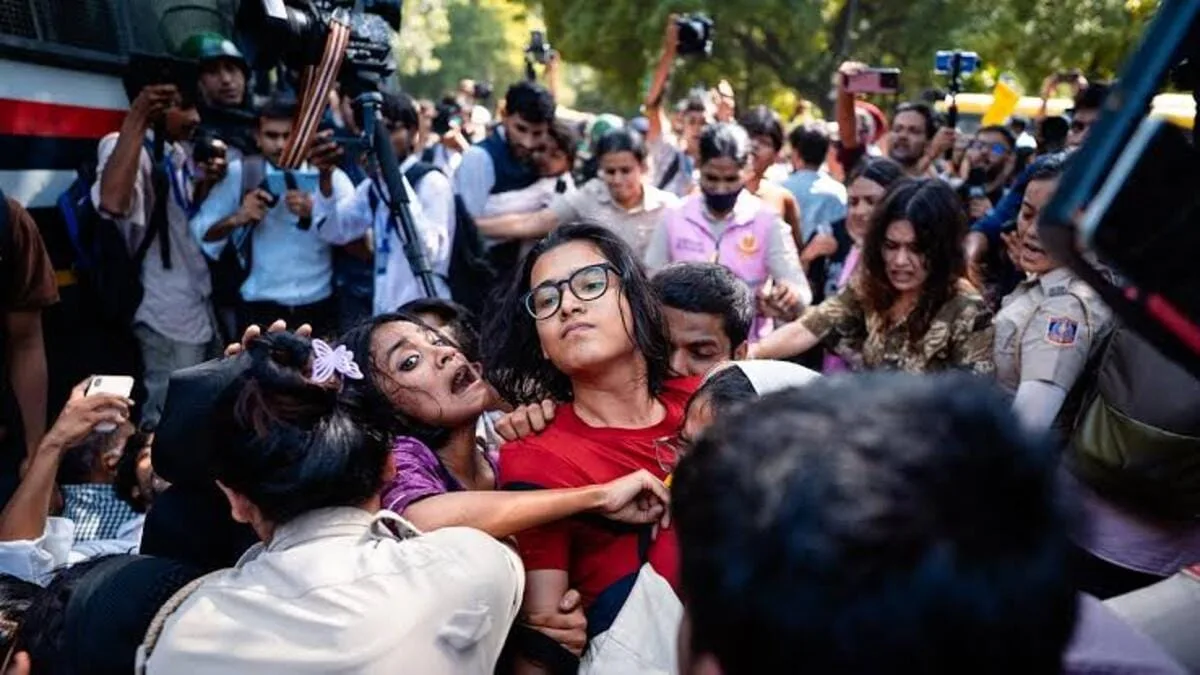
According to a report, journalist Ruchi Tiwari accused Neha Bora of encouraging a mob that assaulted her and of calling for her clothes to be removed during a protest. Tiwari also described being dragged around and having her clothes pulled during the incident. This raises an important question about how political activists treat women who disagree with them. If a woman journalist was subjected to intimidation and threats of public humiliation for her views or reporting, the incident would represent a serious attack on her dignity and professional freedom. The video is also gaining traction online, with Neha Bora allegedly heard telling the mob assaulting the journalist in public to “strip her and parade her naked.”
No political disagreement can justify threatening to strip a woman in public. Such conduct, if established, must be condemned regardless of the political identity of those involved.
Women’s dignity cannot be defended selectively
Women’s safety and dignity are not principles that can be invoked only when politically convenient. Every woman, whether she is a journalist, an activist, a protester or a political opponent, deserves protection from physical intimidation, sexual harassment and public humiliation.
The controversy surrounding Bora raises a question of consistency. Those who speak about women’s rights and bodily autonomy must uphold the same principles when dealing with ideological opponents. A woman journalist should not be subjected to humiliation simply because her questions, reporting or political position are unwelcome.
The controversy has also drawn attention to the treatment of journalists at political events. A report said a joint press conference involving Bora and Dipke in New Delhi on October 15 descended into chaos, with reports of journalists facing harassment and disruptive behaviour.
Journalists must be able to question political leaders and activists without fear of assault, intimidation or retaliation. Press conferences are public-facing forums in which difficult questions are part of the profession. Disagreement with a journalist’s reporting is never a justification for threatening or physically confronting them.
Any assault on a journalist should be investigated impartially, and responsibility should be determined on the basis of evidence rather than political loyalties.
The controversy surrounding Neha Bora underscores the need for consistent standards in public life. Women’s dignity cannot become a political slogan that is defended in one situation and disregarded in another.
Neha Bora is a student activist and the national president of the All-India Students’ Association (AISA), a left-wing student organisation affiliated with the Communist Party of India (Marxist–Leninist) Liberation. She is pursuing a PhD at Jawaharlal Nehru University (JNU).