Who was Jam Sahib, the Indian king who sheltered Jewish refugees during the holocaust?
October 4, 2026
  • Read Ecopy
  • Circulation
  • Advertise
  • Careers
  • About Us
  • Contact Us
Android AppiPhone AppArattai
Organiser
  • ‌
  • Bharat
    • Assam
    • Bihar
    • Chhattisgarh
    • Jharkhand
    • Maharashtra
    • View All States
  • World
    • Asia
    • Europe
    • North America
    • South America
    • Africa
    • Australia
  • Editorial
  • International
  • Opinion
  • RSS @ 100
  • More
    • World Hindu Congress 2026
    • Op Sindoor
    • Analysis
    • Sports
    • Defence
    • Politics
    • Business
    • Economy
    • Culture
    • Special Report
    • Sci & Tech
    • Entertainment
    • G20
    • Azadi Ka Amrit Mahotsav
    • Vocal4Local
    • Web Stories
    • Education
    • Employment
    • Books
    • Interviews
    • Travel
    • Law
    • Health
    • Obituary
  • Subscribe
    • Subscribe Print Edition
    • Subscribe Ecopy
    • Read Ecopy
  • ‌
  • Bharat
    • Assam
    • Bihar
    • Chhattisgarh
    • Jharkhand
    • Maharashtra
    • View All States
  • World
    • Asia
    • Europe
    • North America
    • South America
    • Africa
    • Australia
  • Editorial
  • International
  • Opinion
  • RSS @ 100
  • More
    • World Hindu Congress 2026
    • Op Sindoor
    • Analysis
    • Sports
    • Defence
    • Politics
    • Business
    • Economy
    • Culture
    • Special Report
    • Sci & Tech
    • Entertainment
    • G20
    • Azadi Ka Amrit Mahotsav
    • Vocal4Local
    • Web Stories
    • Education
    • Employment
    • Books
    • Interviews
    • Travel
    • Law
    • Health
    • Obituary
  • Subscribe
    • Subscribe Print Edition
    • Subscribe Ecopy
    • Read Ecopy
Organiser
  • Home
  • Bharat
  • World
  • Operation Sindoor
  • Editorial
  • Analysis
  • Opinion
  • Culture
  • Defence
  • International Edition
  • RSS @ 100
  • Magazine
  • Read Ecopy
Home Bharat

Who was Jam Sahib, the Indian king who sheltered Jewish refugees during the holocaust?

During his address to Israel’s Parliament, Prime Minister Narendra Modi recalled a remarkable yet often overlooked chapter of history, the story of an Indian king who offered refuge to nearly 1,000 Polish Jewish children during World War II. His tribute revived global attention to an enduring symbol of India’s humanitarian legacy

Shashank Kumar DwivediShashank Kumar Dwivedi
Feb 26, 2026, 09:30 am IST
inBharat, World, Middle East, Asia
Follow on Google News
Jam Sahib, the Maharajah who Protected Polish Jewish Children

Jam Sahib, the Maharajah who Protected Polish Jewish Children

Facebook
Twitter
WhatsAppTelegramEmail

While addressing Israel’s Parliament, the Knesset, Prime Minister Narendra Modi brought back into focus a deeply moving yet relatively lesser-known episode from history, that of an Indian ruler who extended sanctuary to nearly 1,000 Polish Jewish children fleeing the devastation of World War II. His remarks renewed international attention on a powerful example of India’s long-standing humanitarian ethos.

The Prime Minister was referring to Digvijaysinhji Ranjitsinhji Jadeja, the Jam Sahib of Nawanagar (now Jamnagar in Gujarat), whose extraordinary gesture during the Holocaust continues to echo far beyond India’s borders, remembered with gratitude in Poland and honoured in Israel as a symbol of compassion in one of humanity’s darkest eras.

While addressing the Knesset during his two-day visit to Israel, Prime Minister Narendra Modi went beyond contemporary geopolitics and strategic cooperation. He reached back into the 1940s to recall a humanitarian gesture that predated formal diplomatic ties between India and Israel.

In a speech largely focused on shared democratic values, technological partnerships and counter-terror cooperation, Modi paused to recount how an Indian ruler had opened his kingdom’s doors to Jewish children fleeing Nazi persecution during World War II. The story, though not widely known in popular discourse, remains deeply embedded in Polish and Jewish collective memory.

The king he referred to was Digvijaysinhji Ranjitsinhji Jadeja, popularly known as the Jam Sahib of Nawanagar.

A haven in western India during the Holocaust

In 1942, Europe was engulfed in war. The Nazi regime’s systematic persecution of Jews had intensified, forcing thousands to flee their homes. Among them were nearly 1,000 Polish children, many of Jewish origin, who had endured displacement, hunger and uncertainty after the invasion of Poland.

After a perilous journey that took them through Soviet territories and parts of the Middle East, the children eventually arrived in India. It was at this critical juncture that Jam Sahib Digvijaysinhji intervened.

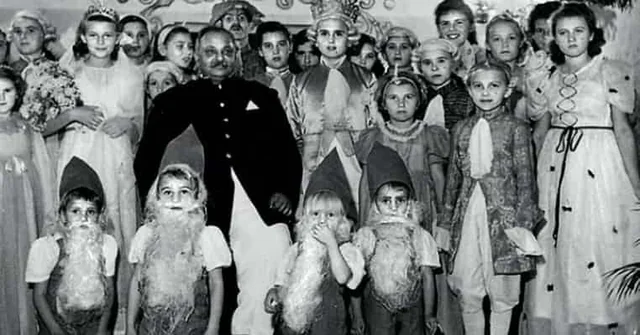
Rather than treating them as temporary refugees, he established a dedicated settlement for them at Balachadi, near Jamnagar in Gujarat. The settlement was not merely a camp; it was structured to provide food, education, healthcare and emotional security.

Historical accounts and survivor testimonies recount that the Maharaja addressed the children with words that have since become legendary: “You are no longer orphans. You are now Nawanagaris.” With this declaration, he symbolically adopted them as subjects of his princely state.

At a time when many countries had closed their borders to Jewish refugees, a small princely state in western India chose inclusion over indifference.

Personal funding and royal patronage

Historians note that much of the relief effort was funded personally by the Maharaja. Balachadi became home to the children from 1942 until the end of the war in 1945.

The Jam Sahib ensured that the children continued their education according to Polish curricula so they could reintegrate smoothly after the war. Cultural and religious freedoms were respected, and efforts were made to preserve their identity and heritage.

When World War II ended, many of the children were resettled in Poland, the United Kingdom, Australia and later Israel. Yet their connection to India endured.

Survivors would go on to refer to Digvijaysinhji as the “Good Maharaja,” a title that reflected not political power but moral courage.

A legacy honoured in Poland and Israel

In Poland, the memory of the Jam Sahib remains deeply cherished. In Warsaw, a square has been named in his honour, often referred to as the “Good Maharaja Square.” Memorials and educational institutions recount his humanitarian gesture as an example of global solidarity during one of history’s darkest chapters.

Descendants of the rescued children have visited Jamnagar over the decades to pay tribute. The bond forged in 1942 has thus transcended geography and generations.

The story is also cited in Israel as part of the broader narrative of global communities that stood by Jewish refugees during the Holocaust. While India did not have formal diplomatic relations with Israel until 1992, Jewish communities had lived in India for centuries without facing systemic anti-Semitism.

By recalling this episode in the Jerusalem, PM Modi underscored a shared moral history that predates modern strategic ties.

Why the reference matters today

India and Israel today share robust cooperation in defence, agriculture, water technology, cybersecurity and innovation. However, Modi’s mention of the Jam Sahib added a civilisational dimension to the relationship.

The Prime Minister’s reference served multiple purposes:

1. Historical Continuity – It highlighted that goodwill between Indians and Jews existed long before diplomatic formalities.
2. Civilisational Values – It reinforced India’s long-standing tradition of offering refuge to persecuted communities.
3. Moral Diplomacy – It positioned the India–Israel partnership as rooted not only in strategic interests but also in shared historical memory.

In a global context where refugee crises continue to unfold, the story of Balachadi offers a reminder of ethical leadership during turbulent times.

India’s broader refuge tradition

The Jam Sahib’s actions were not isolated from India’s broader civilisational ethos. Historically, India has hosted multiple refugee communities, including Parsis fleeing Persia, Tibetan Buddhists escaping Chinese occupation, and various minority groups seeking safety.

The Jam Sahib’s intervention during World War II thus aligns with a longer narrative of hospitality and coexistence that Modi sought to emphasise in his speech.

Importantly, the Maharaja acted in 1942, when India itself was under British colonial rule and facing internal political upheaval. Despite limited resources and wartime uncertainty, he chose to prioritise humanitarian relief.

The Balachadi settlement stands today as a reminder of that extraordinary chapter. Though the children eventually left, the emotional imprint remains strong.

For survivors and their descendants, India was not just a temporary refuge; it was a place of dignity restored. Many have spoken about the warmth and acceptance they experienced in Jamnagar.

By invoking this history in Israel’s Parliament, PM Modi effectively bridged past and present. He reminded the global audience that diplomacy is strengthened by shared memory.

In 1942, when indifference was widespread and options were few, an Indian king chose compassion.

Decades later, that decision continues to echo, linking Jamnagar to Warsaw, and Jamnagar to Jerusalem, as a testament to humanity over hatred.
Topics: Jam SahibDigvijaysinhji JadejaModi in IsraelNarendra ModiJamnagarKnessetholocaustIndia Israel Relations
Share
Tweet
SendShareSend
✮ Subscribe Organiser YouTube Channel. ✮
✮ Join Organiser's WhatsApp channel for Nationalist views beyond the news. ✮
Previous News

The Kerala Story in Bhopal? Job promise, forced conversions and alleged sex racket rock MP capital

Next News

Delhi Car Blast Probe: NIA arrests two J&K residents linked to Ansar Ghazwat-ul-Hind for supplying weapons

Related News

Gujarat High Court upheld privacy protections for PM Narendra Modi’s educational records while dismissing Arvind Kejriwal’s appeal

Gujarat High Court rejects Arvind Kejriwal’s appeal, upholds privacy protection over PM Modi’s educational records

“Nation First, Citizen First”: PM Modi urges faster exams and tech overhaul as UPSC marks 100 years

Delhi’s September air turns cleaner: AQI hits five-year low as poor air days fall

Rahul should apologise, otherwise will keep calling him ‘fraud’: BJP Keralam President Rajeev Chandrasekhar

PM Modi with Ashok Singhal

Ashok Singhal Birth Centenary: The tireless Karyakarta who took the Ram Mandir movement from streets to Ayodhya

PM Modi joins youngsters at Bhajan Clubbing in Delhi

When Gen Z meets bhakti: PM Modi fuels the ‘bhajan clubbing’ revolution in Delhi

Load More

Latest News

Madhya Pradesh Chief Minister Dr Mohan Yadav and Home Minister Amit Shah

Madhya Pradesh: Home Minister Amit Shah vows drug-free state by 2029: Hails new criminal laws as justice-oriented

Captain Smit Machchhar(Left) Film maker Santosh Pandit (Right)

‘No salute, no thanks’: Film maker Santosh Pandit questions Keralam stars’ silence over Smit Machchhar

VHP National Spokesperson Vinod Bansal condemns attack on Ohio Hindu Mandir

US: Vishwa Hindu Parishad condemns attack on Ohio Hindu Mandir; Vindo Bansal seeks action & security for the community

Captain Smit Machchhar and Israel Prime Minister Benjamin Netanyahu

Flydubai Terror Attack: PM Netanyahu speaks to Captain Smit; Invites PM Modi & Indian pilot for Israel Independence Day

Chenai, Dhanda after winning mixed team trap gold

Japan Asian Games 2026 | ‘Never, never, never give up’: Chenai, Dhanda stress power of self-belief

Choudhri obtained a Talaq divorce in Pakistan without Azhar’s knowledge; the Texas Supreme Court later rejected its recognition over lack of notice and due process

Secret Sharia Talaq Divorce in US: Texas Supreme court rejects divorce over lack of notice, upholds wife’s due process

ABVP demands Ashoka Chakra for Captain Smit Machchhar

ABVP Office-Bearers Meeting in Itanagar: Demands Ashoka Chakra for Captain Smit Machchhar for his exemplary courage

The Peshmerga Forces: How Iraqi Kurdistan is building a stronger security apparatus!

The Crown Has Changed, But Not the Mindset!

Rashtra Sevika Samiti lauds Captain Smit Machchhar’s valour when there was a terror attack on Flydubai Aircraft

Rashtra Sevika Samiti hails Captain Smit Machchhar’s courage as an embodiment of Bharatiya sanskars & dharma

Load More
  • Privacy
  • Terms
  • Cookie Policy
  • Refund and Cancellation
  • Delivery and Shipping

© Bharat Prakashan (Delhi) Limited.
Tech-enabled by Ananthapuri Technologies

  • Home
  • Search Organiser
  • Bharat
    • Assam
    • Bihar
    • Chhattisgarh
    • Jharkhand
    • Maharashtra
    • View All States
  • World
    • Asia
    • Africa
    • North America
    • South America
    • Europe
    • Australia
  • Editorial
  • Operation Sindoor
  • Opinion
  • Analysis
  • Defence
  • Culture
  • Sports
  • Business
  • RSS @ 100
  • Entertainment
  • More ..
    • Sci & Tech
    • Vocal4Local
    • Special Report
    • Education
    • Employment
    • Books
    • Interviews
    • Travel
    • Health
    • Politics
    • Law
    • Economy
    • Obituary
  • Subscribe Magazine
  • Read Ecopy
  • Advertise
  • Circulation
  • Careers
  • About Us
  • Contact Us
  • Policies & Terms
    • Privacy Policy
    • Cookie Policy
    • Refund and Cancellation
    • Terms of Use

© Bharat Prakashan (Delhi) Limited.
Tech-enabled by Ananthapuri Technologies