Who was Jam Sahib, the Indian king who sheltered Jewish refugees during the holocaust?
June 24, 2026
  • Read Ecopy
  • Circulation
  • Advertise
  • Careers
  • About Us
  • Contact Us
Android AppiPhone AppArattai
Organiser
  • ‌
  • Bharat
    • Assam
    • Bihar
    • Chhattisgarh
    • Jharkhand
    • Maharashtra
    • View All States
  • World
    • Asia
    • Europe
    • North America
    • South America
    • Africa
    • Australia
  • Editorial
  • International
  • Opinion
  • RSS @ 100
  • More
    • Op Sindoor
    • Analysis
    • Sports
    • Defence
    • Politics
    • Business
    • Economy
    • Culture
    • Special Report
    • Sci & Tech
    • Entertainment
    • G20
    • Azadi Ka Amrit Mahotsav
    • Vocal4Local
    • Web Stories
    • Education
    • Employment
    • Books
    • Interviews
    • Travel
    • Law
    • Health
    • Obituary
  • Subscribe
    • Subscribe Print Edition
    • Subscribe Ecopy
    • Read Ecopy
  • ‌
  • Bharat
    • Assam
    • Bihar
    • Chhattisgarh
    • Jharkhand
    • Maharashtra
    • View All States
  • World
    • Asia
    • Europe
    • North America
    • South America
    • Africa
    • Australia
  • Editorial
  • International
  • Opinion
  • RSS @ 100
  • More
    • Op Sindoor
    • Analysis
    • Sports
    • Defence
    • Politics
    • Business
    • Economy
    • Culture
    • Special Report
    • Sci & Tech
    • Entertainment
    • G20
    • Azadi Ka Amrit Mahotsav
    • Vocal4Local
    • Web Stories
    • Education
    • Employment
    • Books
    • Interviews
    • Travel
    • Law
    • Health
    • Obituary
  • Subscribe
    • Subscribe Print Edition
    • Subscribe Ecopy
    • Read Ecopy
Organiser
  • Home
  • Bharat
  • World
  • Operation Sindoor
  • Editorial
  • Analysis
  • Opinion
  • Culture
  • Defence
  • International Edition
  • RSS @ 100
  • Magazine
  • Read Ecopy
Home Bharat

Who was Jam Sahib, the Indian king who sheltered Jewish refugees during the holocaust?

During his address to Israel’s Parliament, Prime Minister Narendra Modi recalled a remarkable yet often overlooked chapter of history, the story of an Indian king who offered refuge to nearly 1,000 Polish Jewish children during World War II. His tribute revived global attention to an enduring symbol of India’s humanitarian legacy

Shashank Kumar DwivediShashank Kumar Dwivedi
Feb 26, 2026, 09:30 am IST
in Bharat, World, Middle East, Asia
Follow on Google News
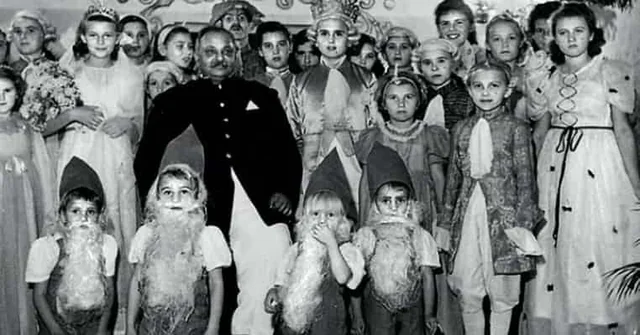
Jam Sahib, the Maharajah who Protected Polish Jewish Children

Jam Sahib, the Maharajah who Protected Polish Jewish Children

FacebookTwitterWhatsAppTelegramEmail

While addressing Israel’s Parliament, the Knesset, Prime Minister Narendra Modi brought back into focus a deeply moving yet relatively lesser-known episode from history, that of an Indian ruler who extended sanctuary to nearly 1,000 Polish Jewish children fleeing the devastation of World War II. His remarks renewed international attention on a powerful example of India’s long-standing humanitarian ethos.

The Prime Minister was referring to Digvijaysinhji Ranjitsinhji Jadeja, the Jam Sahib of Nawanagar (now Jamnagar in Gujarat), whose extraordinary gesture during the Holocaust continues to echo far beyond India’s borders, remembered with gratitude in Poland and honoured in Israel as a symbol of compassion in one of humanity’s darkest eras.

While addressing the Knesset during his two-day visit to Israel, Prime Minister Narendra Modi went beyond contemporary geopolitics and strategic cooperation. He reached back into the 1940s to recall a humanitarian gesture that predated formal diplomatic ties between India and Israel.

In a speech largely focused on shared democratic values, technological partnerships and counter-terror cooperation, Modi paused to recount how an Indian ruler had opened his kingdom’s doors to Jewish children fleeing Nazi persecution during World War II. The story, though not widely known in popular discourse, remains deeply embedded in Polish and Jewish collective memory.

The king he referred to was Digvijaysinhji Ranjitsinhji Jadeja, popularly known as the Jam Sahib of Nawanagar.

A haven in western India during the Holocaust

In 1942, Europe was engulfed in war. The Nazi regime’s systematic persecution of Jews had intensified, forcing thousands to flee their homes. Among them were nearly 1,000 Polish children, many of Jewish origin, who had endured displacement, hunger and uncertainty after the invasion of Poland.

After a perilous journey that took them through Soviet territories and parts of the Middle East, the children eventually arrived in India. It was at this critical juncture that Jam Sahib Digvijaysinhji intervened.

Rather than treating them as temporary refugees, he established a dedicated settlement for them at Balachadi, near Jamnagar in Gujarat. The settlement was not merely a camp; it was structured to provide food, education, healthcare and emotional security.

Historical accounts and survivor testimonies recount that the Maharaja addressed the children with words that have since become legendary: “You are no longer orphans. You are now Nawanagaris.” With this declaration, he symbolically adopted them as subjects of his princely state.

At a time when many countries had closed their borders to Jewish refugees, a small princely state in western India chose inclusion over indifference.

Personal funding and royal patronage

Historians note that much of the relief effort was funded personally by the Maharaja. Balachadi became home to the children from 1942 until the end of the war in 1945.

The Jam Sahib ensured that the children continued their education according to Polish curricula so they could reintegrate smoothly after the war. Cultural and religious freedoms were respected, and efforts were made to preserve their identity and heritage.

When World War II ended, many of the children were resettled in Poland, the United Kingdom, Australia and later Israel. Yet their connection to India endured.

Survivors would go on to refer to Digvijaysinhji as the “Good Maharaja,” a title that reflected not political power but moral courage.

A legacy honoured in Poland and Israel

In Poland, the memory of the Jam Sahib remains deeply cherished. In Warsaw, a square has been named in his honour, often referred to as the “Good Maharaja Square.” Memorials and educational institutions recount his humanitarian gesture as an example of global solidarity during one of history’s darkest chapters.

Descendants of the rescued children have visited Jamnagar over the decades to pay tribute. The bond forged in 1942 has thus transcended geography and generations.

The story is also cited in Israel as part of the broader narrative of global communities that stood by Jewish refugees during the Holocaust. While India did not have formal diplomatic relations with Israel until 1992, Jewish communities had lived in India for centuries without facing systemic anti-Semitism.

By recalling this episode in the Jerusalem, PM Modi underscored a shared moral history that predates modern strategic ties.

Why the reference matters today

India and Israel today share robust cooperation in defence, agriculture, water technology, cybersecurity and innovation. However, Modi’s mention of the Jam Sahib added a civilisational dimension to the relationship.

The Prime Minister’s reference served multiple purposes:

1. Historical Continuity – It highlighted that goodwill between Indians and Jews existed long before diplomatic formalities.
2. Civilisational Values – It reinforced India’s long-standing tradition of offering refuge to persecuted communities.
3. Moral Diplomacy – It positioned the India–Israel partnership as rooted not only in strategic interests but also in shared historical memory.

In a global context where refugee crises continue to unfold, the story of Balachadi offers a reminder of ethical leadership during turbulent times.

India’s broader refuge tradition

The Jam Sahib’s actions were not isolated from India’s broader civilisational ethos. Historically, India has hosted multiple refugee communities, including Parsis fleeing Persia, Tibetan Buddhists escaping Chinese occupation, and various minority groups seeking safety.

The Jam Sahib’s intervention during World War II thus aligns with a longer narrative of hospitality and coexistence that Modi sought to emphasise in his speech.

Importantly, the Maharaja acted in 1942, when India itself was under British colonial rule and facing internal political upheaval. Despite limited resources and wartime uncertainty, he chose to prioritise humanitarian relief.

The Balachadi settlement stands today as a reminder of that extraordinary chapter. Though the children eventually left, the emotional imprint remains strong.

For survivors and their descendants, India was not just a temporary refuge; it was a place of dignity restored. Many have spoken about the warmth and acceptance they experienced in Jamnagar.

By invoking this history in Israel’s Parliament, PM Modi effectively bridged past and present. He reminded the global audience that diplomacy is strengthened by shared memory.

In 1942, when indifference was widespread and options were few, an Indian king chose compassion.

Decades later, that decision continues to echo, linking Jamnagar to Warsaw, and Jamnagar to Jerusalem, as a testament to humanity over hatred.

Topics: KnessetholocaustIndia Israel RelationsJam SahibDigvijaysinhji JadejaModi in IsraelNarendra ModiJamnagar
ShareTweetSendShareSend
✮ Subscribe Organiser YouTube Channel. ✮
✮ Join Organiser's WhatsApp channel for Nationalist views beyond the news. ✮
Previous News

The Kerala Story in Bhopal? Job promise, forced conversions and alleged sex racket rock MP capital

Next News

Delhi Car Blast Probe: NIA arrests two J&K residents linked to Ansar Ghazwat-ul-Hind for supplying weapons

Related News

Israel-Iran crisis has highlighted not only shifting dynamics of West Asia but also growing confidence of India's foreign policy

India, Israel and the rise of strategic autonomy in an era of global geopolitical realignment

Andhra Pradesh Minister and TDP National General Secretary Nara Lokesh

Nara Lokesh dismisses rumours of TDP sabotaging Modi government, reaffirms unconditional NDA support

Delhi Chief Minister Rekha Gupta paid tribute to Bharatiya Jana Sangh founder Syama Prasad Mookerjee on his death anniversary

Article 370 abrogation was the greatest tribute to Syama Prasad Mookerjee: Delhi CM Rekha Gupta

A representative image

Organic manure adoption surges 3.5 times in Kharif 2026 as India builds fertiliser buffer against global turmoil

Prime Minister Narendra Modi and French President Emmanuel Macron

India-France 114-Rafale Deal: How New Delhi is turning defence procurement into a Make-in-India aerospace revolution

India’s first made-in-India C-295 aircraft marks a shift from state control to nation-building through public-private partnership

From Nationalisation to Nation Building: The difference between socialism and integral humanism

Load More

Latest News

President Droupadi Murmu confers the Padma Shri on former civil servant R.V.S. Mani on June 23, 2026.

Former MHA official RVS Mani honoured with Padma Shri for contributions to internal security

Tamil Nadu: Temple funds only for temple property; TVK govt concedes before Madras High Court

Keralam’s former Industries Secretary, Mohammed Haneesh IAS (Right Side)

Keralam Cashew Scam: Former Industries Secretary Md Haneesh apologises before High Court after contempt proceedings

Tamil Nadu: Assembly Speaker directs all bureaucrats to strictly follow warrant of precedence after Mayor-MLA row

Kamakhya Mandir

Kamakhya Mandir’s Ambubachi Mela: The ancient tradition that honours the menstruation of mother Earth

Amazon in dock for mocking Hindu Gods

Amazon File: From Ganesha to Aryabhata-Has Amazon India become a platform for Anti-Hindu narratives?

The West Bengal Budget 2026–27 aims to drive growth through infrastructure, industry, innovation and welfare

Reimagining Bengal: How the West Bengal Budget 2026–27 seeks to balance growth, welfare & economic transformation

Pratiraksha is Gujarat Police's Aadhaar-based verification platform designed to identify illegal workers and prevent identity fraud in industrial sectors

Pratiraksha: How Gujarat police uses Aadhaar verification to secure industrial workforce against identity fraud

Israel-Iran crisis has highlighted not only shifting dynamics of West Asia but also growing confidence of India's foreign policy

India, Israel and the rise of strategic autonomy in an era of global geopolitical realignment

Saleem and Jaleel arrested in forced religious conversion case

Karnataka Conversion Case: Forced conversion of Hindu woman and minor son sparks outrage; Saleem and Jaleel arrested

Load More
  • Privacy
  • Terms
  • Cookie Policy
  • Refund and Cancellation
  • Delivery and Shipping

© Bharat Prakashan (Delhi) Limited.
Tech-enabled by Ananthapuri Technologies

  • Home
  • Search Organiser
  • Bharat
    • Assam
    • Bihar
    • Chhattisgarh
    • Jharkhand
    • Maharashtra
    • View All States
  • World
    • Asia
    • Africa
    • North America
    • South America
    • Europe
    • Australia
  • Editorial
  • Operation Sindoor
  • Opinion
  • Analysis
  • Defence
  • Culture
  • Sports
  • Business
  • RSS @ 100
  • Entertainment
  • More ..
    • Sci & Tech
    • Vocal4Local
    • Special Report
    • Education
    • Employment
    • Books
    • Interviews
    • Travel
    • Health
    • Politics
    • Law
    • Economy
    • Obituary
  • Subscribe Magazine
  • Read Ecopy
  • Advertise
  • Circulation
  • Careers
  • About Us
  • Contact Us
  • Policies & Terms
    • Privacy Policy
    • Cookie Policy
    • Refund and Cancellation
    • Terms of Use

© Bharat Prakashan (Delhi) Limited.
Tech-enabled by Ananthapuri Technologies