The 1946 rebellion of Bharatiya soldiers across the three Armed Forces – the Royal Indian Air Force, Royal Navy and Royal Army – against British rule is considered the last battle of our Independence. The British had ruled Bharat for around two centuries and had overcome the armed rebellion of 1857, the Non-Cooperation Movement of 1920-22, and the Quit India Movement of 1942-43, solely on the strength and loyalty of the Armed Forces, which mostly comprised Indian soldiers. Consequently, they became scared to stay any longer in Bharat after this revolt of the Armed Forces in 1946.
It was only in the aftermath of this rebellion of Bharatiya soldiers – in the Royal Indian Air Force from January 22, 1946, in the Royal Indian Navy from February 18, 1946, and in the Royal Indian Army from February 26, 1946, – that they decided to leave Bharat. They reached this decision in 1946 and soon announced in the British Parliament on February 20th, 1947, that they would free India by June 30, 1948. However, they soon realised that the Bharatiya soldiers in the three forces were completely disobeying the British establishment and British officers. Thus, they would not be able to stay even until June 30, 1948.
Within three and a half months of that first declaration, on June 3, 1947, Governor-General Mountbatten preponed the date and announced the departure from Bharat for the midnight of August 14/15, 1947. The British were so intimidated by the armed rebellion that they decided to leave even before August 17, 1947, when the Radcliffe line was to be notified to declare which districts of undivided Bharat would go to Bharat and which would go to Pakistan.
The revolt in the Royal Air Force of 1946 was a series of demonstrations and strikes involving thousands of Bharatiya airmen at several dozen Royal Indian Air Force stations across the entire Indian subcontinent, beginning on January 22, 1946
Regarding the British Prime Minister’s original proposal of freeing India by June 30, 1948, Chakravarti Rajagopalachari had commented that they would only be able to transfer power if they were left with any power at all by that date.
The British Prime Minister Clement Attlee was equally apprehensive that power might slip from British hands after mid-1947 as a result of the rebellion and disobedience of the three Armed Forces along with the police constabulary. It appeared quite apparent that the Azad Hind Government might assume power in the aftermath of the armed rebellion, as the soldiers were agitating for the Indian National Army. Scared of losing power in India due to the rebellion, Attlee contacted Krishna Menon – a Leftist in the Congress and a member of the British Labour Party – to facilitate a smooth transfer of power through a negotiated settlement. Menon then consulted Nehru, who in turn advised changing the Governor-General. He suggested his old friend Mountbatten’s name for the position.
Mountbatten, on assuming the role of Governor-General, though reluctantly, preponed the date of Independence and declared on June 3rd, 1947, that India would be given freedom on the night of August 14/15, 1947. He did not find it practically possible to stay in India even for a day after that midnight, nor to wait until the Radcliffe line was notified on August 17. The newly independent countries were created by August 14/15, but no one knew on that date which districts of undivided Bharat would go to Pakistan and which would remain in India. Even Hindu-majority districts, like the Chittagong Hill district with a 97.50 per cent Hindu population and Khulna with a 52 per cent Hindu population, were given to East Pakistan. None of the stalwarts like Mahatma Gandhi, Nehru, Patel, or Mountbatten cared for this. All were in a hurry out of panic that if the armed rebellion succeeded, power might go to the existing Azad Hind Sarkar created by Netaji.
Attlee’s Admission
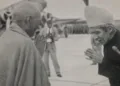
In the year 1956, when Clement Attlee visited Bharat, he admitted to PV Chakravarthy, the Honorable Chief Justice of the Calcutta High Court and Acting Governor of Bengal, that the major factors for the British leaving India were the INA of Netaji Subhash and the armed revolt of 1946. He stated that the Quit India Movement of 1942 had minimal impact. Justice Chakravarthy confirmed this admission of Clement Attlee in one of his letters.
Revolt in Royal Air Force
The revolt in the Royal Air Force of 1946 was a series of demonstrations and strikes involving thousands of Bharatiya airmen at several dozen Royal Indian Air Force stations across the entire Indian subcontinent, beginning on January 22, 1946. As these incidents involved the refusal to obey orders from British officers, it technically constituted a form of rebellion against British power. This “revolt of airmen” began at Maripur and nearby Karachi (RAF Drigh Road) and later spread to involve nearly 50,000 men over 60 RAF stations in India, Ceylon, Burma, and as far away as Singapore, Egypt, North Africa, and Gibraltar – wherever Indian Air staff were posted. Many of the airmen involved faced courts-martial and dismissals.
Revolt in the Royal Indian Navy
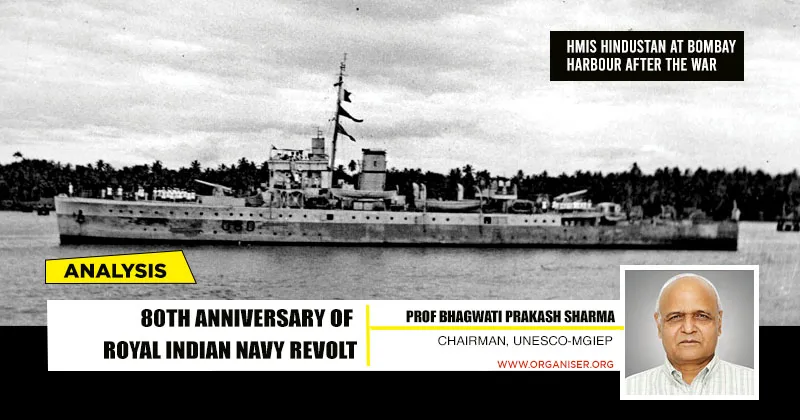
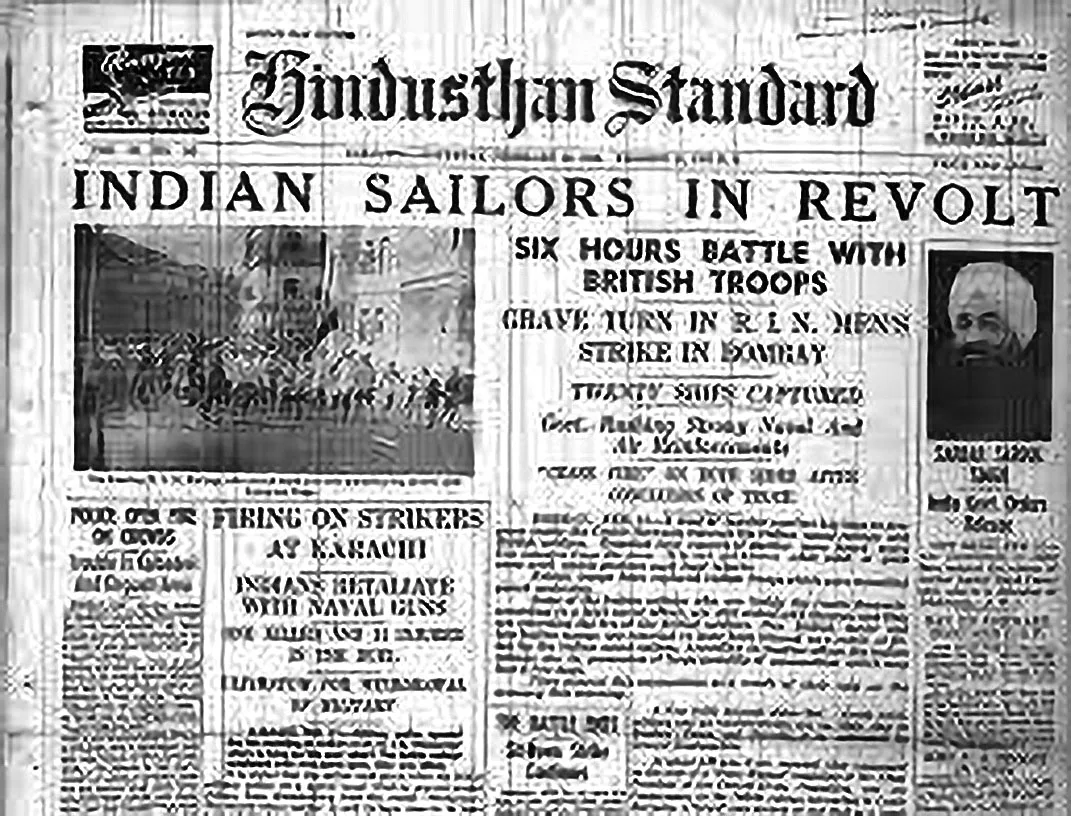
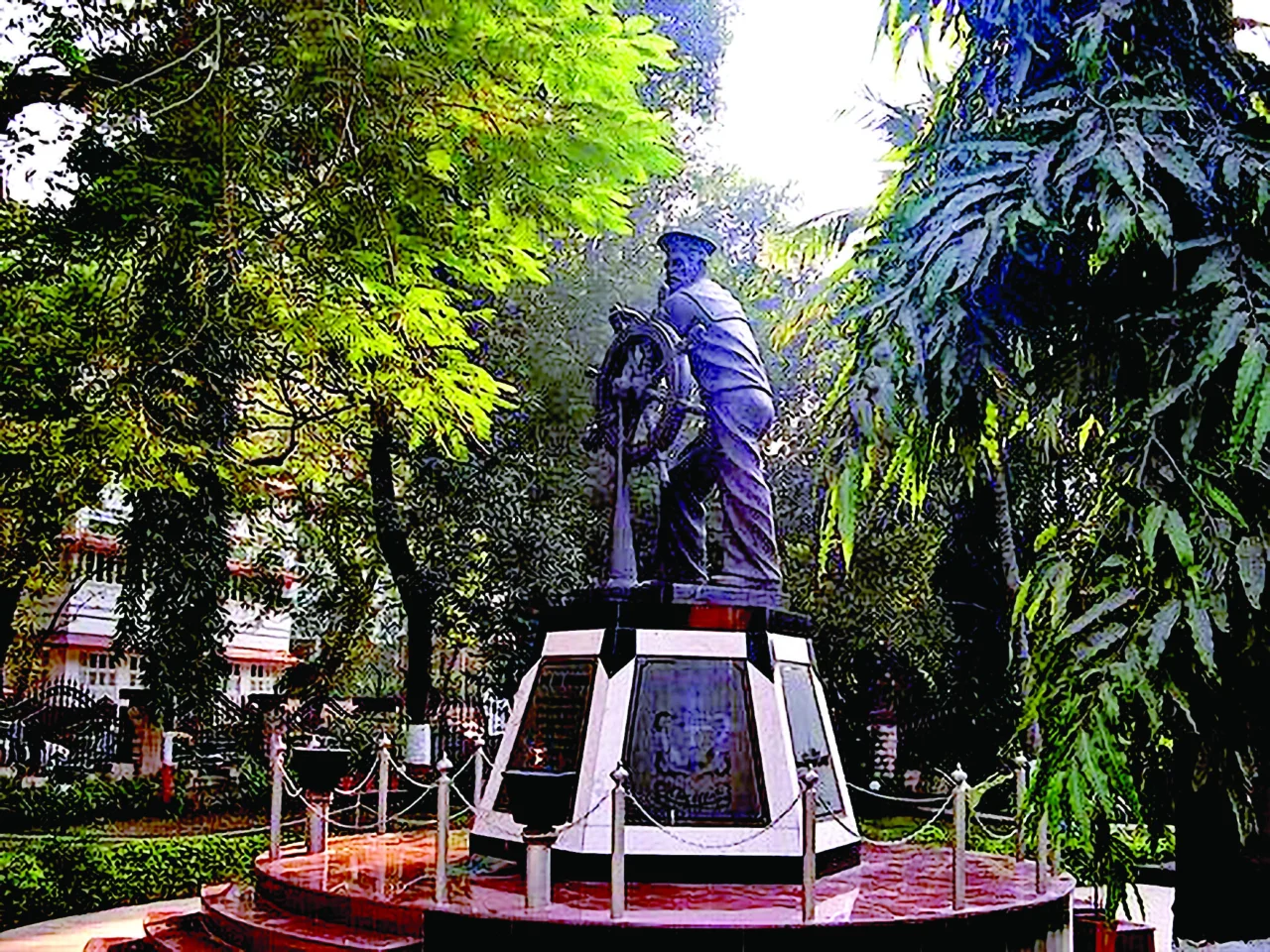
Soon, the rebellion in the Royal Air Force led to a more formidable revolt in the Royal Indian Navy in February 1946, in which the naval staff of 78 out of a total of 88 ships revolted. Lord Wavell, the Viceroy of India, commented at the time: “I am afraid that the example of the Royal Air Force, who got away with what was really a mutiny, has some responsibility for the present situation.”
The Royal Indian Navy revolted against British power on February 18, 1946, on a vast scale, comprising Indian naval ratings, soldiers, police personnel, and civilians. From the initial flashpoint in Bombay, the revolt spread and found support throughout British India, from Karachi to Calcutta, ultimately involving over 20,000 sailors across 78 ships and several shore establishments. By the evening of 19 February, a Naval Central Strike Committee was elected. The strike found wholehearted support across various towns. General strikes in Bombay and several other locations became common features, and the strike was joined by local police forces in some places.
The Indian Naval personnel began calling themselves the “Indian National Navy” and offered left-handed salutes to British officers. Widespread rioting took place from Karachi to Calcutta. Notably, the revolting ships hoisted three flags tied together – those of the Congress, the Muslim League, and the Red Flag. By 22 February 1946, large – scale civilian agitations began across cities like Madras, Calcutta, New Delhi, and over 30 other towns. Looting was widespread and directed at government institutions.
Indian Army Rebels
Alarmed by the revolt in the Royal Indian Navy, British officers brought in the Indian-based Mahratta Light Infantry (MLI) to fire upon the Navy. Reluctant to open fire on their rebelling Indian brethren, the army soldiers fired shots at the ground in front of the Navy men. When the British found Indian soldiers reluctant and lenient in dealing with the rioting Navy, they had to bring in British troops to fire on the striking sailors. At some places, NCOs in the British Indian Army ignored and defied orders from British superiors. In Madras (now Chennai) and Poona (now Pune), British garrisons faced unrest within the ranks of the Indian Army.
Bharatiya Army Disobey the British
The command to open fire on their own brethren – who were making demands similar to theirs at a time when INA prisoners were being tried – was the tipping point for this mammoth unrest. The rebellion spread to Madras, Pune, and several cantonments.
The major rebellion within the Indian Army came from the Indian Signal Corps at Jabalpur. Starting on February 27th,1946, it soon gained momentum and seriousness by March 3, 1946. It could only be contained by the British with the help of senior Indian political leaders. The British were left with no option but to leave immediately. Another challenge for them was to “save face” by pretending they were not fleeing due to an armed rebellion, and to ensure Bharat remained within the British Commonwealth. They achieved these twin objectives by transferring power to Congress and sidelining the Hindu Mahasabha, which had been agitating to keep West Bengal and East Punjab.
Political Leadership Diffused Rebellion
The revolt, though formidable, fell short of ending British rule because the Congress and Muslim League – including Mahatma Gandhi, Nehru, and Patel – tried to convince the soldiers to surrender. They provided explicit assurances that no action would be taken against them if they returned to their duties. The revolt ended with the surrender of the RIN sailors at the insistence of the Indian National Congress and the Muslim League. These leaders condemned the mutiny in the strongest terms, possibly out of apprehension that if the strike continued, power might go to the INA.
Clarion Call by Sardar Patel
The revolt was called off following a meeting between the President of the Naval Central Strike Committee (NCSC) and Vallabhbhai Patel, with an explicit guarantee from Congress that no one would be persecuted. However, betraying these assurances, contingents of naval ratings were arrested and imprisoned in camps under distressing conditions. Patel, sent to Bombay to settle the crisis, called on the strikers to end their action, a sentiment echoed by Muhammad Ali Jinnah on behalf of the Muslim League. Under vehement pressure and the promise of no prosecution, the strikers gave way, only to be betrayed. Arrests, courts – martial, and the immediate dismissal of 476 sailors followed. None of those dismissed were reinstated after Independence, and none of the Congress leaders helped them or kept the promise of non-persecution. Hundreds were denied service and freedom fighter pensions. Mahatma Gandhi also condemned the revolt. In a statement on March 3, 1946, he criticised the strikers for revolting without the “guidance and intervention” of “political leaders of their choice,” stating that if they mutinied for freedom, they were “doubly wrong.”
Broken Promise
Upon the independence of the two nations, the Navy was divided. Unfortunately, British officers remained in positions of authority; Vice Admiral William Edward Parry became the commanding officer of the Indian Navy. None of the discharged sailors were pardoned. Despite the assurances given by Sardar Patel and others, the promises were not honoured. A new Cabinet was formed, but the administration and the command of the three Armed Forces continued under British chiefs and the Governor General Mountbatten. The Kashmir issue was also mishandled by Mountbatten who continued as Governor General.
Recognition in 80th Anniversary
It is now the 80th anniversary of this wide-scale revolt engineered by the three Armed Forces and the constabulary. The Congress had promised they would not be persecuted, but the Government committed a breach of that promise. Many soldiers were denied pensions. All information regarding this revolt needs to be declassified, the soldiers involved should be recognised posthumously, and their family members should be felicitated.