US-Iran Flashpoint: Strait of Hormuz and global economic shock
August 5, 2026
  • Read Ecopy
  • Circulation
  • Advertise
  • Careers
  • About Us
  • Contact Us
Android AppiPhone AppArattai
Organiser
  • ‌
  • Bharat
    • Assam
    • Bihar
    • Chhattisgarh
    • Jharkhand
    • Maharashtra
    • View All States
  • World
    • Asia
    • Europe
    • North America
    • South America
    • Africa
    • Australia
  • Editorial
  • International
  • Opinion
  • RSS @ 100
  • More
    • Op Sindoor
    • Analysis
    • Sports
    • Defence
    • Politics
    • Business
    • Economy
    • Culture
    • Special Report
    • Sci & Tech
    • Entertainment
    • G20
    • Azadi Ka Amrit Mahotsav
    • Vocal4Local
    • Web Stories
    • Education
    • Employment
    • Books
    • Interviews
    • Travel
    • Law
    • Health
    • Obituary
  • Subscribe
    • Subscribe Print Edition
    • Subscribe Ecopy
    • Read Ecopy
  • ‌
  • Bharat
    • Assam
    • Bihar
    • Chhattisgarh
    • Jharkhand
    • Maharashtra
    • View All States
  • World
    • Asia
    • Europe
    • North America
    • South America
    • Africa
    • Australia
  • Editorial
  • International
  • Opinion
  • RSS @ 100
  • More
    • Op Sindoor
    • Analysis
    • Sports
    • Defence
    • Politics
    • Business
    • Economy
    • Culture
    • Special Report
    • Sci & Tech
    • Entertainment
    • G20
    • Azadi Ka Amrit Mahotsav
    • Vocal4Local
    • Web Stories
    • Education
    • Employment
    • Books
    • Interviews
    • Travel
    • Law
    • Health
    • Obituary
  • Subscribe
    • Subscribe Print Edition
    • Subscribe Ecopy
    • Read Ecopy
Organiser
  • Home
  • Bharat
  • World
  • Operation Sindoor
  • Editorial
  • Analysis
  • Opinion
  • Culture
  • Defence
  • International Edition
  • RSS @ 100
  • Magazine
  • Read Ecopy
Home World

US-Iran Flashpoint: Why the Strait of Hormuz could unleash a global economic shock

As US-Iran tensions spike, the Strait of Hormuz (a 33-km-wide maritime chokepoint carrying nearly a fifth of the world’s oil) has once again become the most dangerous flashpoint in global energy politics, with serious implications for India

Kirti PandeyKirti Pandey
Feb 21, 2026, 11:30 am IST
inWorld, West Asia, Analysis, Asia
Follow on Google News
Representative Image

Representative Image

Facebook
Twitter
WhatsAppTelegramEmail

Oil prices are climbing. Wall Street is rattled. The Dow Jones Industrial Average has slid amid fears of a possible U.S. military strike on Iran. At the heart of this volatility lies a narrow strip of water between Iran and Oman, the Strait of Hormuz, through which roughly 20 million barrels of petroleum flow every single day.

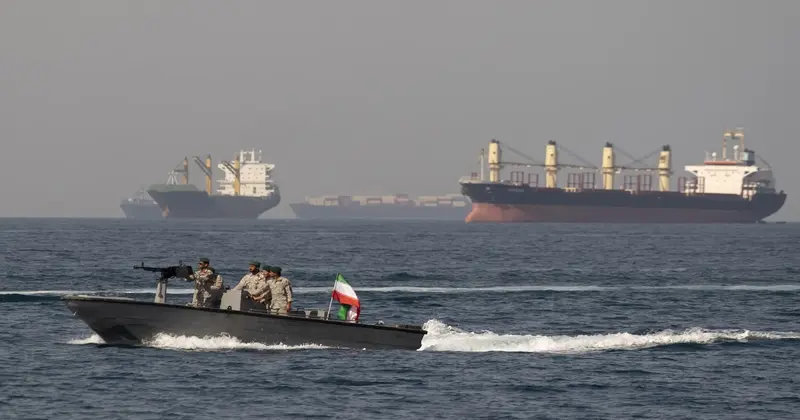
When Iranian state media reported on February 17, that the Strait was temporarily shut for military drills conducted by the Islamic Revolutionary Guard Corps (IRGC), global markets took notice. Though the closure was brief and framed as a “security precaution”, it was a sharp reminder of how fragile the world’s energy lifeline can be.

If tensions escalate further and the Strait faces a prolonged disruption, the consequences would stretch far beyond the Gulf, reaching stock exchanges, fuel pumps and household budgets worldwide, including in India.

The world’s most important energy chokepoint

Geographically, the Strait of Hormuz connects the Persian Gulf to the Gulf of Oman and the Arabian Sea. At its narrowest point, it is just about 33 kilometres wide, with even narrower shipping lanes for inbound and outbound tankers. Strategically, however, it is immense.

Nearly one-fifth of global oil consumption and a significant portion of liquefied natural gas (LNG) exports pass through this corridor daily. Major producers, Saudi Arabia, Iraq, United Arab Emirates, Kuwait and Iran, all rely on it to ship energy to global markets.

https://twitter.com/CraigTaylorViz/status/1935683595278127322

Asia is the primary destination. China, India, Japan and South Korea together account for the bulk of oil transiting the Strait. There are limited alternative routes or pipelines that can bypass Hormuz at scale. That is why it is often described as the world’s most sensitive energy chokepoint. Even the threat of disruption can send oil futures surging.

What happens if Iran closes it?

Iran has periodically threatened to shut the Strait in response to Western sanctions or military pressure. But what would an actual closure mean?

Strait of Hormuz.

With all this talk of closing/choking the “Strait of Hormuz” around, the map of Middle East and an Info video for you. pic.twitter.com/skYCQ10Yzb

— Sangha/ਸੰਘਾ/संघा/سنگھا (@FarmStudioz) June 23, 2025

Immediate oil price shock

A sustained blockade would sharply reduce global oil supply overnight. With spare production capacity limited and rerouting options constrained, crude prices could spike dramatically. Analysts have long warned that even a partial disruption could push Brent crude well above $100 per barrel.

Higher oil prices ripple quickly into:

  • Petrol and diesel costs
  • Airline ticket prices
  • Freight and logistics charges
  • Manufacturing and food inflation

Financial markets would react just as swiftly. Equity indices typically fall during energy shocks, while safe-haven assets rise.

Shipping and insurance turbulence

Insurance premiums for vessels entering the Gulf would soar. Tankers might hesitate to sail. Naval escorts from global powers, including the United States, would likely increase, raising the risk of military confrontation.

Strategic reality check

However, closing Hormuz is not simple. The U.S. Fifth Fleet, based in Bahrain, maintains a significant naval presence in the region. A prolonged blockade would likely trigger a military response. Moreover, Iran itself exports oil through the Strait. A full closure would hurt its own economy.

Historically, even during intense periods like the Iran-Iraq War, particularly the “Tanker War” phase, shipping was harassed and attacked, but the Strait was never completely sealed off for long.

Why India should be watching closely

For India, the Strait of Hormuz is not an abstract geopolitical issue, it is directly tied to economic stability.

Energy Dependence

India imports over 80 per cent of its crude oil needs. A substantial share of those imports comes from Gulf suppliers whose shipments pass through Hormuz.

A prolonged disruption would:

  • Increase India’s crude import bill
  • Widen the trade deficit
  • Weaken the rupee
  • Push up domestic fuel and LPG prices
  • Add inflationary pressure to the economy

In a country where fuel costs influence everything from vegetable prices to transport fares, the impact would be felt widely.

Diaspora and trade concerns

Millions of Indians live and work in Gulf countries. Remittances from the region form a crucial component of household incomes back home. Heightened instability could disrupt not just oil flows, but trade routes and employment security for the diaspora.

Strategic Calculations

India has diversified energy sourcing in recent years, including increased purchases from Russia and other regions. It also maintains strategic petroleum reserves. But diversification does not eliminate vulnerability. The Gulf remains central to India’s energy matrix.

The Indian Navy already conducts regular deployments in the Arabian Sea to safeguard shipping lanes. In a crisis scenario, maritime security would assume even greater importance.

Also Read: India–Brazil Bilateral Summit: PM Modi and President Lula to push trade, defence and tech cooperation

The long history of Hormuz: From spice route to oil artery

The Strait’s strategic value predates oil by centuries. During the medieval era, the Kingdom of Hormuz controlled trade between Persia, Arabia and India. European powers soon recognised its importance. In 1515, Portuguese commander Afonso de Albuquerque seized Hormuz to dominate the lucrative spice trade routes linking Europe to India.

Later, the Safavid dynasty expelled the Portuguese with British assistance. For the British Empire, securing Gulf waters was essential to protecting sea routes to colonial India. In the 20th century, with the discovery of vast oil reserves across the Gulf, Hormuz transformed from a commercial gateway into the central artery of the global energy system.

Since then, it has been a recurring flashpoint, during the Cold War, the Iran–Iraq War, US-Iran tensions in the 1980s, and various standoffs in the 21st century. Yet despite repeated threats, the Strait has never been permanently closed. The reason is simple: too much is at stake for too many countries.

A narrow passage, A global fault line

Today’s tensions, marked by US military deployments and Iran’s signalling through temporary closures, underscore a sobering truth: global energy security rests on a fragile maritime corridor barely 33 kilometres wide.

For investors, it means volatility.
For governments, strategic recalculations.
For energy-importing nations like India, it means vigilance.

The Strait of Hormuz may be narrow, but its impact spans continents. In moments of geopolitical strain, it becomes not just a waterway, but the pressure valve of the global economy.


Topics: USAStrait of HormuzUS President Donald TrumpConflictIran
Share
Tweet
SendShareSend
✮ Subscribe Organiser YouTube Channel. ✮
✮ Join Organiser's WhatsApp channel for Nationalist views beyond the news. ✮
Previous News

Karnataka: BJP slams arrest of RTI activist Snehamayi Krishna, calls it ‘Emergency-Like Rule’ in the state

Next News

India’s AI Impact Summit: A turning point for the future

Related News

West Asia Conflict: Stranded Sikhs in Iran land in India; Express gratitude to PM Modi and MEA for safe evacuation

POTUS Trump (left) and Chinese President Xi (right); file photo shows Uyghur detainees during a political education session at a detention camp in Xinjiang, China, April 2017.

US blacklists 43 Chinese companies over abuses against Uyghur Muslims in latest trade war escalation

India’s Critical Mineral Push: Partners with 11 countries including Australia & US to build secure global value chain

Representative Image

West Asia Conflict: India safely evacuates 2,557 citizens from Iran; Reaffirms freedom of navigation & energy security

West Asia Conflict: How subsea cables are brewing silent wars beneath the sea, endangering global internet traffic

US President Donald Trump, Saudi Arabian Crown Prince Mohammed bin Salman, and Iranian cleric Mojtaba Khamenei

Saudi Arabia joins US in deadly strike on Iran-backed Iraqi Shia militia Popular Mobilisation Forces

Load More

Latest News

Zuckerberg Apologises Over PM Modi Video, Meta Faces Fresh Scrutiny

Meta under fire over content manipulation: Mark Zuckerberg apologises over PM Modi video row, CSAM & deepfake lapses

The Amritsar arrests expose a troubling new face of proxy warfare, low-cost, digitally recruited and built around vulnerable young recruits (AI generated image)

Amritsar Arrests Expose the New Face of Proxy War: Petrol bombs, online handlers & vulnerable teen recruits

CPM cadre convicted by Court

Keralam: CPM cadres get 16-year jail term for bid to murder RSS karyakartas in 2018 Panoor case

Tamil Nadu Finance Minister N. Marie Wilson presented the first Budget of the TVK government in Assembly on August 5, 2026

Tamil Nadu: TVK’s first Budget projects Rs 16,000 crore additional revenue, announces welfare push

India’s global crackdown on fugitives has intensified, with 274 offenders brought back from 36 countries since 2019 (AI generated image)

From Vijay Mallya to Tahawwur Rana: India’s global pursuit of fugitives brings 274 offenders back from 36 countries

SDPI National General Secretary Riyaz Parangipete

Karnataka Hate Speech Case: SDPI’s Riyaz Parangipete convicted in 11-year-old case, PFI links back in focus

Press breifing by Adilabad SP Akhil Mahajan, IPS

Telangana: Bangladeshi nationals arrested in Adilabad; police expose cross-border burglary network active since 2015

India’s laws allow police to use proportionate force against unlawful assemblies, subject to legal safeguards

Use of Force by Police: Understanding the law beyond the controversy

I.I.M.U.N. founder Rishabh Shah (Left), RSS Sarsanghchalak Dr Mohan Bhagwat (Right)

‘Not the first time’: RSS Sarsanghchalak Dr Bhagwat returns to I.I.M.U.N. to engage with Gen Z & Gen Alpha in Mumbai

Varanasi is set to welcome a spectacular cricket stadium blending modern sports infrastructure with Kashi’s timeless spiritual identity (AI generated image)

Varanasi: Bhagwan Shiva-inspired cricket stadium set to blend Kashi’s spiritual heritage with modern sporting grandeur

Load More
  • Privacy
  • Terms
  • Cookie Policy
  • Refund and Cancellation
  • Delivery and Shipping

© Bharat Prakashan (Delhi) Limited.
Tech-enabled by Ananthapuri Technologies

  • Home
  • Search Organiser
  • Bharat
    • Assam
    • Bihar
    • Chhattisgarh
    • Jharkhand
    • Maharashtra
    • View All States
  • World
    • Asia
    • Africa
    • North America
    • South America
    • Europe
    • Australia
  • Editorial
  • Operation Sindoor
  • Opinion
  • Analysis
  • Defence
  • Culture
  • Sports
  • Business
  • RSS @ 100
  • Entertainment
  • More ..
    • Sci & Tech
    • Vocal4Local
    • Special Report
    • Education
    • Employment
    • Books
    • Interviews
    • Travel
    • Health
    • Politics
    • Law
    • Economy
    • Obituary
  • Subscribe Magazine
  • Read Ecopy
  • Advertise
  • Circulation
  • Careers
  • About Us
  • Contact Us
  • Policies & Terms
    • Privacy Policy
    • Cookie Policy
    • Refund and Cancellation
    • Terms of Use

© Bharat Prakashan (Delhi) Limited.
Tech-enabled by Ananthapuri Technologies