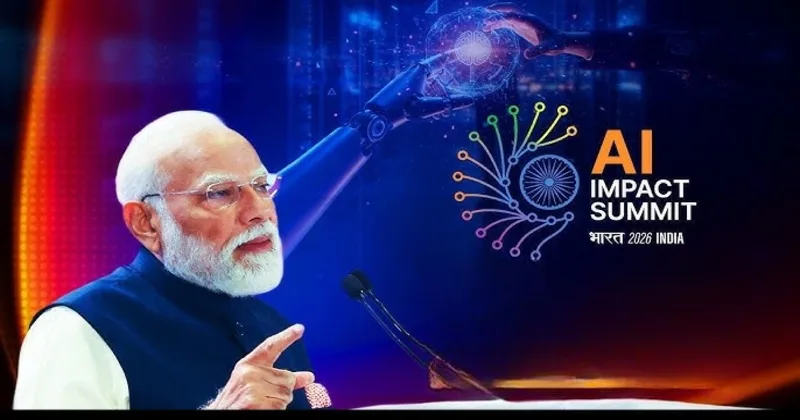
The AI Impact Summit currently taking place in New Delhi marks an important moment in India’s technological journey. Hosted at the world-class venue Bharat Mandapam, the summit brings together global leaders, technology experts, policymakers, researchers, start-ups and industry giants to discuss the future of Artificial Intelligence(AI). The event is not just a conference; it is a strong statement that India is ready to play a leading role in shaping the future of AI for the world.
Artificial Intelligence is no longer a technology of the future. It is already part of daily life. From mobile assistants and online recommendations to smart farming tools and advanced medical diagnosis, AI is transforming how we live and work. Countries around the world are competing to become leaders in AI research and development. By organizing this summit, India is clearly showing that it wants to be at the center of this global transformation.
One of the key highlights of the summit is the vision shared by Prime Minister Narendra Modi. He has repeatedly emphasized that AI should be used for the benefit of humanity. His approach is not just about building powerful technology, but about ensuring that technology serves people. He believes AI should be inclusive, ethical and accessible to all sections of society—from urban entrepreneurs to rural farmers.
In simple words, the message of the summit is clear: AI must not be limited to a few large corporations or advanced nations. Instead, it should help solve real problems such as improving healthcare, strengthening education, supporting agriculture and making governance more efficient. This people-centric approach could become India’s unique contribution to the global AI movement.
Long-term impact on India
The long-term effects of the AI Impact Summit could be very significant. First, it strengthens India’s global image as a serious technology leader. In the past two decades, India has already built a strong reputation in information technology and software services. Now, by focusing on indigenous AI and machine learning research, the country is moving from being a service provider to becoming a creator of original technology. This shift is very important. Nations that create core technologies often shape global standards and rules.
Second, the summit encourages investment in local AI research and development. Indigenous AI models that understand Indian languages, culture and social conditions will be crucial. India is home to hundreds of languages and diverse communities. AI systems built specifically for this diversity can later be adapted for other developing nations. This gives India a strategic advantage, especially in countries across Asia, Africa and Latin America that share similar challenges.
Third, AI can boost economic growth. Studies suggest that AI could add trillions of dollars to the global economy in the coming years. If India builds strong AI capabilities, it can create millions of high-skilled jobs in data science, robotics, cybersecurity, chip design and cloud computing. At the same time, AI tools can improve productivity in traditional sectors like farming, manufacturing and small businesses. For example, farmers can use AI-based weather predictions and small traders can use AI tools to manage inventory and customer service.
Fourth, the summit highlights the importance of building strong digital infrastructure. AI requires powerful computing systems, secure data storage and reliable internet connectivity. India has already made major progress with digital public infrastructure such as digital identity systems and online payment platforms. The next step is to build AI infrastructure that is affordable and widely accessible. If successful, this could allow start-ups, students and researchers across the country to innovate without depending entirely on foreign platforms.
Leapfrogging into Global AI Leadership
Many experts believe that countries that invest early and boldly in AI can “leapfrog” traditional stages of development. India has a young population, a large pool of engineers and one of the world’s fastest-growing digital markets. With the right policies and research support, India could develop competitive AI models and platforms that challenge global leaders.
Indigenous research is key to this leap. Instead of relying only on imported AI systems, India is working toward creating its own foundation models, chips and research ecosystems. This reduces dependency and increases strategic independence. Over time, this could position India as a trusted AI partner for many countries that are looking for alternatives in the global technology landscape.
Furthermore, India’s democratic system and emphasis on ethical governance may help it build AI systems that are transparent and accountable. In a world increasingly concerned about AI safety and misuse, this responsible approach could become a major strength.
A vision that may shape history
Prime Minister Modi’s tech-savvy leadership is central to this transformation. Over the years, he has strongly supported digital initiatives, start-up growth and innovation-driven governance. His push for “Digital India” laid the foundation for the current AI ambitions. By promoting AI as a tool for inclusive growth, he is aligning technology with national development goals.
In the years to come, historians may look back at this AI Impact Summit as a turning point — a moment when India clearly declared its intention to lead in one of the most powerful technologies of the 21st century. If the ideas discussed at the summit turn into strong policies, investments and research breakthroughs, India could emerge not just as a participant, but as a global leader in AI.
In conclusion, the AI Impact Summit in New Delhi is more than a high-profile event. It represents India’s ambition, confidence and readiness to shape the future. With strong indigenous research, ethical governance and visionary leadership, India has the potential to leapfrog into global AI dominance and redefine how technology serves humanity.