Gurukul to Vidyapeeth: Indian education holds lessons for future
June 4, 2026
  • Read Ecopy
  • Circulation
  • Advertise
  • Careers
  • About Us
  • Contact Us
Android AppiPhone AppArattai
Organiser
  • ‌
  • Bharat
    • Assam
    • Bihar
    • Chhattisgarh
    • Jharkhand
    • Maharashtra
    • View All States
  • World
    • Asia
    • Europe
    • North America
    • South America
    • Africa
    • Australia
  • Editorial
  • International
  • Opinion
  • RSS @ 100
  • More
    • Op Sindoor
    • Analysis
    • Sports
    • Defence
    • Politics
    • Business
    • Economy
    • Culture
    • Special Report
    • Sci & Tech
    • Entertainment
    • G20
    • Azadi Ka Amrit Mahotsav
    • Vocal4Local
    • Web Stories
    • Education
    • Employment
    • Books
    • Interviews
    • Travel
    • Law
    • Health
    • Obituary
  • Subscribe
    • Subscribe Print Edition
    • Subscribe Ecopy
    • Read Ecopy
  • ‌
  • Bharat
    • Assam
    • Bihar
    • Chhattisgarh
    • Jharkhand
    • Maharashtra
    • View All States
  • World
    • Asia
    • Europe
    • North America
    • South America
    • Africa
    • Australia
  • Editorial
  • International
  • Opinion
  • RSS @ 100
  • More
    • Op Sindoor
    • Analysis
    • Sports
    • Defence
    • Politics
    • Business
    • Economy
    • Culture
    • Special Report
    • Sci & Tech
    • Entertainment
    • G20
    • Azadi Ka Amrit Mahotsav
    • Vocal4Local
    • Web Stories
    • Education
    • Employment
    • Books
    • Interviews
    • Travel
    • Law
    • Health
    • Obituary
  • Subscribe
    • Subscribe Print Edition
    • Subscribe Ecopy
    • Read Ecopy
Organiser
  • Home
  • Bharat
  • World
  • Operation Sindoor
  • Editorial
  • Analysis
  • Opinion
  • Culture
  • Defence
  • International Edition
  • RSS @ 100
  • Magazine
  • Read Ecopy
Home Bharat

From Gurukul to Vidyapeeth: Why India’s indigenous education holds lessons for the future

Ancient Indian knowledge systems did not treat education as a narrow pathway to employment. The gurukul, Pathshala, monastery and Vidyapeeth cultivated character, discipline, self-awareness and social responsibility alongside intellectual training. Knowledge was not transactional; it was transformative

Dr Neha NainwalDr Neha Nainwal
Feb 15, 2026, 07:00 pm IST
in Bharat, Analysis, Education
Follow on Google News
Representative Image

Representative Image

FacebookTwitterWhatsAppTelegramEmail

India’s tradition of learning has never been confined to the classroom. In the Indian worldview, education was not merely a ladder for individual advancement but a civilisational instrument for shaping ethical citizens and cohesive communities. The learner was not an isolated economic unit, but a socially embedded being conscious of duty and responsibility.

As India reimagines its future in the twenty-first century, balancing technological ambition with cultural confidence, an important question arises: Can the country draw meaningfully from its indigenous educational traditions to build a more value-driven and self-reliant society?

Education as Character, Not Credential

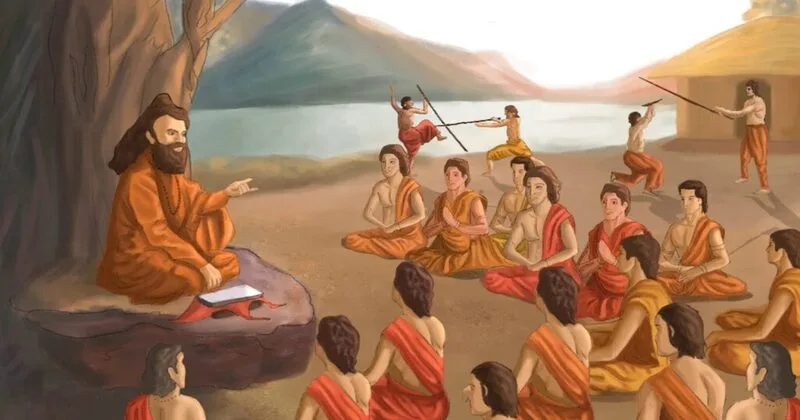
Ancient Indian knowledge systems did not treat education as a narrow pathway to employment. The gurukul, Pathshala, monastery and Vidyapeeth cultivated character, discipline, self-awareness and social responsibility alongside intellectual training. Knowledge was not transactional; it was transformative.

Takshashila, dating back to at least the seventh century BCE, attracted thousands of students from across regions. Its curriculum ranged from Vedic studies and grammar to statecraft, medicine and philosophy. Scholars such as Panini, Charaka and Chanakya emerged from such ecosystems of rigorous debate and interdisciplinary inquiry. Similarly, Nalanda and Vikramshila became global centres of learning, hosting thousands of students and scholars engaged in logic, metaphysics, medicine and Buddhist philosophy.

These were not isolated religious schools. They were vibrant knowledge centres where dialogue, dissent and disciplined scholarship flourished. The refinement of ideas through debate closely resembled what we now consider systematic research.

The Colonial Disruption

The colonial education model reoriented India’s learning systems toward bureaucratic utility and administrative needs. In the process, the organic link between education and community life weakened. Indigenous systems were often dismissed as unscientific or regressive, producing a long-lasting sense of inferiority toward native traditions.

Historical research challenges this narrative. Dharampal’s The Beautiful Tree, based on colonial administrative records, documents a widespread network of village schools in eighteenth-century India. These institutions were community-supported, locally governed and often inclusive across social groups. Instruction in mother tongues, emphasis on practical skills and moral learning, and close ties to local economies made them deeply embedded in society.

This historical recovery is not about nostalgia. It is about restoring intellectual confidence.

The Philosophical Continuum: Gandhi to Vivekananda

Modern Indian thinkers extended this civilisational vision. Mahatma Gandhi’s Nai Talim sought to integrate hand, heart and mind, placing productive labour, ethics and self-reliance at the centre of schooling. Sri Aurobindo viewed education as integral development encompassing physical, mental, moral and spiritual growth. Swami Vivekananda famously argued that education without character is incomplete, insisting that strength, confidence and moral courage are as important as information.

Across these thinkers, a common thread emerges: education must produce responsible citizens, not merely skilled workers.

What Made the Gurukul Model Distinct

The strength of traditional systems lay not in romantic mysticism but in their structural depth.

The Guru-shishya relationship ensured personalised mentorship that shaped life vision, not merely syllabus completion. Integrated living meant that discipline, service, and community life were part of the pedagogy rather than extracurricular add-ons. The curriculum was holistic, bringing together grammar, logic, mathematics, astronomy, medicine and agriculture with philosophy and ethics. Even the idea of Dakshina reflected gratitude and reciprocity rather than a commercial transaction.

Such systems emphasised self-control, reflection and community consciousness, qualities that are increasingly relevant in an age of digital distraction and consumerist excess.

Relevance in the Age of NEP 2020

India today stands at an inflexion point. It is a global technology player while also engaged in cultural and intellectual rediscovery. The National Education Policy 2020 echoes several traditional principles, including multidisciplinary learning, mother tongue instruction, integration of Indian knowledge systems and value-based education.

The revival of Nalanda University as an international institution, the growing global interest in yoga and Indic philosophy, and renewed academic engagement with classical jurisprudence and environmental ethics demonstrate that tradition is not static. It adapts, evolves and enters into dialogue with modernity.

The challenge is not to replace modern universities with gurukuls, but to meaningfully integrate civilisational wisdom into contemporary frameworks.

Also Read: Seva Teerth and Kartavya Bhavans become official address as North-South blocks turn ‘Yuge Yugeen Bharat’ museum

Policy Imperatives for a Balanced Future

If indigenous educational traditions are to contribute meaningfully, three steps are crucial.

  • First, Vidyapeeths and traditional centres of learning must receive institutional recognition and research support, and be integrated into broader higher education networks.
  • Second, academic bridges such as credit transfers, joint programmes and collaborative research between modern universities and traditional institutions can foster mutual enrichment.
  • Third, ethics, environmental consciousness and civic responsibility should be embedded across disciplines rather than relegated to optional modules.

India’s demographic dividend will translate into national strength only if it combines skill with character and innovation with rootedness.

Beyond Nostalgia, Toward Renewal

The debate over indigenous education is not about returning to the past. It is about recovering a civilisational balance that harmonises knowledge, ethics and social responsibility. From Takshashila to Nalanda, and from Gandhi to Vivekananda, the central insight remains consistent: education must shape the whole human being.

As India seeks to become a leading global power, the journey from gurukul to Vidyapeeth may symbolise something deeper. It represents a transition from inherited memory to confident self-definition. In that synthesis of tradition and modern aspiration lies the possibility of an intellectual and cultural renaissance for New India.


Topics: TechnologyEducationGurukul systemlearningcivilisationEthicsNational Education Policy(NEP)
Dr Neha Nainwal
Dr Neha Nainwal
Assistant Professor Shaheed Bhagat Singh College, DU Jila Pramukh, Nai Delhi (ABVP) [Read more]
ShareTweetSendShareSend
✮ Subscribe Organiser YouTube Channel. ✮
✮ Join Organiser's WhatsApp channel for Nationalist views beyond the news. ✮
Previous News

350th Shaheedi Samagam of ‘Hind Di Chadar’ Guru Tegh Bahadur to be marked in Navi Mumbai with massive outreach

Next News

IIT Patna Professor’s paper claims ‘Rape is structured in Brahmanical Hinduism’, sparks massive outrage

Related News

Representative Image

Indian scientists embed nano-gold in ultra-thin films; Opening new frontiers in self-powered wearable technologies

Representative Image

From Gurukul to Exam Hall: How colonial reforms, Macaulay’s legacy created havoc with Indian education system

Bharat Mata: A cultural icon & civilisational spirit reverberating the message of unity in 21st century

Classrooms to Character: The real purpose of education

Beyond the Thucydides Trap: Why the rise of India differs fundamentally from China

An eternal civilization cannot be eradicated! The Sanatana Dharma debate beyond politics and ideology

Load More

Latest News

Padma Bhushan awardee and noted industrialist Kumar Mangalam Birla Kumar Mangalam Birla addressing the Samapana Samaroh (Valedictory Function) of the Rashtriya Swayamsevak Sangh Karyakarta Vikas Varg – Dwitiya at Nagpur, on June 4, 2026

“RSS always stood by the society and nation”, Kumar Mangalam Birla at RSS Karyakarta Vikas Varg 2 in Nagpur

Arunachal Pradesh seals all 15 illegal Mosques; Bandh called off by APIYO

MK Stalin with Sonai Gandhi; MK Stalin with Rahul Gandhi (File Photos) (Left to Right)

Tamil Nadu: DMK says no to INDIA Alliance meet in Delhi, blames Congress for political backstabbing

Union Finance Minister Nirmala Sitharaman

Karnataka: All-Women team powers Yadgir’s groundnut revolution; Nirmala Sitharaman inaugurates NABARD Unit

Keralam: Jamaat-e-Islami event features Hamas and Muslim Brotherhood ideologues, raises concerns over Political Islam

Representative Image (This is an AI Generated image)

Uttar Pradesh CM Abhyudaya Scheme: Apply for free civil services, JEE and NEET coaching from June 5

House worth Rs 2 crore of drug peddler bulldozed in J&K

Anti-narcotics campaign in J&K: Police demolish Rs 2 crore residential property linked to drug peddler Sheikh Tasaduq

As fuel shortages rippled across Asia, New Delhi expanded supplies to its neighbours while Beijing sought to turn energy security into strategic influence.

The Hormuz Test: How India’s energy assistance outshines China’s conditional approach

Demographic changes in Bharat’s border districts have raised concerns about migration, security, and social cohesion

Demographic Shift in Border Areas of Bharat: The dangerous design

FIR filed against the Islamists in the Love Jihad case in Bhopal

Love Jihad again in Bhopal: Minor Hindu girl forced to drink beer, trapped and pressured to convert by Islamists

Load More
  • Privacy
  • Terms
  • Cookie Policy
  • Refund and Cancellation
  • Delivery and Shipping

© Bharat Prakashan (Delhi) Limited.
Tech-enabled by Ananthapuri Technologies

  • Home
  • Search Organiser
  • Bharat
    • Assam
    • Bihar
    • Chhattisgarh
    • Jharkhand
    • Maharashtra
    • View All States
  • World
    • Asia
    • Africa
    • North America
    • South America
    • Europe
    • Australia
  • Editorial
  • Operation Sindoor
  • Opinion
  • Analysis
  • Defence
  • Culture
  • Sports
  • Business
  • RSS @ 100
  • Entertainment
  • More ..
    • Sci & Tech
    • Vocal4Local
    • Special Report
    • Education
    • Employment
    • Books
    • Interviews
    • Travel
    • Health
    • Politics
    • Law
    • Economy
    • Obituary
  • Subscribe Magazine
  • Read Ecopy
  • Advertise
  • Circulation
  • Careers
  • About Us
  • Contact Us
  • Policies & Terms
    • Privacy Policy
    • Cookie Policy
    • Refund and Cancellation
    • Terms of Use

© Bharat Prakashan (Delhi) Limited.
Tech-enabled by Ananthapuri Technologies