For the past two decades, violence, mostly perpetrated by security forces, be it the Pakistan Army, Frontier Corps (FC), police, of the Counter Terrorism Department (CTD) has made life hellish for ordinary Baloch citizens. Armed rebel groups like Baloch Liberation Army (BLA) and Baloch Liberation Front (BLF) are now htting back at the security forces all through the Balochistan province.
Enforced disappearances is something of a unique phrase born in Balochistan and is now widely used and understood in Pakistan and its neighbourhood. Enforced disappearance is the abduction of an unarmed civilian, both men and now increasingly women too, by personnel of the Pakistani security forces.
In many cases, those subjected to enforced disappearances return home, after days, weeks, months or sometimes even years! Badly bruised and tortured during these long periods, those who return home don’t want to talk about the experience they had during their periods of absence. There are dozens of recorded cases of civilians being subjected to enforced disappearance more than once.
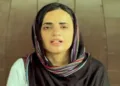
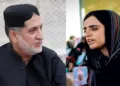
Many times, the bodies of those who are subjected to enforced disappearances are found in isolated places near highways, in open bearing torture and bullet marks. Dr Mahrang Baloch, and her Baloch Yekjehti Committee (BYC), is a household name worldwide because of the role she played in organising protests against the Pakistani security forces for these illegal acts.
Journalists face grave dangers in Balochistan
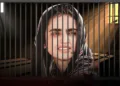
She is now facing the consequences of her peaceful protests. Earlier, she had lost her father who was killed in this manner, kept in custody for a long time and them his bullet riddled body was found. Dr Mahrang has been sentenced to life imprisonment by a kangaroo court which never heard arguments from her side. This gross manner of subversion of legal processes that exist on paper is the hallmark of the justice dispensation system. Injustice masquerades as justice and all illegalities are brushed under the carpet.
In such conditions, how do journalists work in Balochistan? How do they do reporting? Of day to day happenings. Regarding events involving deaths, injuries, destruction of properties or such other things. With Balochistan apparently sitting on a gunpowder keg, with the security forces and armed Baloch groups clashing, relentlessly, on daily basis, what conditions do working journalists face?
Facts regarding fatalities speak for themselves
Between 2008 and 2026 now, 42 journalists have been killed in Balochistan, according to the Balochistan Union of Journalists (BUJ). Those who did not make it to that list will tell you how hard some people tried to put them on it. By that count, at least 42 killers are on the loose. There have never been any convictions, according to a Dawn report.
At least six district reporters declined to be interviewed when the Dawn reported wanted to talk to them about the difficulties they faced on daily basis. Citing security concerns, they refused to speak, or be identified, while several others agreed to speak only anonymously. No names please, the reporters working in the restive province pleaded.
One reporter, speaking anonymously, recounted his harrowing experience in these words. One day I got a call from an unknown number and the caller said: “If you are new to journalism, you might need a coffin. Tell us, so we can send it to you in advance.’’ These lines were conveyed to a reporter who just said he was from Kalat, refusing to even identify himself any further. Two phone calls came from numbers he didn’t recognise a year ago. The reporter used to cover human rights protests. He told people at work about the threats and they recommended he go to the police and file a formal complaint.
He said, matter of fact.
Difficult profession, akin to death wish for many
Trying to be a journalist in Balochistan is one thing, having an active death wish is another.
The Kalat reporter didn’t want to become Abdul Latif Baloch who had worked for daily Intekhab and Aaj TV once upon a time. Gunmen dealt with him with a finality that comes with death. He was permanently stopped from working and breathing too.
The incident happened in Mashkey, Awaran last year on May 24, 2025. Some men, four of them, came to get Abdul Latif at home but he did not want to go with them. It was the middle of the night. His wife and two daughters also didn’t want him to go either because in February, Latif’s son, Saif, was away from home. His body was found some days later, on March 26.
The armed men then decided to use their AK-47s to settle the matter.
A police station with no phone number
When some reporters tried to get an update on the investigation into Abdul Latif’s killing in cold blood by gunmen, they were told that the Mashkey Police Station had no official phone number.
More than a year later, no FIR has been filed regarding Latif’s murder. When some reporters tried to reach Mashkey Police Station, there were no records available there. The policemen said the police station had no records as it was set on fire once.
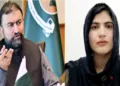
Shahid Rind, an Aide to the Chief Minister of Balochistan, was asked about Latif’s case, but he did not respond. He is otherwise a known name in Balochistan, perhaps better known than the CM Sarfaraz Bugti himself as Rind interacts, and issues statements. On behalf of the CM, as also the Balochistan government on different issues. A sort of official spokesman.
Quetta, Khuzdar most dangerous death traps
After Quetta, it is Khuzdar which is home to the second largest number of graves of journalists (10 since 2006, including the three presidents of the press club, after which it was shut for four years). Every type of person, group, entity, organisation, government and law and order body that one can think of is heavily invested in the quality of the freedom of press here.
One solution to maintaining the quality of the freedom of the press has been recommended by the union. It would like journalism to be classified as a proper career protected by the State with a Journalists Protection Bill, Balochistan, like the ones elsewhere in Pakistan.
They talk about welfare and insurance and hostile environment training. In February, CM’s Aide Shahid Rind had told the Quetta Press Club that the government was ready to take up the bill and discuss it with all stakeholders. The union’s president hopes he will live to report that it will be passed this year.
AK-47s, bullets available aplenty
Most of the reporters in the districts of Balochistan know what are considered dangerous stories. What isn’t always understood, until it’s too late for some of them, is that reporting on construction materials, or a batch of leaked exam papers, can carry the same cost. A painful death after being shot, usually multiple times as bullets, and AK-47s, come cheap in Balochistan!
A good number of journalists, a vast majority actually, have learnt how to work safely. They stick to government handouts and press releases. But the more experienced ones assert that you should still check because even reporting on information that appeared in a press release is no guarantee of it being true at all.
A freelance journalist now based in Islamabad, Ayaz Bazai, was being hunted by a private militia over a vlog he published on the mass grave of Tutak, Khuzdar. Bazai had just cited a BBC report in the video. The threat of being shot some day is very real in his case.
Censorship price for being allowed to live
Censorship from the outside and self-censorship from within are effective because they are good at keeping reporters alive, says Iqbal Khattak in a Freedom Network report, a non-profit that keeps track. Sometimes, of course, silence isn’t censorship. Mobile internet services in Panjgur have been suspended since 2022. It was restored for 10 days in September 2025 and then switched off again.
In Dera Bugti, the Chief Minister’s own constituency, 3G and 4G services have been down since June 2024. Last year, the Ministry of Interior unplugged the entire province for the better part of a month, saying there was too much risk of people communicating.
For a reporter, this isn’t just an inconvenience, but the difference between a story filed and a story that never leaves the district. Television stays largely silent in Quetta. Print survives on government advertising, which means the hand that funds the paper is often the hand a story would need to hold to account.
School turned into animal shelter report
Siraj Reki, a reporter with Vsh News in Surab Town, discovered that his work made his family vulnerable. “My father’s salary was restricted in 2019, and he was questioned by the Education department as reprisal. This happened due to pressure from a tribal chief over a news report on a school that was turned into an animal shelter,” he says.
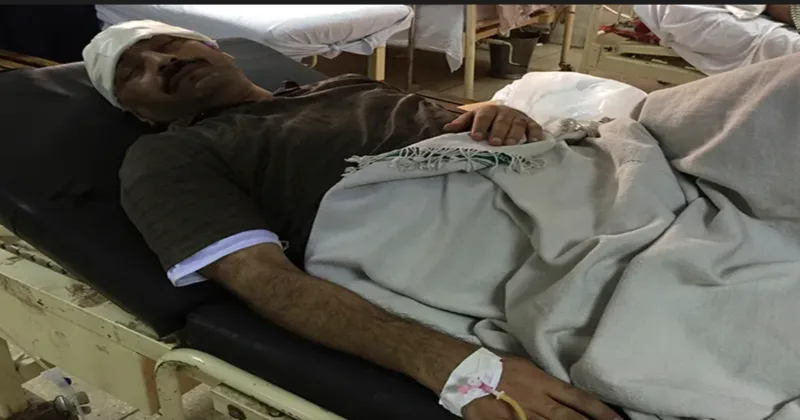
Journalists need to be extraordinarily careful while trying to cover stories about politics and conflict. But Sarfraz Shah, who runs a small digital outlet, says in these cases the trouble can start before a story is even written. The president of the Kechi Press Club Farhan Ghani Jamali was attacked by dozens of men in December 2025 over reporting on construction materials in Dhadar, Bolan.
Asking a government department for information on a development project it turns out is dangerous as well. He should have just stuck to the press release.