Gurukul to Vidyapeeth: Indian education holds lessons for future
July 15, 2026
  • Read Ecopy
  • Circulation
  • Advertise
  • Careers
  • About Us
  • Contact Us
Android AppiPhone AppArattai
Organiser
  • ‌
  • Bharat
    • Assam
    • Bihar
    • Chhattisgarh
    • Jharkhand
    • Maharashtra
    • View All States
  • World
    • Asia
    • Europe
    • North America
    • South America
    • Africa
    • Australia
  • Editorial
  • International
  • Opinion
  • RSS @ 100
  • More
    • Op Sindoor
    • Analysis
    • Sports
    • Defence
    • Politics
    • Business
    • Economy
    • Culture
    • Special Report
    • Sci & Tech
    • Entertainment
    • G20
    • Azadi Ka Amrit Mahotsav
    • Vocal4Local
    • Web Stories
    • Education
    • Employment
    • Books
    • Interviews
    • Travel
    • Law
    • Health
    • Obituary
  • Subscribe
    • Subscribe Print Edition
    • Subscribe Ecopy
    • Read Ecopy
  • ‌
  • Bharat
    • Assam
    • Bihar
    • Chhattisgarh
    • Jharkhand
    • Maharashtra
    • View All States
  • World
    • Asia
    • Europe
    • North America
    • South America
    • Africa
    • Australia
  • Editorial
  • International
  • Opinion
  • RSS @ 100
  • More
    • Op Sindoor
    • Analysis
    • Sports
    • Defence
    • Politics
    • Business
    • Economy
    • Culture
    • Special Report
    • Sci & Tech
    • Entertainment
    • G20
    • Azadi Ka Amrit Mahotsav
    • Vocal4Local
    • Web Stories
    • Education
    • Employment
    • Books
    • Interviews
    • Travel
    • Law
    • Health
    • Obituary
  • Subscribe
    • Subscribe Print Edition
    • Subscribe Ecopy
    • Read Ecopy
Organiser
  • Home
  • Bharat
  • World
  • Operation Sindoor
  • Editorial
  • Analysis
  • Opinion
  • Culture
  • Defence
  • International Edition
  • RSS @ 100
  • Magazine
  • Read Ecopy
Home Bharat

From Gurukul to Vidyapeeth: Why India’s indigenous education holds lessons for the future

Ancient Indian knowledge systems did not treat education as a narrow pathway to employment. The gurukul, Pathshala, monastery and Vidyapeeth cultivated character, discipline, self-awareness and social responsibility alongside intellectual training. Knowledge was not transactional; it was transformative

Dr Neha NainwalDr Neha Nainwal
Feb 15, 2026, 07:00 pm IST
in Bharat, Analysis, Education
Follow on Google News
Representative Image

Representative Image

FacebookTwitterWhatsAppTelegramEmail

India’s tradition of learning has never been confined to the classroom. In the Indian worldview, education was not merely a ladder for individual advancement but a civilisational instrument for shaping ethical citizens and cohesive communities. The learner was not an isolated economic unit, but a socially embedded being conscious of duty and responsibility.

As India reimagines its future in the twenty-first century, balancing technological ambition with cultural confidence, an important question arises: Can the country draw meaningfully from its indigenous educational traditions to build a more value-driven and self-reliant society?

Education as Character, Not Credential

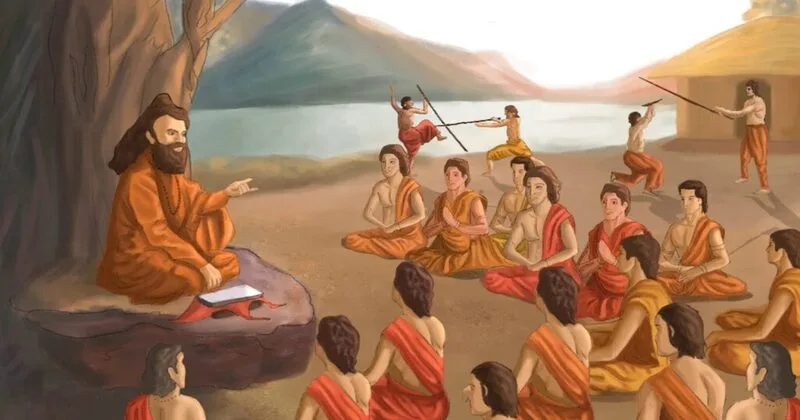
Ancient Indian knowledge systems did not treat education as a narrow pathway to employment. The gurukul, Pathshala, monastery and Vidyapeeth cultivated character, discipline, self-awareness and social responsibility alongside intellectual training. Knowledge was not transactional; it was transformative.

Takshashila, dating back to at least the seventh century BCE, attracted thousands of students from across regions. Its curriculum ranged from Vedic studies and grammar to statecraft, medicine and philosophy. Scholars such as Panini, Charaka and Chanakya emerged from such ecosystems of rigorous debate and interdisciplinary inquiry. Similarly, Nalanda and Vikramshila became global centres of learning, hosting thousands of students and scholars engaged in logic, metaphysics, medicine and Buddhist philosophy.

These were not isolated religious schools. They were vibrant knowledge centres where dialogue, dissent and disciplined scholarship flourished. The refinement of ideas through debate closely resembled what we now consider systematic research.

The Colonial Disruption

The colonial education model reoriented India’s learning systems toward bureaucratic utility and administrative needs. In the process, the organic link between education and community life weakened. Indigenous systems were often dismissed as unscientific or regressive, producing a long-lasting sense of inferiority toward native traditions.

Historical research challenges this narrative. Dharampal’s The Beautiful Tree, based on colonial administrative records, documents a widespread network of village schools in eighteenth-century India. These institutions were community-supported, locally governed and often inclusive across social groups. Instruction in mother tongues, emphasis on practical skills and moral learning, and close ties to local economies made them deeply embedded in society.

This historical recovery is not about nostalgia. It is about restoring intellectual confidence.

The Philosophical Continuum: Gandhi to Vivekananda

Modern Indian thinkers extended this civilisational vision. Mahatma Gandhi’s Nai Talim sought to integrate hand, heart and mind, placing productive labour, ethics and self-reliance at the centre of schooling. Sri Aurobindo viewed education as integral development encompassing physical, mental, moral and spiritual growth. Swami Vivekananda famously argued that education without character is incomplete, insisting that strength, confidence and moral courage are as important as information.

Across these thinkers, a common thread emerges: education must produce responsible citizens, not merely skilled workers.

What Made the Gurukul Model Distinct

The strength of traditional systems lay not in romantic mysticism but in their structural depth.

The Guru-shishya relationship ensured personalised mentorship that shaped life vision, not merely syllabus completion. Integrated living meant that discipline, service, and community life were part of the pedagogy rather than extracurricular add-ons. The curriculum was holistic, bringing together grammar, logic, mathematics, astronomy, medicine and agriculture with philosophy and ethics. Even the idea of Dakshina reflected gratitude and reciprocity rather than a commercial transaction.

Such systems emphasised self-control, reflection and community consciousness, qualities that are increasingly relevant in an age of digital distraction and consumerist excess.

Relevance in the Age of NEP 2020

India today stands at an inflexion point. It is a global technology player while also engaged in cultural and intellectual rediscovery. The National Education Policy 2020 echoes several traditional principles, including multidisciplinary learning, mother tongue instruction, integration of Indian knowledge systems and value-based education.

The revival of Nalanda University as an international institution, the growing global interest in yoga and Indic philosophy, and renewed academic engagement with classical jurisprudence and environmental ethics demonstrate that tradition is not static. It adapts, evolves and enters into dialogue with modernity.

The challenge is not to replace modern universities with gurukuls, but to meaningfully integrate civilisational wisdom into contemporary frameworks.

Also Read: Seva Teerth and Kartavya Bhavans become official address as North-South blocks turn ‘Yuge Yugeen Bharat’ museum

Policy Imperatives for a Balanced Future

If indigenous educational traditions are to contribute meaningfully, three steps are crucial.

  • First, Vidyapeeths and traditional centres of learning must receive institutional recognition and research support, and be integrated into broader higher education networks.
  • Second, academic bridges such as credit transfers, joint programmes and collaborative research between modern universities and traditional institutions can foster mutual enrichment.
  • Third, ethics, environmental consciousness and civic responsibility should be embedded across disciplines rather than relegated to optional modules.

India’s demographic dividend will translate into national strength only if it combines skill with character and innovation with rootedness.

Beyond Nostalgia, Toward Renewal

The debate over indigenous education is not about returning to the past. It is about recovering a civilisational balance that harmonises knowledge, ethics and social responsibility. From Takshashila to Nalanda, and from Gandhi to Vivekananda, the central insight remains consistent: education must shape the whole human being.

As India seeks to become a leading global power, the journey from gurukul to Vidyapeeth may symbolise something deeper. It represents a transition from inherited memory to confident self-definition. In that synthesis of tradition and modern aspiration lies the possibility of an intellectual and cultural renaissance for New India.


Topics: TechnologyEducationGurukul systemlearningcivilisationEthicsNational Education Policy(NEP)
Dr Neha Nainwal
Dr Neha Nainwal
Assistant Professor Shaheed Bhagat Singh College, DU Jila Pramukh, Nai Delhi (ABVP) [Read more]
ShareTweetSendShareSend
✮ Subscribe Organiser YouTube Channel. ✮
✮ Join Organiser's WhatsApp channel for Nationalist views beyond the news. ✮
Previous News

350th Shaheedi Samagam of ‘Hind Di Chadar’ Guru Tegh Bahadur to be marked in Navi Mumbai with massive outreach

Next News

IIT Patna Professor’s paper claims ‘Rape is structured in Brahmanical Hinduism’, sparks massive outrage

Related News

Bharat’s Data Centre Moment: From digital consumer to trusted technology power

80 Years of Organiser: How India’s impactful weekly redefined nationalism through civilisational lens

Japanese Prime Minister Sanae Takaichi and Prime Minister Narendra Modi

Indo-Japan Summit: Tech & AI are the pillars of partnership; MoUs inked on defence, critical minerals & clean energy

India’s Mega Semiconductor & AI Mission: 12 projects, Rs 1.64L crore investment & 45K GPUs power global tech leadership

Varanasi to emerge as world’s second vegetarian city, reviving its vedic roots & centuries-old sattvic culinary legacy

Bharatiya Model for Educational Revolution: Six quotients to revive the timeless concept of Acharya

Load More

Latest News

Madhya Pradesh's Uniform Civil Code draft proposes mandatory registration of live-in relationships

Madhya Pradesh: UCC draft proposes mandatory registration of live-in relationships, divorce & inheritance laws

Devotees gather in large numbers in Puri for Mahaprabhu Jagannath's Nabajaubana Darshan

Odisha: Mahaprabhu Jagannath appears in divine Nabajaubana form after 15-day anasara, thousands gather in Puri

India's Udyam Registration and Udyam Assist platforms are formalising MSMEs and driving inclusive entrepreneurial growth

How Udyam Registration and Udyam Assist are transforming India’s MSME and entrepreneurial ecosystem

Maoist Ravindra Ganjhu (Source: OpIndia)

Jharkhand: Maoist commander Ravindra Ganjhu with bounty of Rs 20 lakh arrested after 16 years

Gyanvapi Complex

Gyanvapi Row: Hindu side demands Mosque premises be vacated, Muslim side rejects mediation; Both seek court verdict

Union Minister Piyush Goyal (Left) and European Commissioner for Agriculture and Food, Christophe Hansen (Right)

India-EU FTA legal scrubbing nears completion; Trade pact set to become operational in early 2027

World Youth Skills Day 2026

World Youth Skills Day 2026: Equipping young people for a shared future in an AI-driven world

Kalyan Banerjee Blames Abhishek Banerjee’s ‘Camac Street Ecosystem’, I-PAC for TMC’s 2026 Poll Defeat

‘Camac street finished TMC’: Kalyan Banerjee blames Abhishek Banerjee, I-PAC for Bengal poll debacle and party split

Air India Crash: Final report to be out soon

Air India AI-171 crash probe enters final phase; Draft investigation report likely by October, AAIB tells Supreme Court

A representative image

Passport meant for international travel, not citizenship proof: MEA clarifies amid political row

Load More
  • Privacy
  • Terms
  • Cookie Policy
  • Refund and Cancellation
  • Delivery and Shipping

© Bharat Prakashan (Delhi) Limited.
Tech-enabled by Ananthapuri Technologies

  • Home
  • Search Organiser
  • Bharat
    • Assam
    • Bihar
    • Chhattisgarh
    • Jharkhand
    • Maharashtra
    • View All States
  • World
    • Asia
    • Africa
    • North America
    • South America
    • Europe
    • Australia
  • Editorial
  • Operation Sindoor
  • Opinion
  • Analysis
  • Defence
  • Culture
  • Sports
  • Business
  • RSS @ 100
  • Entertainment
  • More ..
    • Sci & Tech
    • Vocal4Local
    • Special Report
    • Education
    • Employment
    • Books
    • Interviews
    • Travel
    • Health
    • Politics
    • Law
    • Economy
    • Obituary
  • Subscribe Magazine
  • Read Ecopy
  • Advertise
  • Circulation
  • Careers
  • About Us
  • Contact Us
  • Policies & Terms
    • Privacy Policy
    • Cookie Policy
    • Refund and Cancellation
    • Terms of Use

© Bharat Prakashan (Delhi) Limited.
Tech-enabled by Ananthapuri Technologies