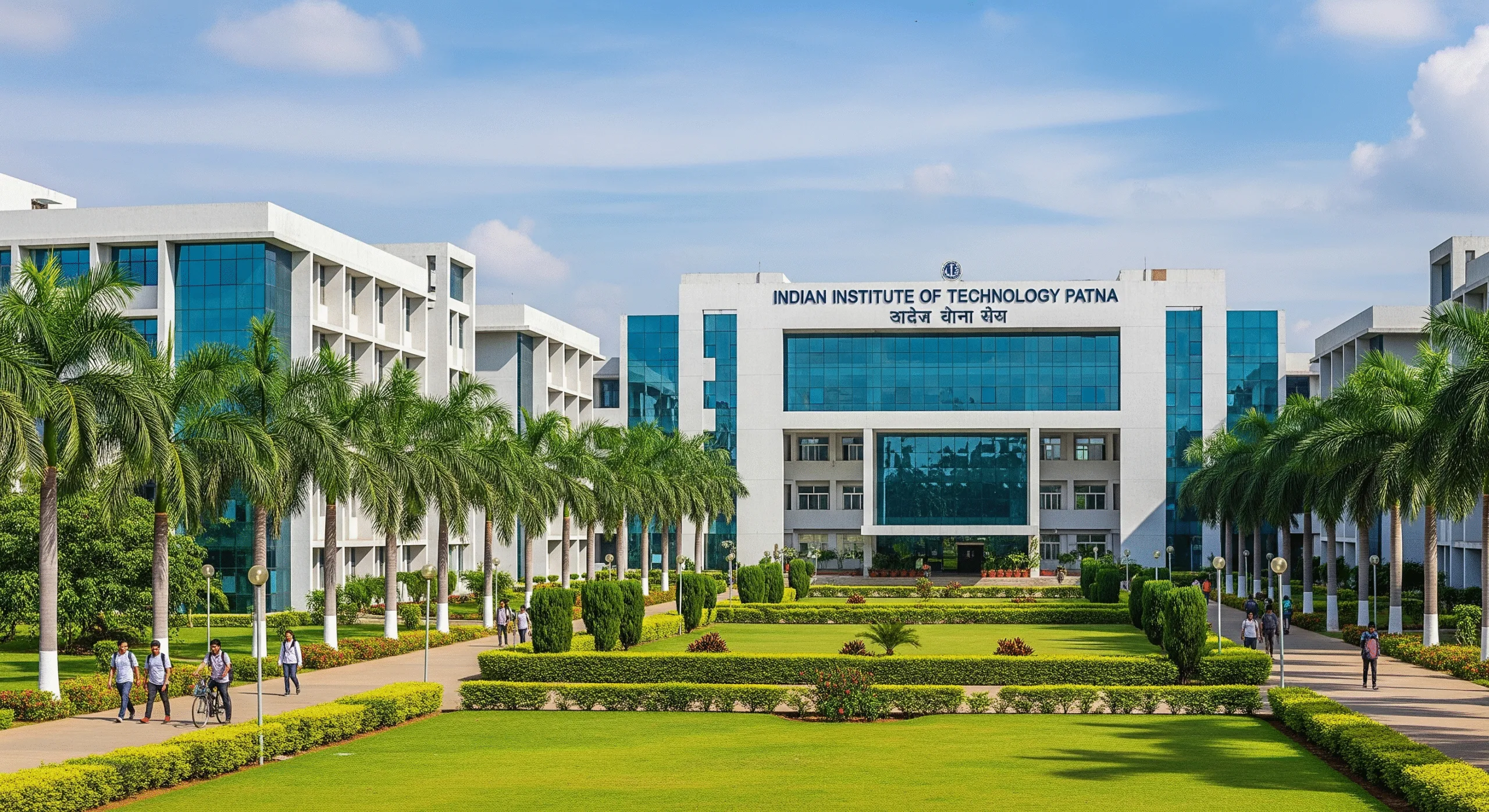
The Indian Institute of Technology (IIT) Patna is once again at the centre of a heated debate after one of its faculty members, Dr Priyanka Tripathi, Associate Professor of English, came under criticism for another of her published research papers. The paper, titled “Gendered and Casteist Body: Cast(e)ing and Castigating the Female Body in Select Bollywood Films,” was co-authored with Bidisha Pal of IIT Dhanbad and Partha Bhattacharjee of Amity University.
The controversy erupted after portions of the paper circulated on social media, particularly one passage that states: “The act of rape is normalised within the patriarchal ‘norms’ of Hindu society and is associated with the inevitable outcome of staunch orthodoxy. Jean Chapman (2014) argues that Brahmanical Hinduism normalises subtleties of misogynistic activities and this leads him into saying that rape is not random. It is structured.”
The statement has been described by protestors as sweeping, inflammatory and lacking nuance, particularly given the sensitive nature of the subject matter.
Academic framework of the paper
The paper examines representations of caste, gender, and sexual violence in Hindi cinema, focusing primarily on two films: Bandit Queen directed by Shekhar Kapur and Article 15 directed by Anubhav Sinha.
According to the authors, cinema reflects and reinforces structures of caste and gender oppression. In discussing Bandit Queen, which portrays the life of Phoolan Devi and includes depictions of sexual violence, the paper states, “The spectacle of cinema depicts a sustained form of Savarna patriarchy in the act of public rape.”
The authors frame rape in the films not merely as individual criminal acts but as manifestations of larger caste and patriarchal structures.
The research draws from critical caste theory and feminist scholarship. The authors cite Suraj Yengde, a scholar known for his work on caste issues, and Meena Kandasamy, a poet and writer who has frequently critiqued caste hierarchies and patriarchy.
Linking Womanhood with “Dalithood”
One of the paper’s central conceptual arguments is the linking of gender oppression with caste marginalisation. The authors quote Meena Kandasamy, “For a man, the woman is the Dalit of the house.”
They argue that womanhood is symbolically and structurally linked to what they term “Dalithood,” suggesting that women across caste hierarchies are subjected to patriarchal control, while Dalit women face compounded marginalisation.
The paper further claims, “Dalits in India are also victims of the politics of segregation. There is hidden apartheid within mainstream Indian society which precipitates that very idea of segregation. This is nothing but a kind of physical apartheid which owes its origin to the hierarchical ladder of the caste system.”
The analogy between caste-based discrimination in India and apartheid in South Africa has drawn criticism from commentators who argue that such comparisons oversimplify distinct historical and socio-political contexts.
The core controversial claim
The strongest reaction, however, has centred around the paper’s assertion that rape is “normalised” within patriarchal Hindu norms.
By invoking the term “Brahmanical Hinduism” and associating it with structured misogyny, the authors argue that sexual violence is embedded within systemic power hierarchies rather than occurring as isolated acts.
Many argue that such phrasing risks painting an entire religious and civilisational tradition with a broad brush, rather than distinguishing between criminal acts, social distortions, and theological teachings. They contend that equating Hindu society as a whole with normalisation of rape disregards legal reforms, social movements, and internal reform traditions that have challenged gender injustice for decades.
Excerpts of the paper were widely shared online, with several social media users tagging the Ministry of Education and demanding action. They questioned how such claims were published without substantial empirical backing and why they were framed in civilisational terms rather than socio-political critique.
As of now, IIT Patna has not issued a detailed public clarification regarding the matter. The institute has previously faced scrutiny over academic debates within its Humanities and Social Sciences department.
The controversy comes close on the heels of another debate surrounding Dr Tripathi’s earlier paper linking Hindu philosophical concepts such as Shakti and Prakriti with queer ecofeminist theory.
Dr Priyanka Tripathi’s academic background
Dr Priyanka Tripathi is an Associate Professor of English at IIT Patna and previously served as Head of the Department of Humanities and Social Sciences. She completed her PhD from IIT Kharagpur and has held visiting fellowships at international institutions, including the University of Leeds and the University of Edinburgh.
Her research areas include Gender Studies, Medical Humanities, South Asian fiction, and graphic narratives. She has also authored The Gendered War: Evaluating Feminist Ethnographic Narratives of the 1971 War of Bangladesh.
In addition, she holds editorial positions with journals published by Taylor & Francis, a UK-based academic publisher known for publishing a wide spectrum of critical scholarship on politics, society, and culture.
Academic critique vs religious sensitivity
The recurring controversies surrounding Dr Tripathi’s work have reignited a larger national debate about the boundaries of academic freedom in India’s premier institutions.
Key questions being raised include:
1. Should religious traditions be framed in structural or civilisational terms when analysing social crimes?
2. Does invoking “Hindu society” in sweeping academic claims risk alienating large sections of believers?
3. How should publicly funded institutions balance free inquiry with social responsibility?
India’s universities have long been spaces for critical theory, postcolonial scholarship, and feminist critique.
However, such frameworks must be applied with precision and contextual clarity, particularly when addressing issues as grave as sexual violence.
Notably, this is not the first time Dr Tripathi’s academic writings have drawn criticism. Her earlier works have engaged with themes of patriarchy, caste hierarchy, and reinterpretations of Hindu social traditions.
Whether this latest controversy results in institutional review, clarification, or remains part of a larger public debate remains to be seen.