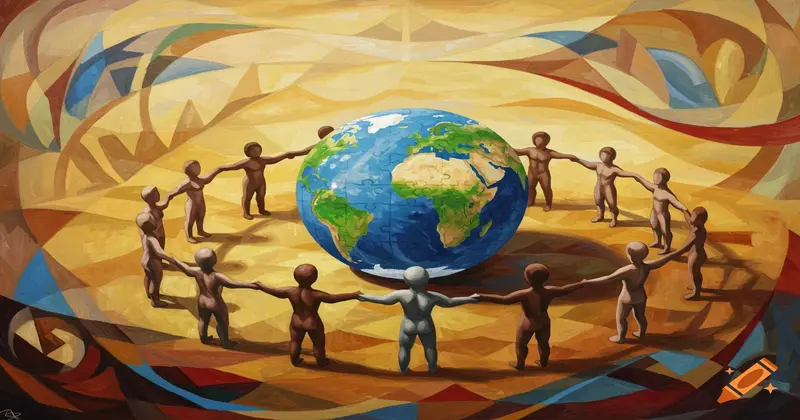
The idea of “pollution” is no longer limited to contaminated air, poisoned water or degraded soil. A far more subtle and dangerous form of pollution is spreading silently within society i.e. the pollution of human relationships. This decay has reached the very space where trust, affection, sacrifice and coexistence once formed the moral foundation of social life. Today, almost no relationship remains untouched by selfishness, suspicion or unchecked ego. The family, once regarded as the strongest institution of security and values, is increasingly turning into a site of conflict, dissatisfaction and emotional fragmentation.
Core virtues such as love, cooperation, harmony, tolerance and mutual respect are rapidly disappearing from family life. In their place, deceit, manipulation, emotional exploitation and hostility are gaining ground. Modern individuals, driven by excessive self-interest and material ambition, often sever relationships without hesitation or remorse. As a result, Indian society is witnessing a steady rise in family disintegration, divorce and the social normalization of pre-marital live-in relationships. The shift from joint families to nuclear households is not merely a structural transformation; it reflects a deeper socio-psychological imbalance that is directly affecting the younger generation. Rising tendencies toward crime, substance abuse, loneliness and depression among youth are closely linked to the weakening of the family fabric.
In many ways, the pollution of relationships is more destructive than environmental pollution, because it corrodes society from within. This concern is strongly supported by data from the National Crime Records Bureau’s report Crime in India(September 2025). In 2023 alone, over 4.48 lakh crimes against women were registered, nearly 31.4 per cent of which involved cruelty by husbands or their relatives. Similarly, among the 1.77 lakh crimes recorded against children, more than 96 per cent of cases under the POCSO Act involved perpetrators who were not strangers but acquaintances or close relatives. Even in heinous crimes such as murder, family disputes have emerged as a leading cause. These statistics reveal not only a rise in crime but a profound moral and relational collapse within society.
Indian civilization, rooted in Sanatan values, has traditionally viewed the family as a “laboratory of sanskar” where ethical conduct and emotional balance are cultivated. For centuries, the Indian family system represented a moral strength that inspired admiration even beyond national boundaries. Today, however, this institution is drifting away from its cultural discipline, traditions and value-based framework. The growing self-centered outlook of the younger generation has intensified this crisis. Career advancement, material comfort and individual freedom dominate priorities, while responsibilities toward family, society and the nation are steadily relegated to the margins. This shift perhaps explains why temporary and fragile relationships are increasingly preferred over the enduring sanctity of marriage.
Another alarming outcome of this social transformation is the declining fertility rate. According to the National Family Health Survey–5, urban India’s total fertility rate has fallen to 1.6, far below the replacement level of 2.1. This trend points toward a future marked by widespread loneliness among the elderly and the erosion of intergenerational support systems. A 2024 Lok Sabha report further highlights that nearly 60 percent of Indian youth experience loneliness, a condition that often leads to depression, anxiety and substance dependence. UNICEF reports consistently emphasize that family conflict remains one of the primary contributors to mental health issues among adolescents.
The erosion of dialogue, patience and emotional sensitivity within families has dismantled the protective cultural shield once provided by joint family systems. Studies conducted during the COVID-19 pandemic demonstrated that individuals living in joint families were better equipped to cope with crises due to shared emotional and social support. In contrast, those in nuclear families experienced deeper feelings of isolation, insecurity and psychological stress.
It is important to recognize that geographical separation due to livelihood constraints may be unavoidable, but emotional distance is largely a product of ego, misplaced priorities and weakened values. In this context, initiatives such as the Rashtriya Swayamsevak Sangh’s ‘Parivar Prabodhan’ efforts to strengthen family awareness are not only commendable but also serve as a model for other social organizations. In a nation of 1.4 billion people, restoring the family as a space of trust, dialogue and empathy is not solely the responsibility of single institutions. It is a collective moral obligation of every citizen.
The timeless Rigvedic exhortation “Sangachchhadhwam Samvadadhwam”-reminds us that social harmony is sustained through unity and communication. If cultural and familial consciousness is not revived in time, India’s rich civilizational heritage risks being reduced to mere historical references and statistical records. In the relentless pursuit of development, we must not loosen our grip on human bonds, for a resilient society is built not only on economic growth, but on the strength and sanctity of relationships.