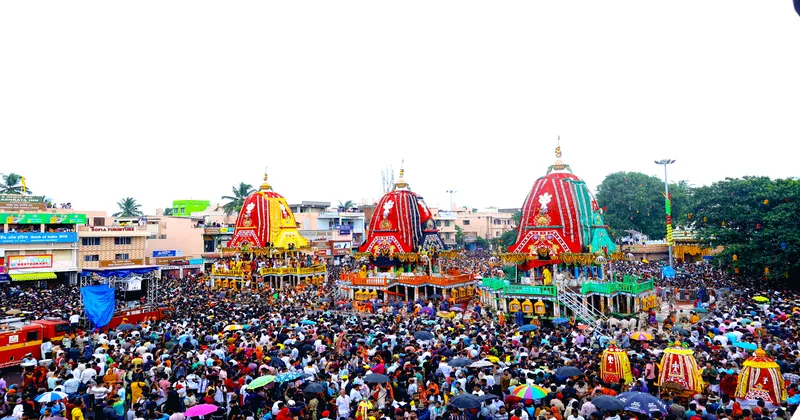
The Jagannath Rath Yatra of Puri is far more than a religious festival; it is a celebration of India’s living cultural tradition that unites faith, social harmony, public participation, and human values into a single thread. Organized for centuries, the Yatra remains as relevant today as ever because its core message offers meaningful responses to many of the challenges confronting modern society. The symbolic act of Lord Jagannath leaving the temple to come among the people signifies that the true purpose of religion is to remain connected with society, embrace everyone without discrimination, and promote the welfare of all.
At a time when society is divided by caste, class, language, region, and ideological differences, the Jagannath Rath Yatra stands as an extraordinary example of social harmony. From the construction of the chariots to the organisation of the procession, artisans, servitors, artists, traders, volunteers, and devotees participate with equal dedication and a shared sense of purpose. The sight of thousands of people pulling the chariot together is not merely a religious ritual; it is a powerful symbol of collective responsibility, cooperation, and national unity. This message is especially significant in a democratic society, reminding us that a nation progresses not through the efforts of a single individual but through the active participation of its people.
The digital age has revolutionized communication, yet it has also narrowed the space for genuine human interaction and personal connection. In such a context, the Rath Yatra brings millions together in a shared cultural and spiritual experience. It demonstrates that while technology can simplify life, it can never replace social bonds, collective celebrations, and cultural traditions. Such shared experiences strengthen mental well-being, foster social trust, and reinforce a sense of cultural belonging.
The Jagannath Rath Yatra also has significant economic importance. The festival generates substantial opportunities for tourism, transportation, handicrafts, local industries, hospitality, the preparation of prasada (sacred offerings), and numerous small-scale enterprises, creating employment and boosting local incomes. It illustrates that India’s cultural heritage is not only a matter of faith but also a powerful driver of local economic development and self-reliance.
From an environmental perspective, the Yatra conveys equally meaningful lessons. Traditional craftsmanship, the use of natural materials, and community cooperation reflect a sustainable way of living in harmony with nature. If the festival is further integrated with initiatives such as plastic-free practices, cleanliness drives, water conservation, and green event management, it can also serve as an effective platform for environmental awareness and conservation.
In today’s global landscape, marked by wars, intolerance, social tensions, and growing consumerism, the Jagannath Rath Yatra embodies the timeless Indian ideal of Sarvajana Hitaya, Sarvajana Sukhaya-“for the welfare of all and the happiness of all.” It reminds us that true progress cannot be measured solely by economic growth; it must also be reflected in social harmony, cultural self-confidence, environmental balance, and human compassion. For this reason, the Jagannath Rath Yatra is not merely a religious tradition but an enduring source of inspiration for building an inclusive, compassionate, and responsible India that confidently advances from its rich traditions toward a brighter future.