Pollution beyond the environment: The decay of human bonds
August 3, 2026
  • Read Ecopy
  • Circulation
  • Advertise
  • Careers
  • About Us
  • Contact Us
Android AppiPhone AppArattai
Organiser
  • ‌
  • Bharat
    • Assam
    • Bihar
    • Chhattisgarh
    • Jharkhand
    • Maharashtra
    • View All States
  • World
    • Asia
    • Europe
    • North America
    • South America
    • Africa
    • Australia
  • Editorial
  • International
  • Opinion
  • RSS @ 100
  • More
    • Op Sindoor
    • Analysis
    • Sports
    • Defence
    • Politics
    • Business
    • Economy
    • Culture
    • Special Report
    • Sci & Tech
    • Entertainment
    • G20
    • Azadi Ka Amrit Mahotsav
    • Vocal4Local
    • Web Stories
    • Education
    • Employment
    • Books
    • Interviews
    • Travel
    • Law
    • Health
    • Obituary
  • Subscribe
    • Subscribe Print Edition
    • Subscribe Ecopy
    • Read Ecopy
  • ‌
  • Bharat
    • Assam
    • Bihar
    • Chhattisgarh
    • Jharkhand
    • Maharashtra
    • View All States
  • World
    • Asia
    • Europe
    • North America
    • South America
    • Africa
    • Australia
  • Editorial
  • International
  • Opinion
  • RSS @ 100
  • More
    • Op Sindoor
    • Analysis
    • Sports
    • Defence
    • Politics
    • Business
    • Economy
    • Culture
    • Special Report
    • Sci & Tech
    • Entertainment
    • G20
    • Azadi Ka Amrit Mahotsav
    • Vocal4Local
    • Web Stories
    • Education
    • Employment
    • Books
    • Interviews
    • Travel
    • Law
    • Health
    • Obituary
  • Subscribe
    • Subscribe Print Edition
    • Subscribe Ecopy
    • Read Ecopy
Organiser
  • Home
  • Bharat
  • World
  • Operation Sindoor
  • Editorial
  • Analysis
  • Opinion
  • Culture
  • Defence
  • International Edition
  • RSS @ 100
  • Magazine
  • Read Ecopy
Home Bharat

Pollution beyond the environment: The decay of human bonds

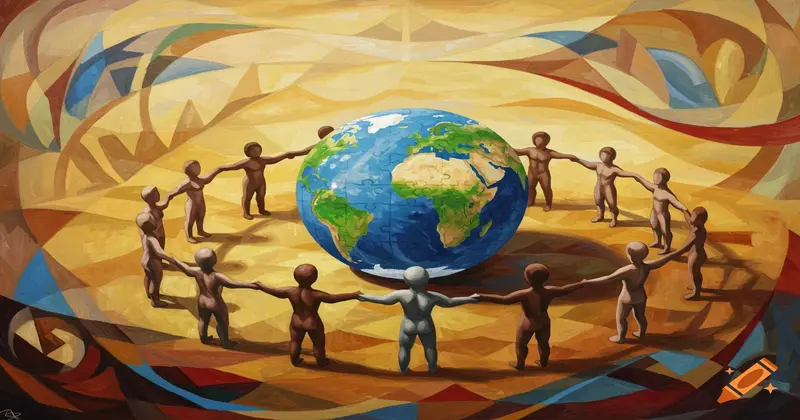
The timeless Rigvedic exhortation “Sangachchhadhwam Samvadadhwam”-reminds us that social harmony is sustained through unity and communication. If cultural and familial consciousness is not revived in time, India’s rich civilizational heritage risks being reduced to mere historical references and statistical records. In the relentless pursuit of development, we must not loosen our grip on human bonds

Dr Manmohan PrakashDr Manmohan Prakash
Feb 9, 2026, 07:50 pm IST
in Bharat, Opinion, Culture
Follow on Google News
Representative Image

Representative Image

FacebookTwitterWhatsAppTelegramEmail

The idea of “pollution” is no longer limited to contaminated air, poisoned water or degraded soil. A far more subtle and dangerous form of pollution is spreading silently within society i.e. the pollution of human relationships. This decay has reached the very space where trust, affection, sacrifice and coexistence once formed the moral foundation of social life. Today, almost no relationship remains untouched by selfishness, suspicion or unchecked ego. The family, once regarded as the strongest institution of security and values, is increasingly turning into a site of conflict, dissatisfaction and emotional fragmentation.

Core virtues such as love, cooperation, harmony, tolerance and mutual respect are rapidly disappearing from family life. In their place, deceit, manipulation, emotional exploitation and hostility are gaining ground. Modern individuals, driven by excessive self-interest and material ambition, often sever relationships without hesitation or remorse. As a result, Indian society is witnessing a steady rise in family disintegration, divorce and the social normalization of pre-marital live-in relationships. The shift from joint families to nuclear households is not merely a structural transformation; it reflects a deeper socio-psychological imbalance that is directly affecting the younger generation. Rising tendencies toward crime, substance abuse, loneliness and depression among youth are closely linked to the weakening of the family fabric.

In many ways, the pollution of relationships is more destructive than environmental pollution, because it corrodes society from within. This concern is strongly supported by data from the National Crime Records Bureau’s report Crime in India(September 2025). In 2023 alone, over 4.48 lakh crimes against women were registered, nearly 31.4 per cent of which involved cruelty by husbands or their relatives. Similarly, among the 1.77 lakh crimes recorded against children, more than 96 per cent of cases under the POCSO Act involved perpetrators who were not strangers but acquaintances or close relatives. Even in heinous crimes such as murder, family disputes have emerged as a leading cause. These statistics reveal not only a rise in crime but a profound moral and relational collapse within society.

Indian civilization, rooted in Sanatan values, has traditionally viewed the family as a “laboratory of sanskar” where ethical conduct and emotional balance are cultivated. For centuries, the Indian family system represented a moral strength that inspired admiration even beyond national boundaries. Today, however, this institution is drifting away from its cultural discipline, traditions and value-based framework. The growing self-centered outlook of the younger generation has intensified this crisis. Career advancement, material comfort and individual freedom dominate priorities, while responsibilities toward family, society and the nation are steadily relegated to the margins. This shift perhaps explains why temporary and fragile relationships are increasingly preferred over the enduring sanctity of marriage.

Another alarming outcome of this social transformation is the declining fertility rate. According to the National Family Health Survey–5, urban India’s total fertility rate has fallen to 1.6, far below the replacement level of 2.1. This trend points toward a future marked by widespread loneliness among the elderly and the erosion of intergenerational support systems. A 2024 Lok Sabha report further highlights that nearly 60 percent of Indian youth experience loneliness, a condition that often leads to depression, anxiety and substance dependence. UNICEF reports consistently emphasize that family conflict remains one of the primary contributors to mental health issues among adolescents.

The erosion of dialogue, patience and emotional sensitivity within families has dismantled the protective cultural shield once provided by joint family systems. Studies conducted during the COVID-19 pandemic demonstrated that individuals living in joint families were better equipped to cope with crises due to shared emotional and social support. In contrast, those in nuclear families experienced deeper feelings of isolation, insecurity and psychological stress.

Also Read: Pariksha pe Charcha: “Not dreaming is a crime, but action gives dreams meaning,” PM Modi to exam warriors

It is important to recognize that geographical separation due to livelihood constraints may be unavoidable, but emotional distance is largely a product of ego, misplaced priorities and weakened values. In this context, initiatives such as the Rashtriya Swayamsevak Sangh’s ‘Parivar Prabodhan’ efforts to strengthen family awareness are not only commendable but also serve as a model for other social organizations. In a nation of 1.4 billion people, restoring the family as a space of trust, dialogue and empathy is not solely the responsibility of single institutions. It is a collective moral obligation of every citizen.

The timeless Rigvedic exhortation “Sangachchhadhwam Samvadadhwam”-reminds us that social harmony is sustained through unity and communication. If cultural and familial consciousness is not revived in time, India’s rich civilizational heritage risks being reduced to mere historical references and statistical records. In the relentless pursuit of development, we must not loosen our grip on human bonds, for a resilient society is built not only on economic growth, but on the strength and sanctity of relationships.


Topics: indian civilisationSocial HarmonySocietyHuman BondsParivar PrabodhanCulture
ShareTweetSendShareSend
✮ Subscribe Organiser YouTube Channel. ✮
✮ Join Organiser's WhatsApp channel for Nationalist views beyond the news. ✮
Previous News

Hindu Sammelan in Delhi’s Chhatarpur: Harmony, values and culture converge

Next News

Hate against India & Hinduism or external pressure: Why Gaurav Gogoi changed his children nationality & religion?

Related News

Kanwar Yatra

When Faith Walks the Highways: A journey through the Kanwar yatra and the living soul of India

Hindu Samaj have long strengthened social unity, and reviving their spirit can help Hindu society face today’s challenges together

World Hindu Congress 2026: Reviving the spirit of samaj to rebuild Hindu unity and social strength

Guruji MS Golwalkar: The lessons for social harmony and united Hindu society

Bharat was not created by the British; It is a timeless civilisational spirit rooted in cultural unity

Jagannath Rath Yatra is more than a sacred procession, it reflects India's enduring values of social harmony and cultural unity

Jagannath Rath Yatra: A living symbol of India’s civilisational values advancing from tradition to the future

Dakshineshwari temple in Dhaka

Dhakeshwari Temple: The surviving heart of a forgotten Hindu heritage in Bangladesh

Load More

Latest News

Site of Suicide bombing attack in which 14 people were killed in in Swat district of Khyber Pakhtunkhwa province in Pakistan

Pakistan: 8 policemen among 14 killed in suicide bombing at Kabal police station in Swat district, 22 injured

(Left) Bilawal Bhutto (Right) Pakistan PM Shehbaz Sharif

PoJK Polls: Bilawal accuses PML-N of robbing votes through bullets & batons; warns of withdrawing support to PM Sharif

Minister Vanni Arasu, CM Vijay Joseph (Left to right) (File Photo)

Tamil Nadu: VCK Minister Vanni Arasu mistakes NCC’s ‘jai hind, sriman’ for ‘jai shri Ram’, BJP hits back

Protesters affiliated to Cockroach Janta Party confronting a policeman on duty at Jantar Mantar protest sight

Cockroach Janta Party: Scientific dissection of cockroaches

Dr Suresh Hanagavadi conferred with Padmashri

Dr Suresh Hanagavadi: The remarkable journey of a doctor who revolutionised haemophilia care & patient advocacy

A discussion on anti-paper leak in Parliament

Public Examinations (Prevention of Unfair Means) Amendment Bill, 2026: Passing the trust test

(Left) Sanket Upadhyay (Right) Veteran BBC journalist Rehan Fazal

Veteran Journalist Rehan Fazal claims BBC India blocked RSS coverage, raising questions over editorial neutrality

Kanwar Yatra

When Faith Walks the Highways: A journey through the Kanwar yatra and the living soul of India

Bhojshala Campus

Bhojshala: The legacy of  a scholarly king

Boxer Lovlina protests against incorrect India map at a Glasgow restaurant

CWG silver medalist Lovlina flags incorrect India map in Glasgow restaurant; Protests missing Northeast & Kashmir

Load More
  • Privacy
  • Terms
  • Cookie Policy
  • Refund and Cancellation
  • Delivery and Shipping

© Bharat Prakashan (Delhi) Limited.
Tech-enabled by Ananthapuri Technologies

  • Home
  • Search Organiser
  • Bharat
    • Assam
    • Bihar
    • Chhattisgarh
    • Jharkhand
    • Maharashtra
    • View All States
  • World
    • Asia
    • Africa
    • North America
    • South America
    • Europe
    • Australia
  • Editorial
  • Operation Sindoor
  • Opinion
  • Analysis
  • Defence
  • Culture
  • Sports
  • Business
  • RSS @ 100
  • Entertainment
  • More ..
    • Sci & Tech
    • Vocal4Local
    • Special Report
    • Education
    • Employment
    • Books
    • Interviews
    • Travel
    • Health
    • Politics
    • Law
    • Economy
    • Obituary
  • Subscribe Magazine
  • Read Ecopy
  • Advertise
  • Circulation
  • Careers
  • About Us
  • Contact Us
  • Policies & Terms
    • Privacy Policy
    • Cookie Policy
    • Refund and Cancellation
    • Terms of Use

© Bharat Prakashan (Delhi) Limited.
Tech-enabled by Ananthapuri Technologies