‘Leave India if you can’t follow constitution’: Supreme Court tells Meta in WhatsApp privacy case
August 26, 2026
  • Read Ecopy
  • Circulation
  • Advertise
  • Careers
  • About Us
  • Contact Us
Android AppiPhone AppArattai
Organiser
  • ‌
  • Bharat
    • Assam
    • Bihar
    • Chhattisgarh
    • Jharkhand
    • Maharashtra
    • View All States
  • World
    • Asia
    • Europe
    • North America
    • South America
    • Africa
    • Australia
  • Editorial
  • International
  • Opinion
  • RSS @ 100
  • More
    • Op Sindoor
    • Analysis
    • Sports
    • Defence
    • Politics
    • Business
    • Economy
    • Culture
    • Special Report
    • Sci & Tech
    • Entertainment
    • G20
    • Azadi Ka Amrit Mahotsav
    • Vocal4Local
    • Web Stories
    • Education
    • Employment
    • Books
    • Interviews
    • Travel
    • Law
    • Health
    • Obituary
  • Subscribe
    • Subscribe Print Edition
    • Subscribe Ecopy
    • Read Ecopy
  • ‌
  • Bharat
    • Assam
    • Bihar
    • Chhattisgarh
    • Jharkhand
    • Maharashtra
    • View All States
  • World
    • Asia
    • Europe
    • North America
    • South America
    • Africa
    • Australia
  • Editorial
  • International
  • Opinion
  • RSS @ 100
  • More
    • Op Sindoor
    • Analysis
    • Sports
    • Defence
    • Politics
    • Business
    • Economy
    • Culture
    • Special Report
    • Sci & Tech
    • Entertainment
    • G20
    • Azadi Ka Amrit Mahotsav
    • Vocal4Local
    • Web Stories
    • Education
    • Employment
    • Books
    • Interviews
    • Travel
    • Law
    • Health
    • Obituary
  • Subscribe
    • Subscribe Print Edition
    • Subscribe Ecopy
    • Read Ecopy
Organiser
  • Home
  • Bharat
  • World
  • Operation Sindoor
  • Editorial
  • Analysis
  • Opinion
  • Culture
  • Defence
  • International Edition
  • RSS @ 100
  • Magazine
  • Read Ecopy
Home Bharat

‘Leave India if you can’t follow constitution’: Supreme Court tells Meta in WhatsApp privacy case

The Supreme Court issued a sharp warning to Meta over WhatsApp’s 2021 privacy policy, saying no company would be allowed to compromise the privacy of Indian citizens. The top court ordered WhatsApp to stop sharing any user data with Meta until the case is finally decided

WEBDESKWEBDESK
Feb 3, 2026, 02:10 pm IST
inBharat, World, Law
Follow on Google News
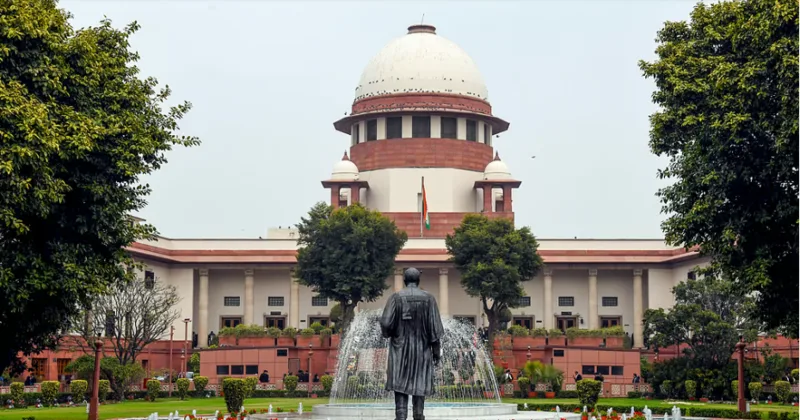
Supreme Court of India

Supreme Court of India

Facebook
Twitter
WhatsAppTelegramEmail

The Supreme Court on Tuesday (Feb 3) came down heavily on Meta and its messaging platform WhatsApp over violations of user privacy, making it clear that compliance with the Indian Constitution is non-negotiable for foreign technology companies operating in the country. A bench led by Chief Justice Surya Kant warned Meta in unambiguous terms that if it could not follow India’s constitutional framework, it should leave the country.

Hearing a batch of appeals related to WhatsApp’s controversial 2021 privacy policy, the Chief Justice observed that no company would be permitted to “play with the privacy” of Indian citizens. The bench categorically stated that it would not allow even “a single digit” of user data to be shared, underscoring the seriousness with which the court viewed the matter.

During the proceedings, Solicitor General Tushar Mehta strongly criticised WhatsApp’s data-sharing policy, describing it as exploitative and commercially driven. He argued that user data, including metadata, was being monetised under the garb of consent and that such practices violated the spirit of the Digital Personal Data Protection Act. Counsel appearing for the Competition Commission of India supported this argument, stating that even encrypted data could be commercially exploited and that informed consent was largely illusory.

The Supreme Court expressed deep scepticism over Meta and WhatsApp’s claim that users had given informed consent to the privacy policy. The bench pointed out that a vast majority of WhatsApp users in India, including street vendors and people in rural areas, could not realistically be expected to understand complex legal language used in privacy policies. The court questioned the fairness of presenting users with a take-it-or-leave-it choice that effectively forced them to accept data sharing in order to continue using the service.

Chief Justice Surya Kant remarked that the policy appeared to be “very cleverly crafted” in a manner that deprived ordinary users of any meaningful choice. He illustrated this by referring to a hypothetical poor fruit seller, questioning how such a person could comprehend opt-in and opt-out clauses embedded in dense legal jargon. The bench described the situation as an unequal contest, likening it to a choice between “the lion and the lamb”.

The court issued a clear ultimatum to WhatsApp, stating that the company must either file an undertaking that no data would be shared with Meta or face dismissal of its plea. Rejecting arguments that the policy aligned with international standards, the bench emphasised that India’s privacy framework could not be equated with European regulations and that commercial use of shared data raised serious constitutional concerns.

The judges also flagged concerns over behavioural and commercial exploitation of user data, particularly targeted advertising. The bench took note of instances where users allegedly received advertisements for medicines shortly after having private chats with doctors, raising troubling questions about how user data was being analysed and monetised.

The hearing relates to multiple appeals filed by WhatsApp, Meta and the Competition Commission of India challenging a January 2025 order of the National Company Law Appellate Tribunal. The NCLAT had upheld a Rs 213.14 crore penalty imposed by the CCI on WhatsApp and Meta for abusing their dominant position through the 2021 privacy policy, which mandated data sharing with Meta companies as a condition for continued use of WhatsApp.

In November 2024, the CCI had found that the policy amounted to an unfair and coercive practice, forcing users into a take-it-or-leave-it arrangement. The penalty and remedial directions were later upheld by the NCLAT in November 2025, which also directed WhatsApp to strengthen user-choice safeguards and allow opt-out options for data sharing.

As an interim measure, the Supreme Court has now ordered WhatsApp not to share any user information with Meta until the matter is fully heard.

Topics: CJI Surya KantWhatsApp Privacy PolicyNCLATSupreme CourtMetadata protectionDPDP Act
Share
Tweet
SendShareSend
✮ Subscribe Organiser YouTube Channel. ✮
✮ Join Organiser's WhatsApp channel for Nationalist views beyond the news. ✮
Previous News

Protests erupt across US criticising the atrocities on Hindus in Bangladesh; Demands accountability from Yunus regime

Next News

Budget 2026: Hyderabad to become high-speed rail hub; travel time to be slashed from 15 hours to 3.5 hours

Related News

The Supreme Court of India

“Can the court direct fresh elections like this?”: SC questions TMC plea over West Bengal SIR voter deletion

Supreme Court rejects rape convict Tarun Tejpal’s exemption plea; Orders to surrender within two weeks

Join hands against the US’ unilateral tariff pressures

Pakistan PM Shehbaz Sharif and Former PM Imran Khan

Pakistan: Contempt plea filed against PM Shehbaz Sharif & 2 ministers for defying Supreme Court order on Imran Khan

Goa government moves Supreme Court seeking life imprisonment for convicted rapist Tarun Tejpal

Goa government demands life imprisonment for convicted rapist Tarun Tejpal, escalates case to Supreme Court

Meta CEO Mark Zuckerberg

Trouble for Zuckerberg: 29 US states seek $1.4T from Meta, putting Facebook, Instagram and his AI ambitions at risk

Load More

Latest News

Home minister Priyank Kharge tells no case registered against RSS in Karnataka

Rajasthan High Court

Rajasthan High Court orders major school food reform, bans chips, fizzy drinks within 50 metres of schools

A representative image

FSSAI Flags Bournvita Claims: Mondelez removes health, nutrient claims from e-commerce platforms

The Supreme Court of India

“Can the court direct fresh elections like this?”: SC questions TMC plea over West Bengal SIR voter deletion

A representative image

NADCP Impact: FMD outbreaks fall from 132 to 40, brucellosis cases also decline since 2019

A representative image

Regenerative Agriculture: Why India needs to restore soil, save water and build climate-resilient farms

A representative image generated using AI

Hindu Hate Watch-A Weekly Tracker: 66 cases of abuses, assault and killings of Hindus reported this week

Empowering Indian youth with Cloud and AI skills, building a future-ready workforce for the digital economy (This image is generated by AI)

Scaling India’s AI Talent Pool: NSDC and AWS target 1.6 Lakh future tech professionals

‘Must Have Hit One of the Hills’: Gen Chauhan on Kirana Hills During Op Sindoor

Kirana Hills in Pakistan hit during Operation Sindoor? Gen Anil Chauhan says loitering munition may have struck site

The social cost of Gulf migration goes beyond money, as Islamic conservative social norms return to Keralam with migrant communities.

Keralam’s Gulf Money, Radical Return: World Bank study exposes how conservative Islamic norms come home with migrants

Load More
  • Privacy
  • Terms
  • Cookie Policy
  • Refund and Cancellation
  • Delivery and Shipping

© Bharat Prakashan (Delhi) Limited.
Tech-enabled by Ananthapuri Technologies

  • Home
  • Search Organiser
  • Bharat
    • Assam
    • Bihar
    • Chhattisgarh
    • Jharkhand
    • Maharashtra
    • View All States
  • World
    • Asia
    • Africa
    • North America
    • South America
    • Europe
    • Australia
  • Editorial
  • Operation Sindoor
  • Opinion
  • Analysis
  • Defence
  • Culture
  • Sports
  • Business
  • RSS @ 100
  • Entertainment
  • More ..
    • Sci & Tech
    • Vocal4Local
    • Special Report
    • Education
    • Employment
    • Books
    • Interviews
    • Travel
    • Health
    • Politics
    • Law
    • Economy
    • Obituary
  • Subscribe Magazine
  • Read Ecopy
  • Advertise
  • Circulation
  • Careers
  • About Us
  • Contact Us
  • Policies & Terms
    • Privacy Policy
    • Cookie Policy
    • Refund and Cancellation
    • Terms of Use

© Bharat Prakashan (Delhi) Limited.
Tech-enabled by Ananthapuri Technologies