NEW DELHI: For years, the legal debate over Deepawali firecrackers has repeatedly been reduced to two competing positions: prohibit them altogether in the name of pollution, or permit celebration without meaningful restriction.
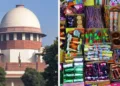
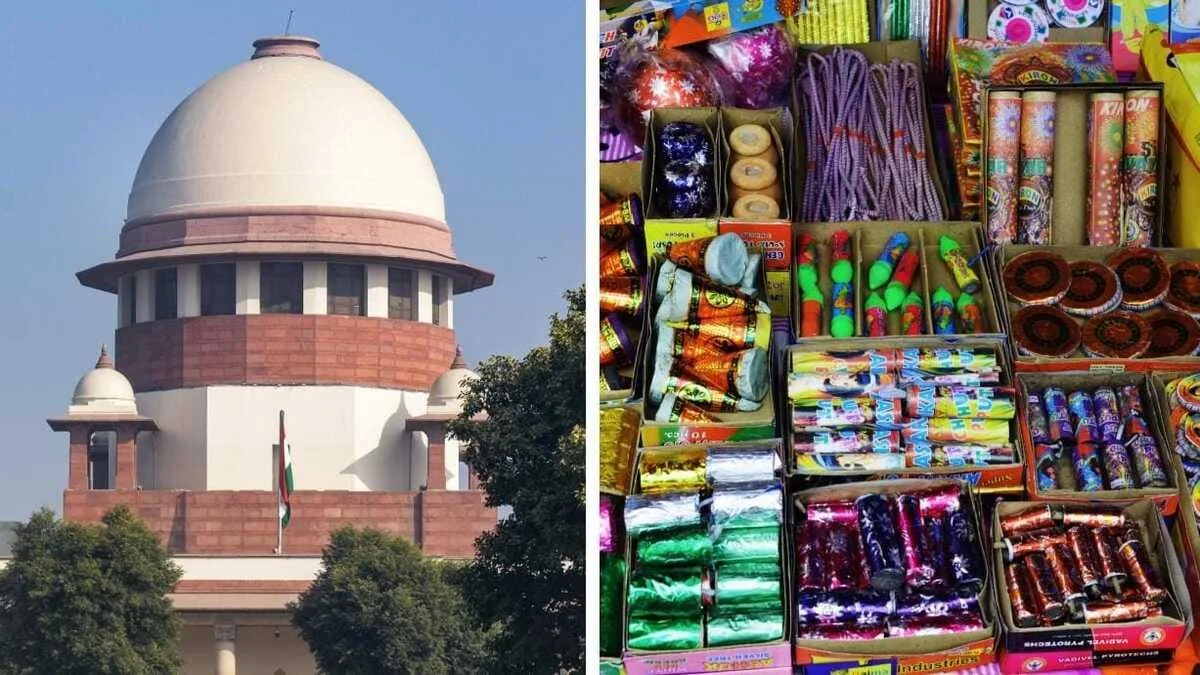
The Supreme Court has now signalled that it is unwilling to accept either extreme. Hearing the long-running Arjun Gopal v. Union of India proceedings on September 30, a Bench of Justices M M Sundresh and Augustine George Masih made clear that it would neither endorse a complete prohibition on firecrackers nor allow them to be burst throughout the day.
Justice Sundresh said a total ban would have an impact on public sentiments, while unrestricted bursting would affect other living beings, particularly children, elderly persons and those suffering from illness. The Court indicated that the workable solution lay in specifying both the permissible categories of crackers and the hours during which they could be used.
That approach is important because the case is no longer only about choosing between firecrackers and clean air. Advances in green-cracker technology have added a third possibility: permitting celebration while reducing emissions and regulating noise.
The Centre placed before the Court recommendations concerning next-generation joined firecrackers, commonly associated with a chain or “lari” format. The Bench accepted the recommendation permitting their manufacture subject to prescribed specifications.
According to the material placed before the Court, studies by CSIR-National Environmental Engineering Research Institute indicated around a 30 per cent reduction in emissions and a reduction in solid-waste generation ranging between 4 and 32 per cent in the new-generation joined crackers. Their manufacture remains subject to conditions including smaller shell sizes, prescribed burst intervals, permissible noise levels and the exclusion of banned chemicals.
The question of barium, however, remains open. The Centre informed the Court that NEERI has been studying newer formulations containing reduced quantities of barium salts and nitrates. Interim material indicated particulate-emission reductions of 45 to 60 per cent compared with conventional formulations, but further ambient-air studies are being undertaken in Delhi, Bhopal, Kolkata and Chennai.
The exercise is expected to be completed by October 15, after which the findings will be placed before the Supreme Court.
The Bench also deliberately refrained from deciding the separate question of restrictions applicable specifically to Delhi-NCR. Similar issues are pending in the M.C. Mehta v. Union of India proceedings before a Bench headed by the Chief Justice of India, and the Court considered it appropriate that the overlapping questions be dealt with together.
The judicial approach is therefore more nuanced than either side of the familiar debate may suggest. The Court has not declared an unrestricted right to burst firecrackers. Noise standards, chemical restrictions, manufacturing rules and timings remain central to the regulatory framework. Equally, it has declined to proceed on the assumption that prohibition must invariably be the first response when technological and regulatory alternatives are available. There is a broader principle here. Environmental protection need not require the State to treat cultural practice and ecological responsibility as irreconcilable. Where cleaner technology can demonstrably reduce harm, regulation can evolve alongside it.
Deepawali is still weeks away, and crucial questions, including the position concerning barium and the final framework applicable to Delhi-NCR, remain to be decided.