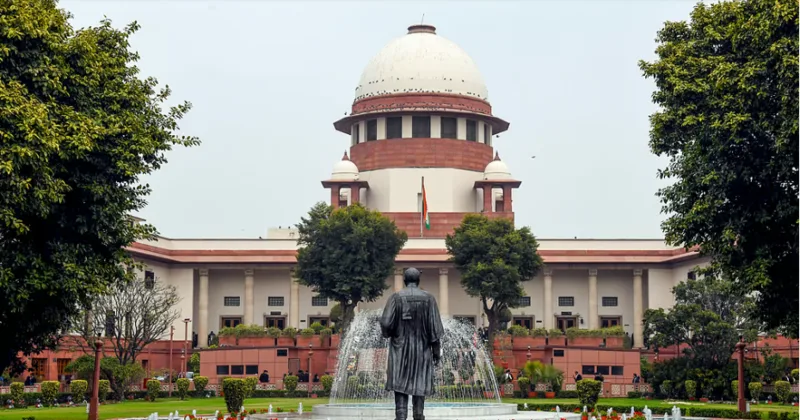
The Supreme Court on Tuesday (Feb 3) came down heavily on Meta and its messaging platform WhatsApp over violations of user privacy, making it clear that compliance with the Indian Constitution is non-negotiable for foreign technology companies operating in the country. A bench led by Chief Justice Surya Kant warned Meta in unambiguous terms that if it could not follow India’s constitutional framework, it should leave the country.
Hearing a batch of appeals related to WhatsApp’s controversial 2021 privacy policy, the Chief Justice observed that no company would be permitted to “play with the privacy” of Indian citizens. The bench categorically stated that it would not allow even “a single digit” of user data to be shared, underscoring the seriousness with which the court viewed the matter.
During the proceedings, Solicitor General Tushar Mehta strongly criticised WhatsApp’s data-sharing policy, describing it as exploitative and commercially driven. He argued that user data, including metadata, was being monetised under the garb of consent and that such practices violated the spirit of the Digital Personal Data Protection Act. Counsel appearing for the Competition Commission of India supported this argument, stating that even encrypted data could be commercially exploited and that informed consent was largely illusory.
The Supreme Court expressed deep scepticism over Meta and WhatsApp’s claim that users had given informed consent to the privacy policy. The bench pointed out that a vast majority of WhatsApp users in India, including street vendors and people in rural areas, could not realistically be expected to understand complex legal language used in privacy policies. The court questioned the fairness of presenting users with a take-it-or-leave-it choice that effectively forced them to accept data sharing in order to continue using the service.
Chief Justice Surya Kant remarked that the policy appeared to be “very cleverly crafted” in a manner that deprived ordinary users of any meaningful choice. He illustrated this by referring to a hypothetical poor fruit seller, questioning how such a person could comprehend opt-in and opt-out clauses embedded in dense legal jargon. The bench described the situation as an unequal contest, likening it to a choice between “the lion and the lamb”.
The court issued a clear ultimatum to WhatsApp, stating that the company must either file an undertaking that no data would be shared with Meta or face dismissal of its plea. Rejecting arguments that the policy aligned with international standards, the bench emphasised that India’s privacy framework could not be equated with European regulations and that commercial use of shared data raised serious constitutional concerns.
The judges also flagged concerns over behavioural and commercial exploitation of user data, particularly targeted advertising. The bench took note of instances where users allegedly received advertisements for medicines shortly after having private chats with doctors, raising troubling questions about how user data was being analysed and monetised.
The hearing relates to multiple appeals filed by WhatsApp, Meta and the Competition Commission of India challenging a January 2025 order of the National Company Law Appellate Tribunal. The NCLAT had upheld a Rs 213.14 crore penalty imposed by the CCI on WhatsApp and Meta for abusing their dominant position through the 2021 privacy policy, which mandated data sharing with Meta companies as a condition for continued use of WhatsApp.
In November 2024, the CCI had found that the policy amounted to an unfair and coercive practice, forcing users into a take-it-or-leave-it arrangement. The penalty and remedial directions were later upheld by the NCLAT in November 2025, which also directed WhatsApp to strengthen user-choice safeguards and allow opt-out options for data sharing.
As an interim measure, the Supreme Court has now ordered WhatsApp not to share any user information with Meta until the matter is fully heard.