EU–India deal puts pressure on Pakistan, Bangladesh textiles
June 4, 2026
  • Read Ecopy
  • Circulation
  • Advertise
  • Careers
  • About Us
  • Contact Us
Android AppiPhone AppArattai
Organiser
  • ‌
  • Bharat
    • Assam
    • Bihar
    • Chhattisgarh
    • Jharkhand
    • Maharashtra
    • View All States
  • World
    • Asia
    • Europe
    • North America
    • South America
    • Africa
    • Australia
  • Editorial
  • International
  • Opinion
  • RSS @ 100
  • More
    • Op Sindoor
    • Analysis
    • Sports
    • Defence
    • Politics
    • Business
    • Economy
    • Culture
    • Special Report
    • Sci & Tech
    • Entertainment
    • G20
    • Azadi Ka Amrit Mahotsav
    • Vocal4Local
    • Web Stories
    • Education
    • Employment
    • Books
    • Interviews
    • Travel
    • Law
    • Health
    • Obituary
  • Subscribe
    • Subscribe Print Edition
    • Subscribe Ecopy
    • Read Ecopy
  • ‌
  • Bharat
    • Assam
    • Bihar
    • Chhattisgarh
    • Jharkhand
    • Maharashtra
    • View All States
  • World
    • Asia
    • Europe
    • North America
    • South America
    • Africa
    • Australia
  • Editorial
  • International
  • Opinion
  • RSS @ 100
  • More
    • Op Sindoor
    • Analysis
    • Sports
    • Defence
    • Politics
    • Business
    • Economy
    • Culture
    • Special Report
    • Sci & Tech
    • Entertainment
    • G20
    • Azadi Ka Amrit Mahotsav
    • Vocal4Local
    • Web Stories
    • Education
    • Employment
    • Books
    • Interviews
    • Travel
    • Law
    • Health
    • Obituary
  • Subscribe
    • Subscribe Print Edition
    • Subscribe Ecopy
    • Read Ecopy
Organiser
  • Home
  • Bharat
  • World
  • Operation Sindoor
  • Editorial
  • Analysis
  • Opinion
  • Culture
  • Defence
  • International Edition
  • RSS @ 100
  • Magazine
  • Read Ecopy
Home Bharat

EU-India trade deal raises alarm in Pakistan, Bangladesh as duty-free Indian textiles threaten exports

The proposed India–EU trade agreement is expected to give a major boost to India’s textile exports through duty-free access to Europe. The shift could challenge established exporters such as Pakistan and Bangladesh and reshape the competitive landscape. Indian markets rally on optimism over India–EU trade pact as exporters eye Europe to offset US tariff pressure

Dr Vishnu AravindDr Vishnu Aravind
Jan 29, 2026, 09:30 am IST
in Bharat, Europe, World, South Asia, Asia
Follow on Google News
India–EU trade talks signal a major shift in the European textile market, raising concerns for exporters in Pakistan and Bangladesh

India–EU trade talks signal a major shift in the European textile market, raising concerns for exporters in Pakistan and Bangladesh

FacebookTwitterWhatsAppTelegramEmail

Pakistan and Bangladesh have expressed concerns that the provisions of the proposed India–European Union (EU) trade agreement could adversely affect their export prospects, particularly in the textile sector, which forms the backbone of their exports to Europe. Both countries fear that duty-free access for Indian textile products to the European market will allow India to sell at more competitive prices, thereby eroding their market share.

Textiles account for the bulk of exports from Pakistan and Bangladesh to the EU. Pakistani industry bodies argue that once the trade agreement comes into force, Indian exporters will gain a decisive cost advantage. The Pakistan Textile Council (PTC) has urged the Shehbaz Sharif government to intervene urgently, suggesting that Pakistan should focus on increasing textile exports to the United States instead of relying heavily on the European market.

Pakistan currently exports goods worth around $9 billion annually to the EU, with textiles constituting nearly 65 per cent of this figure. Industry representatives say Pakistan is already facing difficulties competing with India’s improving quality standards and scale in textiles. They warn that the competitive pressure will intensify if India secures duty-free access under the proposed agreement. According to estimates cited by Pakistani traders, in 2024 Pakistan exported textile products worth $6.2 billion to Europe, while India’s textile exports to the EU stood at approximately $5.6 billion.

Until now, Pakistan has maintained an advantage in the European market largely due to duty-free access under the EU’s Generalised System of Preferences (GSP). This preferential status has enabled Pakistani exporters to offset higher domestic production costs. However, reports indicate that this exemption could be withdrawn or restricted in the near future, further weakening Pakistan’s competitive position. At present, Indian textile exports to Europe attract an average import duty of about 12 per cent. Under the proposed India–EU trade agreement, these duties would be eliminated, allowing Indian products to enter the European market at significantly lower prices. Pakistan Textile Council Chairman Fawad Anwar has warned that this shift could enable India to capture a substantial share of Pakistan’s European market.

Also Read: From Importer to Powerhouse: The rise of Bharat’s multi-billion dollar defence export empire

Anwar has also pointed to India’s industry-friendly domestic policies as an additional challenge for Pakistan. He noted that the Indian government supports its textile sector through measures such as low-cost electricity, affordable raw materials, and targeted incentives. In contrast, Pakistan’s textile industry faces high electricity tariffs, heavy taxation, and rising input costs, which undermine its global competitiveness. Anwar cautioned that without immediate policy intervention, Pakistan risks losing the European market it has built over decades, potentially resulting in large-scale job losses and a sharp decline in foreign exchange earnings. Analysts estimate that Pakistan’s textile exports to Europe could decline by 5–10 per cent, amounting to roughly Rs 5,600 crore.

Beyond Pakistan, the proposed trade agreement is also expected to affect other major textile exporters to Europe, including Bangladesh, Vietnam, China, and the Philippines. Bangladesh, in particular, earned more than $16 billion from textile exports last year and has benefited significantly from duty-free access to the EU. However, reports suggest that this preferential treatment may end later this year, prompting concern among Bangladeshi exporters about their future competitiveness.

Meanwhile, Union Minister for Commerce and Industry Piyush Goyal has stated that India’s textile exports are projected to grow to $30–40 billion in the coming years. He noted that textiles are India’s second-largest employment-generating sector after agriculture, employing around four crore people. According to Goyal, implementation of the trade agreement could create an additional 60–70 lakh jobs in the sector. He also remarked that the agreement would alter the competitive landscape for countries that previously exported textiles to Europe under duty-free arrangements.

Markets rally on optimism over India–EU trade pact as exporters eye Europe to offset US tariff pressure

Indian equity markets extended their gains on optimism that the EU-India free trade agreement will help cushion the impact of high tariffs imposed by the United States on Indian exports. Sentiment strengthened further on Wednesday as more details of the agreement emerged. The benchmark Sensex closed at 82,344.68, up 487.20 points, while the Nifty rose 167.35 points to settle at 25,342.75. The Sensex touched an intraday high of 82,504 before some profit-taking slowed the pace of the rally after a two-day advance.

Market participants believe the India–EU agreement will open fresh opportunities for Indian exporters, particularly in sectors such as marine products, jewellery, pharmaceuticals and garments. The European Union is already one of the largest destinations for Indian garment exports, accounting for nearly 38 per cent of total shipments, and this share is expected to rise further once tariffs are reduced or eliminated. Companies are hopeful that part of the export slowdown in the US market, which accounts for around 33 per cent of India’s exports, can be offset through stronger access to the European market. This expectation has lent support to the shares of textile and apparel exporters in recent sessions.

Analysts note that India’s emphasis on diversifying export destinations, rather than over-reliance on a single market, could deliver long-term gains for export-oriented companies. HSBC Global Investment Research has said that the agreement is also likely to enhance investor confidence and attract higher levels of foreign investment into India, reinforcing the country’s position as a competitive global manufacturing and export hub.


 

Topics: Global Tradetextile exportsIndia EU Trade DealIndian MarketsBangladesh Garment IndustryExport CompetitionEU Trade PolicyPakistan Economy
ShareTweetSendShareSend
✮ Subscribe Organiser YouTube Channel. ✮
✮ Join Organiser's WhatsApp channel for Nationalist views beyond the news. ✮
Previous News

Ex-BBC ‘Journalist’ Rifat Jawaid misleads public with Bangladesh video as Indian, deletes post without clarification

Next News

‘Stooping very low’: Fadnavis blasts Mamata Banerjee over remarks on Ajit Pawar plane crash

Related News

Pakistan reels under severe economic crisis

Pakistan gets $3 billion from Saudi Arabia, fails to make any repayments to UAE of $3.5 billion loan as demanded

Fuel price hike deepens inflation crisis in PoGB

Fuel price hike deepens inflation crisis in PoGB, locals blame Islamabad’s policies

Fuel prices soar, markets tumble and austerity measures tighten in Pakistan as the West Asian war deepens Islamabad's economic crisis

Pakistan fuel price hike to Rs 321, PSX plunges 13,157 points as economic crisis deepens

Rahul Gandhi reacts as shifting global trade equations force a rethink of Congress’s economic narrative

Big Misread, Bigger Backfire: Rahul Gandhi panics as India–US trade pact becomes reality

Dhaka is reassessing its trade and diplomatic strategy as shifting tariff regimes and reduced regional support alter economic calculations

India’s trade wins and budget cuts strike Bangladesh

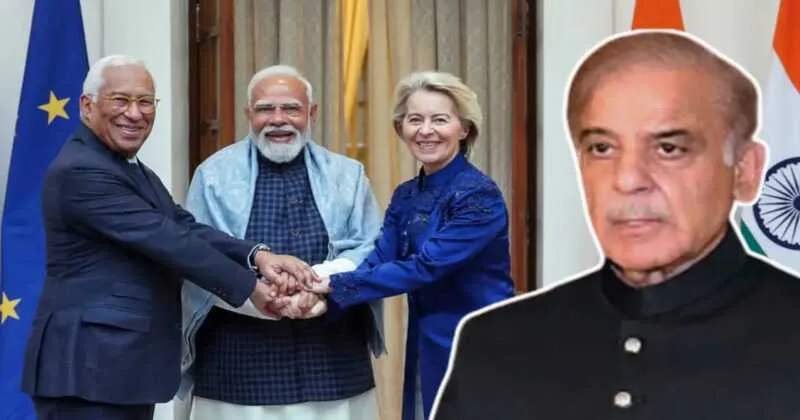
European Council President Antonio Costa, India's Prime Minister Narendra Modi and European Commission President Ursula von der Leyen (Right) in Delhi on January 27, 2026

EU-India Trade Deal: How Kerala and Tamil Nadu find space in the new agreement

Load More

Latest News

TCS Nashik Case: Former AIMIM MP Imtiaz Jaleel Mentioned in 1,500-Page Chargesheet; Admits Meeting Nida Khan’s Family

TCS Corporate Jihad Case: Imtiaz Jaleel met Nida Khan’s family while she was absconding, says 1,500-page chargesheet

PM Modi to Overtake Nehru as India's Longest-Serving Elected Prime Minister on June 10

PM Modi set to surpass Nehru’s record, become India’s longest-serving elected Prime Minister

A representative image

West Bengal Joins Ayushman Bharat: CM Suvendu Adhikari announces coverage for 1.36 crore families

Representatives of the Hindu Janajagruti Samiti, advocates associated with the case, and the complainant address a press conference in Pune regarding allegations of religious conversion pressure and workplace harassment at Wipro Technologies.

After TCS, another Corporate Jihad: Hindu employee alleges Shahina pressured to convert, HR Zeeshan forced resignation

(Left) Nivedita Menon (Right) Arfa Khanum

Podcast Storm: Nivedita Menon & Arfa Khanum slammed for remarks on ‘Love Jihad’ and Hindu women

Operation Delta Hunt: Gujarat Police arrests 362 illegal Bangladeshis, investigates wider network

Operation Delta Hunt: Gujarat Police arrest 362 illegal Bangladeshi nationals during thes crackdown 72-hour

Bangladesh’s reported JF-17 push has triggered fresh scrutiny after India’s Ops Sindoor exposed the vulnerabilities of Pakistani-Chinese defence systems and precision strike capabilities

Shadows of Operation Sindoor: Questions loom over Bangladesh’s JF-17 ambitions amid Sino-Pakistani tech vulnerabilities

B. Nagendra, Congress MLA and former minister in Karnataka

Karnataka: CBI files chargesheets against Nagendra, Congress leader, ex-minister, 29 others in Valmiki Corporation scam

Representative Image (This is an AI generated image)

From Class 10 to Ayurvedic Doctor: Central Sanskrit University unveils new pathway to BAMS

Heera Group founder Nowhera Shaik (File Photo)

Telangana: ED arrests Nowhera Shaik’s aide in Heera Group Sharia-compliant Rs 3000 Cr investment scam

Load More
  • Privacy
  • Terms
  • Cookie Policy
  • Refund and Cancellation
  • Delivery and Shipping

© Bharat Prakashan (Delhi) Limited.
Tech-enabled by Ananthapuri Technologies

  • Home
  • Search Organiser
  • Bharat
    • Assam
    • Bihar
    • Chhattisgarh
    • Jharkhand
    • Maharashtra
    • View All States
  • World
    • Asia
    • Africa
    • North America
    • South America
    • Europe
    • Australia
  • Editorial
  • Operation Sindoor
  • Opinion
  • Analysis
  • Defence
  • Culture
  • Sports
  • Business
  • RSS @ 100
  • Entertainment
  • More ..
    • Sci & Tech
    • Vocal4Local
    • Special Report
    • Education
    • Employment
    • Books
    • Interviews
    • Travel
    • Health
    • Politics
    • Law
    • Economy
    • Obituary
  • Subscribe Magazine
  • Read Ecopy
  • Advertise
  • Circulation
  • Careers
  • About Us
  • Contact Us
  • Policies & Terms
    • Privacy Policy
    • Cookie Policy
    • Refund and Cancellation
    • Terms of Use

© Bharat Prakashan (Delhi) Limited.
Tech-enabled by Ananthapuri Technologies