The paths taken by India and Pakistan in public sanitation have been markedly different. In India, under Prime Minister Narendra Modi, crores of toilets have been built in both urban and rural areas with government funding. Swachh Bharat Abhiyan has transformed cleanliness habits across the nation, with numerous reported instances of families refusing to marry their daughters into households that lack a toilet.
In short, toilet habits in India have been transformed under Modi’s watch, and Open Defecation Free (ODF) is a status thousands of human settlements can rightfully claim today. Government schools have separate toilets for girls and boys, besides provisions for clean drinking water. There are gaps, though, and the absence of these facilities, designated basic, makes news. Beyond news, such information in the public domain becomes a serious source of ridicule and censorship for officials in charge of the areas.
Not across Pakistan, but specifically in the country’s largest province, Punjab, ruled by Mian Nawaz Sharif’s daughter, Maryam Nawaz, toilets are in the news. It is difficult to say that they are in the news for the right reasons, though. It seems the financial health of the government is a bit precarious, and it has now started charging tax on toilets.
Hospitals with toilets on the premises for use by patients and doctors are the first to be caught in this tax net, charged at Rs 2,500 per toilet. As such, the more the number of toilets in a commercial establishment, the more it stands to pay. It basically looks like a follow-up of the government’s earlier decision to tax animal waste, dung basically.
To make establishments clean and for the convenience of patients, hospitals had followed a policy of ‘more the merrier’ so far. It appears ” the lesser the better’’ may be the dictum followed by hospitals in the making. At least in Pakistan’s Punjab. Every single unit of toilet will cost Rs 2,500 in tax.
In future, it is also likely that officials of the municipal bodies may hide the number of actual toilets in the buildings and make money by under-reporting, as a way of corrupt practices. To demonstrate its seriousness in implementing this new tax, the Punjab Water and Sanitation Agency (WASA) has started issuing notices to hospitals in Rahim Yar Khan. WASA Deputy Director Amir Naveed confirmed the charge applies to commercial establishments and institutions that generate wastewater and contribute to sanitation usage in urban areas.
Lala Iqbal Hospital in Rahim Yar Khan has reportedly been billed Rs 37,500 per month based on 15 toilets registered at its healthcare facility under the per-unit sewage calculation formula. Deputy Director Naveed insisted that it is not a toilet tax but a sewage tax meant to recover costs incurred by the government tied to the use of sanitation services used by commercial and institutional waste-generating services. These establishments discharge wastewater into municipal sanitation systems, he pointed out, according to a report of the techjuice.pk.
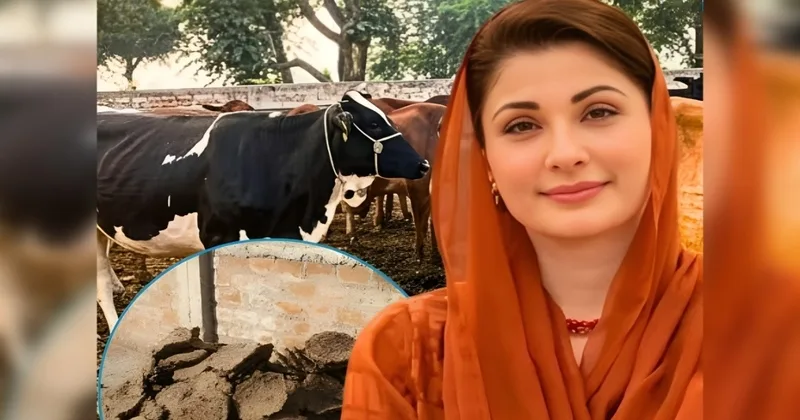
On various social media platforms, the novel way of taxation, duly passed by the Punjab cabinet, is leading to lots of memes. In one short reel, a man referred to former Prime Minister Imran Khan’s suggestion that for ordinary Pakistani citizens, rearing buffaloes, cows and chickens could be a way of supplementing income. Khan was ridiculed by Maryam and other leaders opposed to him in derisive tones. Maryam has gone a step ahead of Imran and started making money on their dung, as she had imposed a tax on their dung some time ago, the man in the video says.
Tax Imposed on Cows/Buffaloes in April
At the beginning of April this year, the Punjab government had imposed a daily “Gobar Tax” of Rs 30 per cow and buffalo in 168 cattle colonies across the province, including major areas in Lahore. This new fee was explained away as “not a traditional tax but a service charge’’ for the organised collection of animal dung (gobar). The collected manure will be used to produce biogas and organic fertiliser under the “Suthra Punjab” programme.
The initiative aims to solve long-standing problems of waste management in cattle colonies, where open dumping of dung creates pollution, bad smells, and health issues. By formalising collection, the government wants to turn waste into a useful resource for clean energy.
This move is part of CM Maryam’s broader “Suthra Punjab – Waste to Value” project. Earlier, the province successfully tested biogas production from animal waste and slaughterhouse offal. Officials believe the new system will improve cleanliness, reduce environmental pollution, and support renewable energy goals. The fee will help cover the cost of regular collection, transportation, and processing of dung.
Authorities say it will create a cleaner environment in cattle colonies while promoting green energy. The plan will be expanded across Punjab if the pilot succeeds.
Diapers for Cows, Buffaloes Proposed
As a parting shot, the man in the video then goes further to suggest how ordinary farmers could perhaps save themselves from paying dung tax. He says tongue firmly in cheek that technical points should be raised about the so-called dung tax and cows, as well as buffaloes, made to wear diapers. Once diapers are put on the animals, there will be nothing falling behind them, he pointed out! His suggestion can be considered misleading as he does not provide the address of the factory or factories that make diapers for cows and buffalo. Besides, he says while signing off that Maryam will find new ways of getting her tax once diapers become popular among animals. Incidentally, the funny and derisive video predates the imposition of a toilet tax on humans.