We the people of Bharat have been fighting against foreign forces for a thousand years to protect our identity and culture. August 15, 1947 and January 26, 1950 were major turning points in this civilisational journey when we got the choice to determine our fate through our system. Though we digested the external invasions by Greeks, Kushan and Hun, the Arab, Turk and Mongol aggressions inflicted deep wound on our institutional structures and psyche. Someone killing others for not adhering to the same faith, or destroying Mandirs with the ideology of iconoclasm was foreign to us. Europeans, especially the British, were more sophisticated in this process of colonisation. Through the tools of history writing, education, law and administrative machinery they colonised our minds. Though this process was not without resistance in the form of Swadharma, Swadeshi, and Swabhasha as the pre-condition for Swaraj, British successfully created army of ‘Indians’ who accepted their intellectual and cultural superiority. When the British were forced to give freedom to Bharat after the end of World War-II, they played the trick of dividing the country on religious lines for the first time in the history and left some ‘brown coolies,’ who kept propagating the colonial narratives even after the Independence.
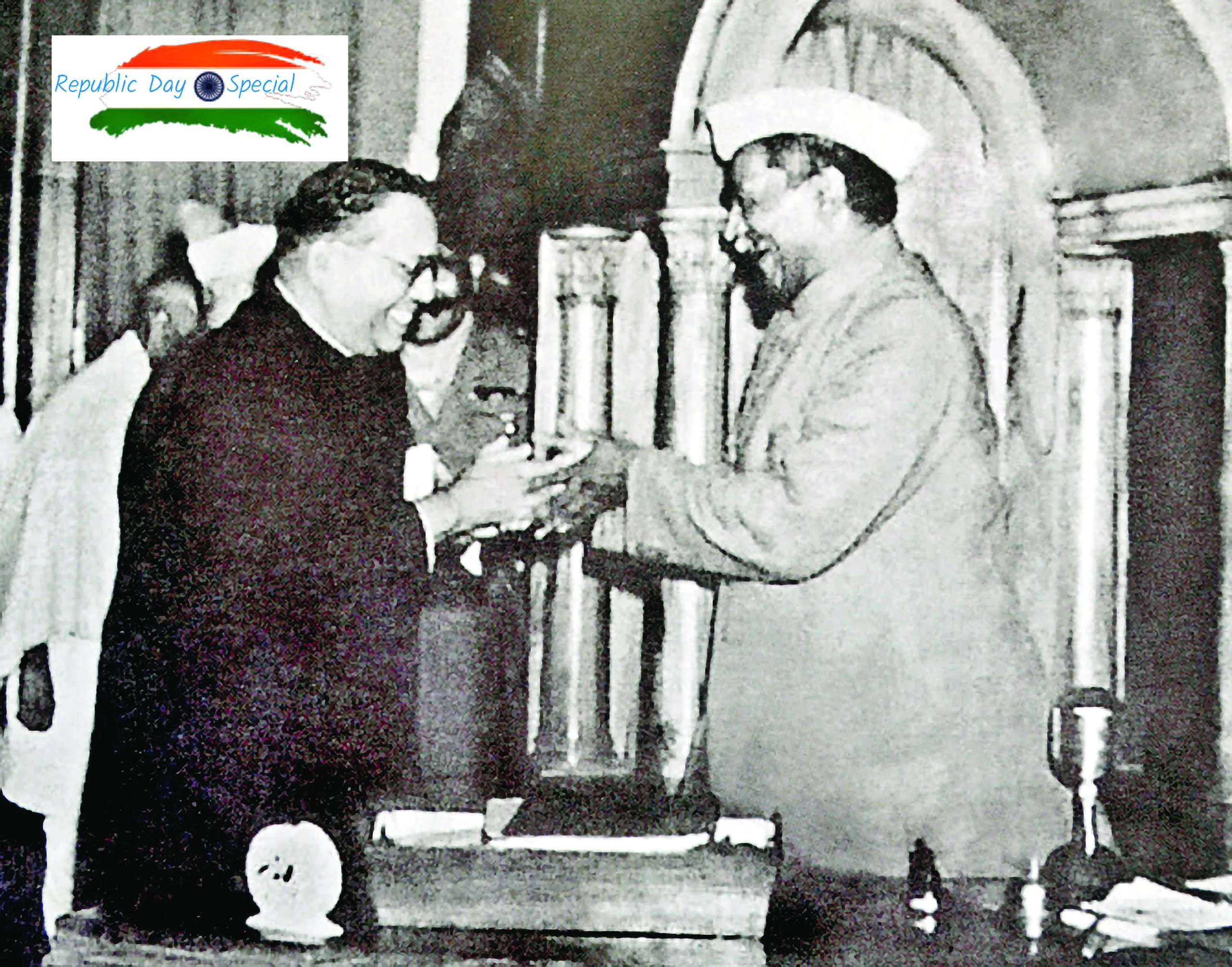
In the last 77 years, since the Constitution came into force, Bharat has moved towards decolonisation of minds, after stabilisation of the political system. Over the last 25 years, Bharatiyas have begun thinking about incorporating everything Bharatiya into their daily lives. Ram Janmabhoomi movement paved the way for cultural resurgence, and now we are looking for Aatmanirbharata in each and every sector.
However, decolonisation is not enough. It is time to think about “Renationalisation of mind” by restoring all the excellent ideas that were ours. For instance, the successful sailing of INSV Kaundinya, whose design is based on a 5th-century CE merchant ship, towards Oman, is an important example of renationalisation of mind. This instils confidence in every Bharatiya in our excellent ancient techniques and skills, which remain relevant in contemporary times.
As we have entered into Amrit Kaal, our sole focus should be to set our own standards of excellence which the world would emulate. As we have already created an enormous educational infrastructure, our goal should now be to bring back the centre of intellectual gravity to Bharat from Europe. Like Nalanda and Taxila, we should have our own centres of educational excellence. Since Bharat’s economy is growing, and infrastructure development is being enhanced; now our priority should be to reclaim our space in the global supply chain, as it used to be. Sustainable, society centric, cultured-based and employability oriented model of development should be our goal. Bharat’s Ayurveda and medicinal practices have already received momentum in the post-Covid-19 world. Now it is on us to take the resolution to restore the excellent healthcare system that once existed.
When many civilisations were wiped out by barbaric forces, Bharatiya civilisation still remains intact. The credit goes to our valiant warriors, like Lachit Barphukan, Maharana Pratap, Chhatrapati Shivaji, Rajendra Chola, Chandragupta, Ashoka, and others, who resisted these barbaric forces through their war tactics and sheer valour. Now, as uncertainties across the globe grow due to the rise of hegemonic forces, it’s time to make our defence production the best in the world. We cannot depend on others for our energy needs and the way we are meeting our renewable energy targets is exemplary. We need to make necessary lifestyle corrections to make our lives environment friendly.
Resistance for righteousness – Dharmic values – is in Bharatiya DNA. The cultural and spiritual connections protected this land for years. January 2026 marked thousand years of attack on the Somnath Mandir in Gujarat by Mahmud Ghaznavi. Despite the attack by many Islamic invaders and anti-Hindu forces, the flag of Somnath still flies high – the reminder that decolonisation is just a comma, renationalisation is the ultimate objective.
Organiser Weekly dedicates this Republic Day special edition to this historic process of decolonisation for renationalisation.