
RSS, in its centenary year, has opted to focus heavily on Panchparivartan points, despite the fact that they have been working on them for decades. The five points are Swa-Bodh, Social Equanimity, Family Enlightenment, Environment, and Civic Sensibility. These elements are critical to making Bharat great again in all aspects of the nation by 2047 while maintaining the environment sustainable and the populace healthy and peaceful. Swadeshi is one facet of Swa-Bodh, which we now refer to as Aatmanirbhar Bharat (Self-reliant Bharat). They follow in the footsteps of Chhatrapati Shivaji Maharaj, Swami Vivekanand, Veer Savarkar and Pandit Deendayal ji Upadhyay.
Sangh and Savarkar’s thinking on Swa-Bodh is very clear. The way we think and commodity market, including the service sector should be Bharatiya; only then can we have true freedom and develop the nation socially and economically in all sectors of life and society, regaining the title of “Vishwaguru”. The Swadeshi Jagaran Manch of the RSS has been striving to raise awareness in society since its foundation in 1991, however Sangh Swayamsevaks have been doing so before then. RSS pushed further Veer Savarkar’s efforts and thought process on Swadeshi.
Why is “Self Reliant Bharat” a necessity?
Self-reliance is the key to strengthening the nation. Focusing on self-reliance benefits the nation by creating employment opportunities, growing entrepreneurs, expanding global markets, upgrading technology, and building skills and knowledge. The Modi government launched Aatmanirbhar Bharat, and we are already seeing the results in terms of national strength. Governments, industrialists, and society must work together to strengthen every sector, including semiconductors, defence, manufacturing, artificial intelligence, space technology, agricultural produce, food technology, pharmaceuticals, healthcare, the digital world, and environmental management. This self-reliance should be achieved without causing harm to the environment or exploiting natural resources.
Bharat’s journey towards “Aatmanirbhar Bharat” and the policies that support it are demonstrating the benefits to our economy. Our economy is growing more robust to withstand the shocks of an unpredictable world and events. The “Make in Bharat” movement seeks to promote the growth of the Bharatiya manufacturing industry as well as the establishment of manufacturing hubs by global corporations in Bharat. We can refer to the entire process as “Make in Bharat” even if a foreign company manufactures its goods in Bharat and uses it to sell them both domestically and internationally. Though not every item can be manufactured, and we must rely on few raw materials from other countries, whatever can be manufactured through technological development should be done indigenously, and as a customer, every Bharatiya should purchase “Make in Bharat” products.
China’s open support for terrorism and the Western world’s reaction to the recent Bharatiya airstrikes deep into the heart of terrorist-afflicted Pakistan make it abundantly evident that they are not afraid of Bharat’s growth but rather of the independence and power it has been displaying recently. Although the world has acknowledged Bharat’s spiritual strength and there is no other option, the Western world is concerned about how Bharat’s strength is manifesting itself in every area with indigenisation. The Western world is infatuated with countries that rely on them for everything, sacrificing their culture and selling natural resources at a lower cost. The Western world is aware of how Bharat’s rise will alter the global order.
The more Bharat grows, the more peace and cooperation there will be in the world, free from terrorism and the exploitation of other countries’ natural resources. Bharat has demonstrated its policy of selfless assistance without any form of undue advantage by providing corona vaccines to a number of countries during the challenging corona phase, assisting in the rescue of citizens of numerous countries stranded in conflict zones, and supporting countries during natural disasters, including Turkey, a country that supports and sympathises with Pakistan.
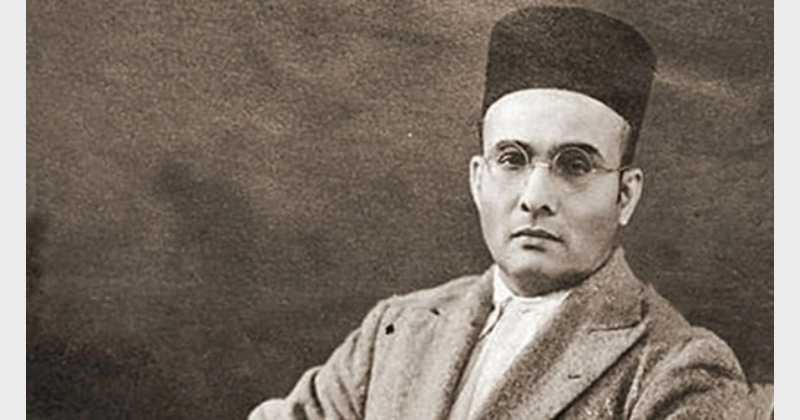
Veer Savarkar’s innate propensity towards Swadeshi
Savarkar delivered “Swadeshicha Phatka” in 1898, when he was in his early teens, possibly between the ages of 15 and 16. Phatka is a type of poetry. In Pune’s “Jagad hitechhu,” this Phatka also gained popularity. This indicates that Savarkar had a notion of Swadeshi when he was a young boy, and this thought was linked to his vision of Swadeshi when he arrived in Pune. On October 7, 1905, Savarkar organised a Holi of foreign clothing in Pune to spur the boycott movement. This Holi’s smoke extended all the way to London. Savarkar wrote the poem “Deepavaliche lakshmipujan” (1925) for the Ratnagiri Hindu fair while he was there. It praised Swadeshi and called for a boycott of foreign products.
Despite having a passion for poetry, Savarkar was a realistic and pragmatic individual. He was not merely a sentimental supporter of Swadeshi. He wrote both direct and ideological works as a result. Savarkar referred to such a period as the “machine era” to greet it. He produced pieces such as “Is machine a curse or a blessing?” and “Does machine increase unemployment?” He was a fervent supporter of machines by thoroughly examining their advantages and job prospects. In Ratnagiri, Savarkar also opened Swadeshi shops. In order to raise awareness of the significance of this and encourage people to use Swadeshi products, Savarkar himself would go out on a handcart and sell them. Savarkar took inspiration from his own nature because he was a creative thinker.
How RSS is advancing Swadeshi consciousness
In November 1991, the first campaign to promote swadeshi products and brands was launched, with a focus on the unorganised and small-scale sectors. The first nationwide campaign was launched from January 1 to 15, 1994. It included public meetings, conferences, brochures with a list of Swadeshi products, street meetings, and wall writings. The Swadeshi Jagaran Manch brings together active swayamsevaks and members of sangh-inspired mass organisations to promote patriotism.
Recently, the Swadeshi Jagran Manch and other Rashtriya Swayamsevak Sangh (RSS) affiliates established a total of 448 centres to promote entrepreneurship and assist people, particularly women and youth, in starting their own businesses to become self-sufficient. “These kendras work as a nodal point for youths to get guidance on self-employment, entrepreneurship, jobs, startups, and other activities,” “Subsequently, from July 30 to October 10, 2023, the SBA (Swavalambi Bharat Abhiyan) conducted a nationwide entrepreneurship promotion programme across 511 districts, in addition to 4,413 separate events. This saw the participation of a whopping 8,20,850 youngsters.” Entrepreneur development programs were organised at as many as 2,701 high schools and intermediate colleges, 1,555 institutes and colleges, and 155 universities with the goal of instilling the spirit of entrepreneurship.
Sangh swayamsevaks aim to build Bharat a successful and strong nation that promotes universal well-being and a healthy lifestyle for all. Veer Savarkar’s Swadeshi principles and Pandit Deendayal Ji Upadhyay’s concept of “Ekatma Manavdarshan”, based on the eternal Hindu vision, emphasise a holistic view of the individual, family, society, nation, world, nature, and cosmos. The holistic approach integrates the ambitions of individuals, families, societies, nations, and the natural world.