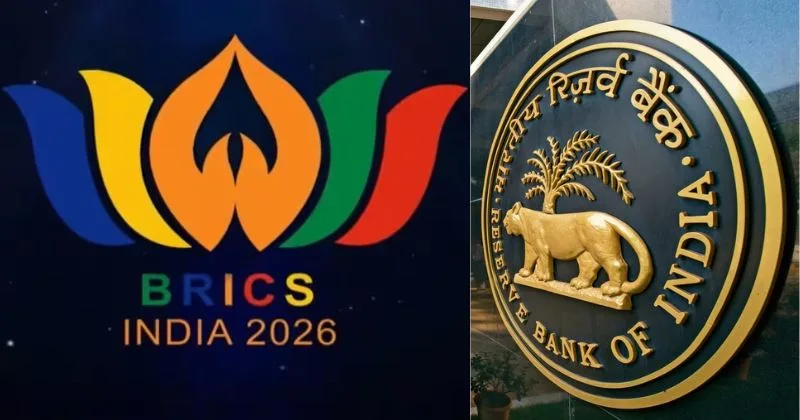
A fresh phase in worldwide finance appears to be unfolding. Attention often lands on Wall Street swings or central bank policy moves, yet subtle changes are stirring across developing nations. In a recent move, India’s monetary authority introduced an idea that could reshape international trade for billions. What happens next may hinge less on traditional markets than on these behind-the-scenes frameworks.
Ahead of any official announcement, change had already taken root. Though policymakers speak of strength abroad and rising numbers at home, influence quietly moves elsewhere, toward financial networks few watch closely. Without fanfare, a shift unfolded in how nations exchange value across borders. Now, Brazilian institutions can settle trade with certain allies while bypassing American banking channels entirely. For the first time since the 1940s, such autonomy exists on a wide scale. Power rarely announces itself; it simply begins operating differently.
This shift isn’t just another deal; it signals a deeper rupture. Nearly one hundred years of U.S. influence grew not only from military strength, but also from control over money itself: transactions worldwide routed via Wall Street, commerce shaped by reliance on greenbacks. Such supremacy shows signs of strain today. From my time overseeing operations at the IMF, patterns of decline become visible long before collapse. Money stops holding power when trust fades. A shift begins not with force but quietly, like tides pulling back. Brazil now trades in digital currency issued by its central bank, moving away from traditional channels. This path runs clear of U.S. influence and avoids SWIFT entirely. The foundation of American economic dominance since the 1970s has weakened as a result. The pundits call such an event significant, on par with splitting an atom. What once seemed impossible might already be happening.
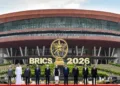
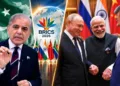
Later this year, India will host the 2026 BRICS summit, where a new idea may gain attention. Instead of waiting, officials from Rio to Jakarta have been quietly considering a shared path forward. Since early talks began, RBI leaders suggested connecting national digital money systems across member states. Countries including Brazil, Russia, China, South Africa, plus recent additions such as the UAE, Iran, and Indonesia could take part. While nothing is confirmed yet, agreement on this framework could be a milestone. For once, coordination, not competition, could shape how these economies move value internally. Discussion remains open, but behind closed doors, timing adds urgency.
Picture today’s cross-border money transfers. Take trade between India and Brazil, most deals move via the US dollar, using a framework set up long ago. Because of that setup, transactions drag on, cost more, yet still funnel through American-controlled channels. Think about grains going from South America to Asia. Or energy moving from Russia into Indian ports. Each deal touches infrastructure shaped by one dominant currency. Power shifts quietly when financial flows depend so heavily on a single nation’s monetary role.
Imagine India’s idea, a bold shift toward economic independence through technology. Instead of relying on traditional systems, BRICS nations might link up digitally to trade directly in their homegrown currencies. Picture Brazilian soybeans moving to Chinese buyers, with payment handled by a state-run digital cash system secured via blockchain. No dollar exchange needed, no delays waiting for distant banks. Funds transfer straight across borders, cutting costs while escaping Washington’s oversight entirely. This path runs outside familiar channels, quiet and efficient.
Hard to overlook what lies at stake. Close to half of the world’s population lives in a BRICS nation, which contributes more than a third of global economic output. A financial network linking these nations might become the strongest test yet of U.S. currency control. Nothing like it has emerged since international rules were redrawn back in the 1940s.
Not surprisingly, attention in Washington has shifted toward BRICS. The administration under President Trump labelled the group as contrary to U.S. priorities, signalling the possibility of trade penalties for countries moving away from dollar-denominated transactions. Such moves highlight a point well known among economic analysts: that influence over international financial flows matters more than sheer military strength when shaping global power. Over the years, dominance in cross-border payments has enabled the United States to effectively charge a fee on much of global trade activity.
Still, obstacles, both technical and political, stand in the way of India’s plan. Although all BRICS nations conduct trials, none has rolled out a full-scale digital currency yet. The e-rupee has around 7 million users so far. Meanwhile, China is pushing hard to get others to adopt its digital yuan beyond its borders. Linking such different setups demands not just matching tech but also deeper coordination beneath the surface.
What happens when countries trying to cooperate follow completely different rules at home? Uneven trade movement creates another problem: how to settle debts fairly. When Russia and India tried using their own currencies, Moscow ended up holding rupees it could not spend. Reports suggest the Reserve Bank of India is now looking at mutual swaps and clearing balances at set intervals. Agreement on such steps remains uncertain, though.
Amid fading worldwide interest in central bank digital currencies, the idea is gaining attention again. Even though stablecoins now dominate, delivering similar advantages minus state-built systems, officials in India still emphasise control, oversight, stability, traits they say set public options apart. Yet, real-world adoption might not align with official expectations.
Even so, the move signals a shift toward multiple centres of influence in global money systems. As political friction grows and nations resort to penalties and trade barriers, they seek ways beyond reliance on the U.S. currency. Driven either by practical gains or self-directed policy, developing countries now treat control over their finances as vital to safety. What was once optional is becoming essential.
Talk of linking payment systems gained ground at the 2025 BRICS meeting in Rio de Janeiro. India’s suggestion turns that talk into a concrete topic for discussion. Though results may take years, or never come, the message stands clear. Reliance on the dollar alone is fading.
Some might say BRICS doesn’t have strong enough institutions to pull off something so bold. Past efforts to build a shared currency didn’t work out; they’ll note this venture could follow the same path. There’s truth in that concern. Just the logistical hurdles might stop it before it even begins.
Yet looking only at chances of success overlooks deeper shifts underway. What matters more is that leading nations are already constructing systems to function beyond the dollar’s reach. Regardless of whether this specific attempt works, the path ahead shows a visible turn. A broader transformation has quietly taken root.
What happens now might surprise those in Washington. Control over global money has always depended on more than power alone. Trust, steady policies, and access built the dollar’s role, not force. When payment systems turn into tools of pressure, others look elsewhere. Stability fades when leverage replaces reliability.
History might remember the 2026 BRICS summit as pivotal, or, on the contrary, it might slip away unnoticed, like numerous prior statements that went unfulfilled. However, the very fact of assembling communicates loud and clear the aspirations of developing countries mingling their might in the financial sector. This metamorphosis continues even if the policymakers on the other side of the Atlantic pay no attention.