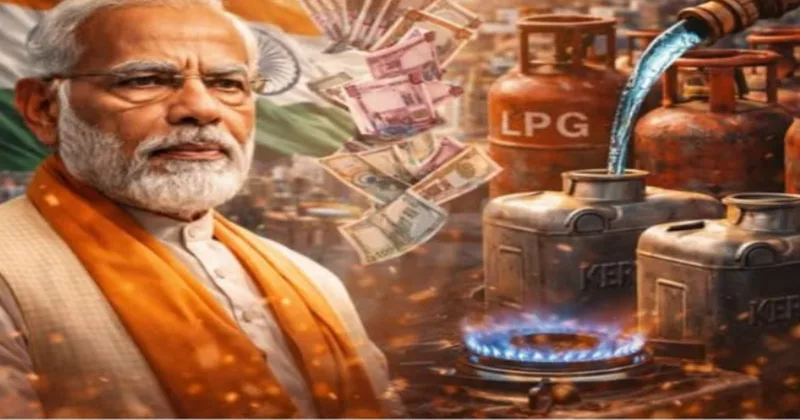
At a time when the world is gripped by geopolitical instability, rising oil prices, war-like tensions in the West Asia, and fears of disruption in the Strait of Hormuz, Prime Minister Narendra Modi has quietly executed one of the most significant strategic energy moves in recent years. While many nations are reacting nervously to the possibility of a global energy shock, India under Modi appears to be preparing several moves ahead.
His recent diplomatic engagements with the United Arab Emirates, BRICS nations, and the Netherlands are not isolated foreign visits. They are part of a larger long-term geopolitical and economic strategy aimed at ensuring that India remains energy-secure even if the global order enters turbulence.
The timing of these moves is crucial. With tensions escalating in West Asia due to the Iran conflict and fears surrounding the Strait of Hormuz — through which nearly one-third of global seaborne oil passes — the world is once again witnessing anxiety similar to the oil crises of the 1970s. For a country like India, which imports over 85% of its crude oil needs, any disruption can directly impact inflation, transportation, food prices, and economic growth.
Instead of waiting for the crisis to deepen, Modi moved proactively.
During his high-profile visit to the UAE, India signed major energy agreements that significantly strengthen India’s strategic petroleum security. One of the most important developments was the agreement with Abu Dhabi National Oil Company (ADNOC) to enhance UAE participation in India’s Strategic Petroleum Reserves up to 30 million barrels.
This is not merely an oil storage deal. It is a geopolitical insurance policy.
The agreement ensures that India will have access to emergency crude reserves during any future supply disruption or wartime scenario. It also signals that India is becoming a trusted strategic energy partner for Gulf nations.
Importantly for Odisha, the proposed strategic reserve facility at Chandikhol has emerged as a major pillar of this strategy. Reports indicate that the Chandikhol reserve project in Jajpur district is expected to become one of India’s key underground oil storage hubs with a planned capacity of around 4 million metric tonnes. Located close to Paradip Port and the Indian Oil Corporation refinery at Paradip, the location offers logistical efficiency for rapid crude transportation and storage. In the event of a global supply disruption, these reserves can help India stabilize fuel supplies and protect domestic markets from panic-driven price spikes.
This transforms Odisha from merely a mineral-rich state into a crucial component of India’s national energy security architecture.
At a time when many countries are struggling to secure even short-term oil contracts, India is building long-duration strategic reserves backed by trusted Gulf partners.
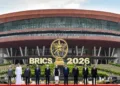
Equally important was Modi’s diplomatic balancing through BRICS.
Even amid Western pressure and global sanctions politics, India has carefully maintained energy relations with both Russia and Iran. Through BRICS engagement and strategic diplomacy, India is ensuring that its oil supply chain remains diversified and uninterrupted.
This is a remarkable balancing act.
India has managed to maintain strong relations simultaneously with the United States, Gulf nations, Russia, and Iran without becoming fully dependent on any single bloc. Such multi-alignment diplomacy is becoming the hallmark of Modi’s foreign policy.
Recent discussions involving BRICS foreign ministers and India’s parallel engagements with Iran and the UAE indicate that New Delhi is prioritizing uninterrupted energy flows over ideological alignments.
India’s message is clear: national interest comes first.
This approach also gives India greater bargaining power. By maintaining multiple suppliers — Russia, UAE, Saudi Arabia, Iran, and others — India reduces vulnerability to geopolitical blackmail and price manipulation.
But perhaps the most visionary aspect of Modi’s strategy lies beyond oil.
While securing immediate crude reserves, he is simultaneously preparing India for a post-oil future through green hydrogen partnerships in Europe, especially with the Netherlands.
This dual-track strategy is where the real masterstroke lies.
Most countries are either focused on current fossil fuel survival or future green ambitions. India is doing both simultaneously.
The Netherlands is emerging as one of Europe’s biggest green hydrogen gateways. India’s engagement with Dutch partners aims to build long-term cooperation in green hydrogen production, transportation, storage, and technology exchange. This aligns perfectly with India’s National Green Hydrogen Mission, which seeks to make India a global hub for clean energy production.
By investing in green hydrogen partnerships now, India is attempting to escape the long-term trap of oil dependency altogether.
In strategic terms, this means:
Ø Short-term security through petroleum reserves.
Ø Medium-term diversification through multi-country crude sourcing.
Ø Long-term independence through green hydrogen and renewable energy.
Ø Very few world leaders are currently operating with this level of layered strategic thinking.
Ø Another important aspect is the economic impact.
Energy insecurity is often the biggest trigger for inflation. High fuel prices increase transport costs, industrial production costs, fertilizer prices, and food inflation. By securing long-term energy agreements and strategic reserves, PM Modi is effectively building a shield around India’s economy.
This is especially important because India remains one of the fastest-growing major economies in the world. Sustained growth requires uninterrupted energy availability.
Moreover, these moves strengthen India’s global standing. Nations that can secure energy during crises emerge as stable economic powers. Nations that cannot often face recession, currency collapse, or social unrest.
The Modi government understands this deeply.
That is why India is not merely reacting to the crisis in West Asia. It is strategically repositioning itself within the global energy order.
The significance of this diplomacy becomes even clearer when viewed alongside India’s maritime security initiatives to protect sea routes and energy supplies through the Arabian Sea and the Strait of Hormuz.
Taken together, these developments reveal a comprehensive doctrine: energy security, strategic reserves, diversified sourcing, maritime protection, and clean-energy transition.
Critics may see foreign visits as symbolic diplomacy. But in reality, these agreements could determine whether India remains stable during future global disruptions.
History has repeatedly shown that wars are not won merely on battlefields — they are won through supply chains, logistics, fuel security, and economic resilience.
In that context, Modi’s recent global engagements may well be remembered as one of the most important strategic energy interventions of this decade.
As the world worries about oil shocks, India is quietly building insurance for the future while securing the present.