Illegal mosques, mazars and house churches spark tension
June 17, 2026
  • Read Ecopy
  • Circulation
  • Advertise
  • Careers
  • About Us
  • Contact Us
Android AppiPhone AppArattai
Organiser
  • ‌
  • Bharat
    • Assam
    • Bihar
    • Chhattisgarh
    • Jharkhand
    • Maharashtra
    • View All States
  • World
    • Asia
    • Europe
    • North America
    • South America
    • Africa
    • Australia
  • Editorial
  • International
  • Opinion
  • RSS @ 100
  • More
    • Op Sindoor
    • Analysis
    • Sports
    • Defence
    • Politics
    • Business
    • Economy
    • Culture
    • Special Report
    • Sci & Tech
    • Entertainment
    • G20
    • Azadi Ka Amrit Mahotsav
    • Vocal4Local
    • Web Stories
    • Education
    • Employment
    • Books
    • Interviews
    • Travel
    • Law
    • Health
    • Obituary
  • Subscribe
    • Subscribe Print Edition
    • Subscribe Ecopy
    • Read Ecopy
  • ‌
  • Bharat
    • Assam
    • Bihar
    • Chhattisgarh
    • Jharkhand
    • Maharashtra
    • View All States
  • World
    • Asia
    • Europe
    • North America
    • South America
    • Africa
    • Australia
  • Editorial
  • International
  • Opinion
  • RSS @ 100
  • More
    • Op Sindoor
    • Analysis
    • Sports
    • Defence
    • Politics
    • Business
    • Economy
    • Culture
    • Special Report
    • Sci & Tech
    • Entertainment
    • G20
    • Azadi Ka Amrit Mahotsav
    • Vocal4Local
    • Web Stories
    • Education
    • Employment
    • Books
    • Interviews
    • Travel
    • Law
    • Health
    • Obituary
  • Subscribe
    • Subscribe Print Edition
    • Subscribe Ecopy
    • Read Ecopy
Organiser
  • Home
  • Bharat
  • World
  • Operation Sindoor
  • Editorial
  • Analysis
  • Opinion
  • Culture
  • Defence
  • International Edition
  • RSS @ 100
  • Magazine
  • Read Ecopy
Home Bharat

From Bareilly to Shimla: How Illegal Mosques, mazars and house churches are altering local demography & social harmony

Incidents across India reveal how informal religious gatherings sometimes evolve into unauthorised structures, raising tensions with local communities. Cases involving both Muslim and Christian groups highlight concerns over land encroachment, demographic changes, and social friction

WEBDESKWEBDESK
Jan 21, 2026, 08:00 am IST
in Bharat, Delhi, Gujarat, Uttarakhand, Uttar Pradesh
Follow on Google News
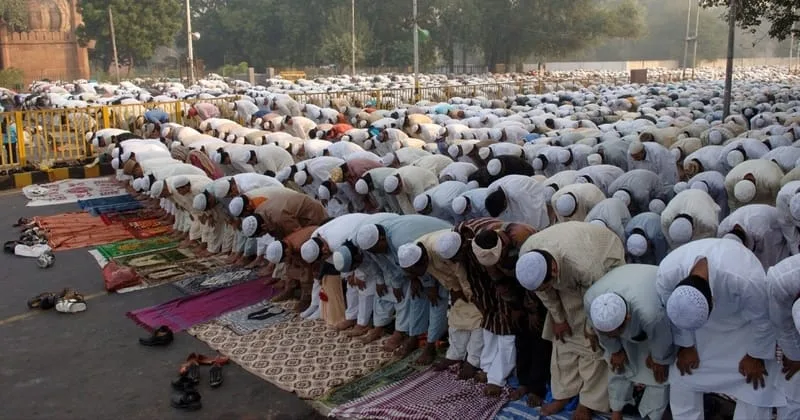
Representative image

Representative image

FacebookTwitterWhatsAppTelegramEmail

New Delhi: In Bareilly district of Uttar Pradesh, police detained 12 Muslim men for offering namaz in a private vacant house without obtaining administrative permission. The men were reportedly using the house as a makeshift mosque and madrasa.

This incident reflects a broader issue concerning informal religious activities in residential and public spaces, particularly by certain groups. Such activities can sometimes lead to encroachment, unauthorised constructions, or conversion efforts under the guise of religious practice. What begins as a routine religious observance may gradually transform into de facto religious structures, with legal and social complications arising as a result. Critics argue that dismissing these concerns as conspiracy theories overlooks instances where religious sentiments have been used to justify encroachments or illegal expansions.

A case in point is the Sanjauli Mosque in Shimla. Originally a modest structure built in the 20th century, it expanded over time into a five-story building encroaching on government land. In 2024, local residents protested, prompting court intervention. The court ordered the demolition of the illegal floors, and by January 2026, it mandated the demolition of all five stories. Although the Himachal Pradesh State Waqf Board appealed, the court upheld the demolition orders.

The Sanjauli Mosque case was not merely an instance of illegal expansion. As the mosque grew, some local residents expressed concerns about demographic changes in the area. According to reports, local Hindus expressed fears about an increasing Muslim presence and alleged harassment, including voyeurism and stalking of women by some visitors to the mosque.

Also Read: Kumbhnomics 2026: How the Pinarayi government let Kerala miss a Rs 2 lakh crore opportunity

Tensions escalated further after a group of five to six individuals reportedly assaulted a local youth, causing head injuries. The accused were said to have been sheltered in the mosque before being taken into police custody. Incidents like these contributed to growing unease among local residents, who perceived the mosque as a focal point for criminal activity. The mosque’s origins date back to 1990, when Mohammed Salim settled in Sanjauli and occupied a piece of government land previously used by a school. He initially built a single-story structure that, over time, expanded into a five-story mosque as the number of worshippers increased. According to these reports, the growth of the mosque coincided with complaints from local Hindus about harassment and rising tensions.

A similar pattern has been observed elsewhere, such as in Delhi’s Al-Mateen Mosque in Seelampur. The mosque began in 2013 as a residential flat converted into a four-story structure for prayer. Reports suggest that it was used during the 2020 Delhi riots, during which three Hindu residents were reportedly injured by gunfire from the mosque. Over time, efforts to expand the mosque intensified, including the purchase of nearby properties, some of which allegedly encroached on land adjacent to a Shiv Mandir. Tensions over these expansions reportedly forced local Hindus to put up “House for Sale” notices and led to confrontations, including alleged incidents of intimidation.

These cases illustrate a recurring pattern in various parts of India: small religious structures or land markers, often beginning as informal shrines or mazars, gradually evolve into permanent, unauthorised structures without official permission. Such expansions have been reported near public infrastructure, forests, railway tracks, airports, and government land, including sites like the Ranjit Sagar Dam in Gujarat and the Rajaji Tiger Reserve in Uttarakhand.

Over time, these informal religious sites may attract larger congregations and, according to reports, become centers of influence in the surrounding community, creating tensions with local residents. Across states such as Gujarat, Assam, Uttar Pradesh, and Uttarakhand, state governments have demolished hundreds of illegal mazars and dargahs, reclaiming the occupied land. Investigations in many cases revealed that these structures were little more than cemented slabs, without any actual burials of revered figures.

In several instances, Muslims have offered namaz on roads, citing the lack of space inside mosques. However, reports suggest that these public prayers have often served as a way to assert religious presence, demonstrate strength, and gradually encroach on public or private land. In December 2022, for example, a row erupted in Gurugram, Haryana, after groups of Muslims began offering namaz in public spaces instead of at mosques or their homes. Hindu groups staged protests and stopped six such prayers.

Similar incidents occurred in Gurugram in 2021. Reports linked the rise of public prayers with increased instances of harassment, including eve-teasing and chain snatching. While some argued that congregational prayers, especially Jumma Namaz, necessitated public spaces, evidence suggested that many traveled over 50 kilometers to pray publicly, indicating that these gatherings were often a deliberate tactic rather than a necessity. According to observers, offering namaz in public is sometimes employed as a step toward asserting local dominance and establishing ‘Muslim areas.’ Reports indicate that these areas may emerge either through migration into Hindu-majority localities, gradual population growth, or the intimidation of non-Muslims, with some groups allegedly enjoying political support. Once established, such neighborhoods can become effectively inaccessible to Hindus, and incidents have been reported where religious processions or celebrations passing near mosques have been attacked. This pattern is not limited to Islamist groups.

Christian missionaries have also been reported to establish influence through property acquisition and private worship gatherings. In February 2025, in Lucknow’s Gomti Nagar Extension, local Hindus protested against an unregistered house-turned-church in Chhota Bharwara, which hosted up to 200 people weekly. Reports suggested that the missionaries engaged in conversion activities and purchased property at inflated rates to create Christian-dominated enclaves, sometimes pressuring residents to sell if they refused to convert.

Similar patterns have been reported in Chhattisgarh, Jharkhand, Gujarat, and Tamil Nadu, where Christian missionaries allegedly encroached on government, vanvasi, or temple lands to conduct conversions and expand influence. Whether involving Muslim immigrants or Christian missionaries, these cases share a common trajectory: outsiders settle in an area, begin with small-scale worship or gatherings, and gradually escalate to land encroachment, influence over local populations, and attempts at religious conversion.




Topics: Land GrabBareilly Sanjauli SeelampurChristian Missionariesillegal mosqueshindu rightsMazarsReligious EncroachmentPublic Namaz
ShareTweetSendShareSend
✮ Subscribe Organiser YouTube Channel. ✮
✮ Join Organiser's WhatsApp channel for Nationalist views beyond the news. ✮
Previous News

BJP President Nitin Nabin appoints key election observers & in-charges for forthcoming polls in multiple states

Next News

Karnataka: BJP MP Jaggesh says CM Siddaramaiah hurt the devotees by rejecting photograph of Sri Raghavendra Swamy

Related News

US protests against India’s FCRA amendments; Transparency norms rattle foreign funded missionary networks

RSS Sarsanghchalak Dr Mohan Bhagwat addressing the gathering in Keralam on the occasion of lecture series on 100 years of RSS

Journey of RSS in 100 Years | Hindu means cultural heritage of Bharat; none is outsider to Sangh: Dr Bhagwat in Keralam

Beyond False Binaries: Tribal faith, conversion and the real challenges before adivasi India

Alleged attempts to convert villagers to Christianity through financial inducements have sparked outrage in Ghumarwin

Religious Conversion at Bilaspur: Villagers allege Rs 5 lakh cash offers to embrace Christianity, VHP demands probe

Arunachal Pradesh seals all 15 illegal Mosques; Bandh called off by APIYO

Supreme Court Refuses to Interfere in HC Order on Conversion Restrictions in Tribal Villages

Chhattisgarh: SC upholds Gram Sabha resolutions restricting entry of Christian missionaries in tribal villages

Load More

Latest News

Delhi Police have dismantled an ISI-linked terror-crime syndicate linked to Pakistan-based operatives Shahzad Bhatti and Ajmal Gujjar

Delhi police bust ISI-linked terror-crime syndicate tied to Shahzad & Ajmal; Seven arrested, major attack plot foiled

Yasmin posed as Riya Gupta to marry a Hindu man

UP: Yasmin posed as Riya Gupta to marry a Hindu man, arrested, police probe suspected marriage fraud racket in Rampur

Prime Minister Narendra Modi with US President Donald Trump

Hormuz Disruptions: “Several Indian civilians lost lives,” says PM Modi & expresses concern in presence of Trump

TMC supremo Mamata Banerjee along with party general secretary Abhishek Banerjee

Lok Sabha seeks Abhishek Banerjee’s response on rebel TMC MPs merger bid as ED questions him in ‘Signature Scam’ case

Bangladeshi woman Kajuli and husband Tarun.

Bangladeshi woman faces deportation after 12 years in India; Married Gujarati man after Facebook romance

Screen grab from the viral video of Ayaaz Madare and the victim

Nagpur Conversion Case: Air Force officer’s wife alleges rape, blackmail and forced religious conversion; Two arrested

Aryabhata advertisement by Amazon India sparks legal notice, boycott calls and cultural sensitivity concerns

Amazon Aryabhata Ad Row: Hindu organisations call for boycott of Amazon for insulting India’s Scientific Heritage

Hiralal Chatta

Remembering Hiralal Chatta on his death anniversary: The tenacious leader of the Kashmiri Hindus

Maharana Pratap at the Battle of Haldighati (This is an AI generated image)

450th anniversary of Battle of Haldighati: Symbol of victory over invading Mughals

PM Modi and French President Emanuel Macron during the G7 summit in Evian in France

EU-India Strategic Realignment: How PM Modi’s Europe push offers a de-risking alternative to China

Load More
  • Privacy
  • Terms
  • Cookie Policy
  • Refund and Cancellation
  • Delivery and Shipping

© Bharat Prakashan (Delhi) Limited.
Tech-enabled by Ananthapuri Technologies

  • Home
  • Search Organiser
  • Bharat
    • Assam
    • Bihar
    • Chhattisgarh
    • Jharkhand
    • Maharashtra
    • View All States
  • World
    • Asia
    • Africa
    • North America
    • South America
    • Europe
    • Australia
  • Editorial
  • Operation Sindoor
  • Opinion
  • Analysis
  • Defence
  • Culture
  • Sports
  • Business
  • RSS @ 100
  • Entertainment
  • More ..
    • Sci & Tech
    • Vocal4Local
    • Special Report
    • Education
    • Employment
    • Books
    • Interviews
    • Travel
    • Health
    • Politics
    • Law
    • Economy
    • Obituary
  • Subscribe Magazine
  • Read Ecopy
  • Advertise
  • Circulation
  • Careers
  • About Us
  • Contact Us
  • Policies & Terms
    • Privacy Policy
    • Cookie Policy
    • Refund and Cancellation
    • Terms of Use

© Bharat Prakashan (Delhi) Limited.
Tech-enabled by Ananthapuri Technologies