
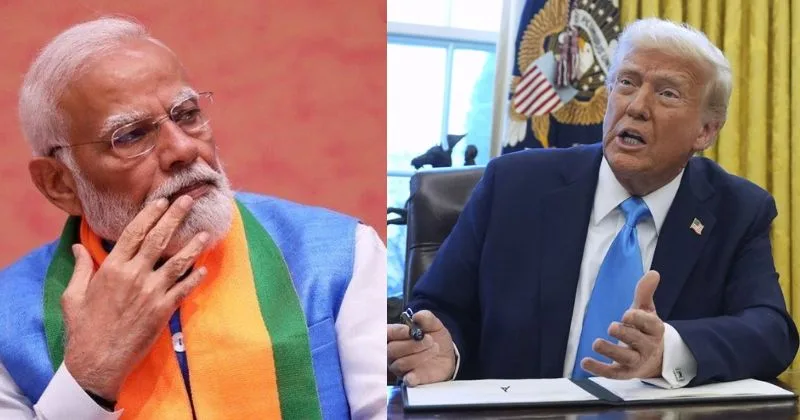
Washington, US: Two US senators have called on President Donald Trump to speak with PM Modi and strike a deal on pulse crops to help American farmers. U.S. Senators Kevin Cramer (R-ND) and Steve Daines (R-MT) wrote a letter to President Trump. They requested Trump to “push for favorable pulse crop provisions in any agreement the United States signs with the Republic of India.” The move came in the context of India announcing on October 30 last year a 30 per cent tariff on yellow peas, which came into effect on November 1, 2025.
Two lawmakers write a letter to Trump
Two Republican senators are urging President Donald Trump to ensure that American pulse crop producers receive better access to the Indian market as part of ongoing trade negotiations between the United States and India. In a letter sent on January 16, Senators Kevin Cramer, a representative from North Dakota and Steve Daines, a representative from Montana, urged President Trump to include “favourable pulse crop provisions” in any future bilateral trade agreement with India. Both senators represent states that are among the largest producers of pulses, such as peas, lentils, and dried beans, in the United States, while India is the world’s biggest consumer of these crops.
What the Lawmakers wrote in the letter to Trump
“North Dakota and Montana are the top two producers of pulse crops, including peas, and India is the world’s largest consumer of these crops, contributing to approximately 27% of the world’s consumption. The most commonly consumed pulse crops in India are lentils, chickpeas, dried beans, and peas, yet they have levied substantial tariffs on American pulse crops.”
“As the United States looks to rebalance trade disparities, American farmers are ready to help fill the gap,” the senators concluded. “They have tremendous capacity to feed and fuel the world if trade opportunities are unleashed. Engaging Prime Minister Modi on pulse crop tariffs to enhance the economic cooperation between our countries would be mutually beneficial to both American producers and Indian customers.”
Why do the Lawmakers want a deal with India and the US?
The letter highlights longstanding concerns among American farmers about India’s high agricultural tariffs, which raise the cost of US pulse exports and make them less competitive compared with other suppliers. According to US trade officials, India’s average applied tariff on agricultural goods is significantly higher than the US’s, creating barriers for American producers in one of the largest global markets.
According to US Ambassador to India Sergio Gor, the US and India are actively engaged in finalising a new trade deal. The Trump Administration launched negotiations for a bilateral trade agreement (BTA) with India on February 13 last year, and in April, the Office of the United States Trade Representative (USTR) finalised its Terms of Reference for a BTA, laying the groundwork for mutually beneficial, multi-sector negotiations.
USTR found India’s average applied tariff rate on agricultural products was 39%, whereas the US applied an average tariff of just 5% on agricultural goods. It also found that technical barriers to trade, regulatory barriers, and restrictions on market access in certain sectors, including agriculture, have reduced US exports to India.
Cramer and Daines argued that lowering these trade barriers would benefit both American farmers and Indian consumers, given India’s massive demand for protein-rich pulses. They also noted that similar outreach was made during President Trump’s first term, with the previous letter being personally delivered to Indian Prime Minister Narendra Modi.
The appeal arrives amid broader US-India trade discussions aimed at finalising a comprehensive bilateral trade agreement, where agriculture remains a key issue.
(With ANI inputs)