New Delhi: A terrifying escalation of targeted violence has once again shattered Nigeria’s volatile Middle Belt, leaving a trail of devastation, grief, and growing outrage among local populations. Between July 24, 2026, and July 29, 2026, at least 22 Christians were brutally killed in a series of renewed, coordinated attacks across three counties in Benue State alone. When combined with horrific assaults in neighbouring Kaduna State during the same timeframe, the casualty list paints a grim picture of an ongoing campaign of terror against Christian communities.
The recent fatalities in Benue State reflect a broader, horrific trend documented by local monitoring groups. Data compiled by TruthNigeria reveals that at least 61 Christians have been slaughtered in Benue State since July 1, 2026. Despite the ongoing military and police presence across the region, residents and civil authorities accuse Nigerian security agencies of severe negligence, pointing out that security forces consistently fail to intervene or prevent repeated incursions.
The bloodiest single offensive in Benue occurred during the early morning hours of July 28, 2026, in the Efeyi-Utikpi community, situated within the Ugboju district of Otukpo County. Around 5:00 a.m., approximately 50 heavily armed Fulani Islamic terrorists descended upon the sleeping village on more than 25 motorcycles. While mainstream media outlets like Daily Trust referred to the perpetrators as “armed invaders” in line with official protocol, local residents unequivocally identified them as members of Fulani Islamic militias shouting “Allahu Akbar”.
Carnage in Otukpo county and security inaction
The assault on Efeyi-Utikpi was marked by unrestrained brutal violence. The armed assailants stormed homes, opening fire indiscriminately on fleeing families. By the afternoon of July 28, 2026, search teams had recovered 14 bodies, while dozens of families desperately searched for missing loved ones. Oche Adah, a resident of Efeyi-Utikpi, provided a harrowing account of the rampage, stating, “We were woken up by gunfire by about 50 well armed Fulani Jihadists on more than 25 motorcycles, followed by chanting of ‘Allahu Akbar’ and people began running in every direction. We have found 14 dead bodies so far. Many families are still searching for relatives and about 30 injured persons are receiving medical treatment at Federal University of Health Sciences Teaching Hospital Otukpo.”
The deadly terror path did not end in Efeyi-Utikpi. As the same militia group retreated on July 29, 2026, they launched further strikes on the communities of Emichi and Nwaba Oju within the Ugboju precinct of Otukpo County, killing three more people. This spree came immediately after an earlier killing on July 27, 2026, in the nearby village of Ipom, and just over two weeks after 16 Christians were murdered in the Otukpo-Nobi area.
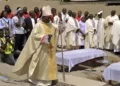
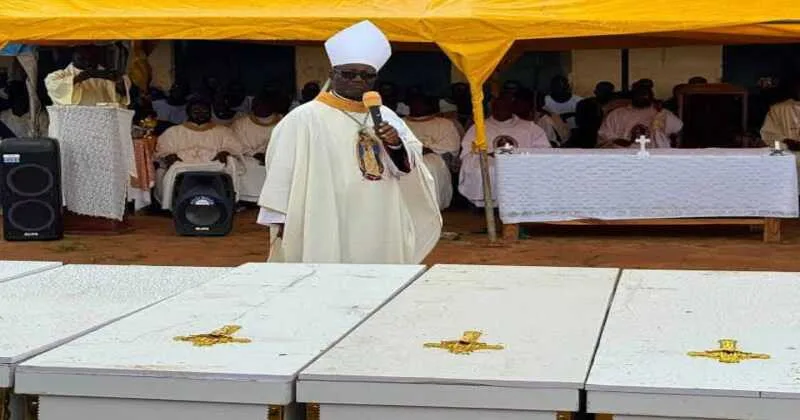
Nigeria: Yesterday, 27 Christians were buried in a mass funeral following last week’s Fulani Muslim attack on Naridon village, Kaduna State.
Three other Christians were laid to rest earlier.
Muslim leaders will not stop this evil.
Christian leaders must, with God’s help. pic.twitter.com/lSdxSHFcxw
— Christian Emergency Alliance (@ChristianEmerg1) August 2, 2026
Condemning the persistent bloodshed, Michael Audu, Member of the Benue State House of Assembly representing Adoka/Ugboju, stated, “These attacks have become recurring tragedies for our communities. People are exhausted from burying loved ones and living in fear.” Otukpo County Chairman Maxwell Ogiri expressed deep indignation over the paralysis of state apparatuses, noting, “We have Military, Police, Mobile Police, Agro-Rangers personnel on ground in Otukpo and always have prior knowledge of attack by Fulani terrorists, yet they continue to kill our people unabated.” Ogiri confirmed that over 30 victims were hospitalised and warned that the final death toll would likely rise as search operations continued across the brushland.
Systematic attacks across Kwande and Ohimini counties
The campaign of intimidation extended across other parts of Benue State, demonstrating a strategic pattern of targeting rural Christian farmers. In Kwande County, located 100 miles northeast of Otukpo, a Christian farmer named Terhemba was targeted and killed on July 27, 2026, while tending her farm in the Abaji community.
Eyewitness Igba Terna, who barely survived the encounter, recalled, “I and the late Mrs. Terhemba were working in her Bambara nut farm when she was shot by a group of about five Fulani Militia. I narrowly escaped death.” The attack highlights the persistent danger faced by agricultural workers who risk their lives daily simply to produce food for their families.
Simultaneously, Ohimini County suffered a two-day siege targeting the Agadagba and Ochobo communities. On July 24, 2026, armed Fulani militants ambushed travellers along the Elulu-Ochobo road, killing one traveller, injuring another, and stealing a motorcycle before attempting an advance on Agadagba. Although local volunteer defenders successfully repelled this initial attack, the militia returned in far greater numbers on July 25, 2026.
Opening fire indiscriminately, they killed two local defense volunteers, injured several others, and forced villagers into hiding. Pius Ameh, a native of Agadagba and former aide to the Ohimini County Chairman, reported, “We repelled them on July 24, but they returned in much larger numbers on July 25. Many families are still searching for missing relatives.”
Local sources indicate that approximately 30 residents remained missing following the attack. Dr. Damian Attah, a Security Analyst at Benue State University, emphasised the organised nature of these incursions, remarking, “Without sustained intelligence operations, rapid-response deployments, and accountability for perpetrators, affected communities will remain vulnerable and the violence could continue to spread across Nigeria’s Middle Belt.”
Massacres in Kaduna and the broader political calculus
The wave of violence was not confined to Benue State. In Kaduna State, located further north in the Middle Belt, an equally horrific massacre occurred on July 26, 2026. At approximately 11:00 p.m., Fulani Islamic terrorists attacked the Christian village of Naridon in Kamaru Ward, Kauru Local Government Area, situated near the border with Plateau State.
The assailants slaughtered at least 30 people, including eight children, critically injured four others, and destroyed extensive property. Dogon Rana, Secretary to the Village Head of Naridon, shared the crushing human toll: “There is someone in this village who lost five children in one night. The only surviving child is critically injured and fighting for his life. This is a tragedy that has thrown the entire community into mourning.”
Rana added that bad road infrastructure severely hampered emergency services, while local residents expressed deep bitterness over the fact that nearby security forces, stationed less than a mile away, failed to intervene during the three-hour ordeal.
Nigeria’s silent genocide continues.
51 Christians, mostly elderly and children, were slaughtered on Palm Sunday.The BBC stays quiet.
No major headlines.
No real UN outcry.Why?
No Jews, no news.While Islamist Fulani militias continue attacking Christian villages, seizing… pic.twitter.com/a5r5zarPbH
— Yossi BenYakar (@YossiBenYakar) August 1, 2026
In response, Kaduna State Governor Uba Sani issued a statement on July 27, 2026, condemning the incident as tragic, ordering security forces to apprehend the perpetrators, and reaffirming cooperation with Plateau State authorities to secure the shared border. However, community leaders remain sceptical, given that this tragedy followed another recent incident where 39 Christians were killed across Middle Belt communities, including nine in Unguwan Magaji, Kaura Local Government Area.
Security analysts speaking to TruthNigeria on background indicate that these synchronised assaults across Benue, Plateau, Taraba, and Kaduna states carry profound religious and political motives.
The persistent human rights violations and targeted violence against Christian agrarian populations in Nigeria demand urgent, transparent global attention and action. Communities across Benue and Kaduna states continue to bear an unbearable burden of grief, destruction, and displacement.