The communist regime led by Xi Jinping is steadily tightening its grip on the alleged unauthorised Christian churches and independent believers across China. Prominent pastors and lay leaders of the influential Protestant Early Rain Covenant Church have been arrested, while authorities in Wenzhou have bulldozed the historic Yayang Church, a place often described by believers as the “Jerusalem of China”.
What has drawn equal attention in India, however, is not merely the severity of the Chinese crackdown but the studied silence of left-wing parties and the so-called rights activists who otherwise claim to be the global conscience on human rights. Parties such as the Communist Party of India (Marxist) and the Communist Party of India, which routinely issue statements on conflicts and civil liberties across continents, have conspicuously avoided condemning the persecution of Christians under a communist regime. Earlier, the same “urban naxal” and “Islamic activist” networks had shown enthusiasm in mobilising street protests and seminars on minority rights within India. Isolated incidents are amplified, governments in New Delhi, Uttar Pradesh or Manipur are relentlessly attacked, and sweeping allegations are made in the name of secularism. Yet when churches are razed and pastors jailed in China, the voices that claim moral authority suddenly fall silent.
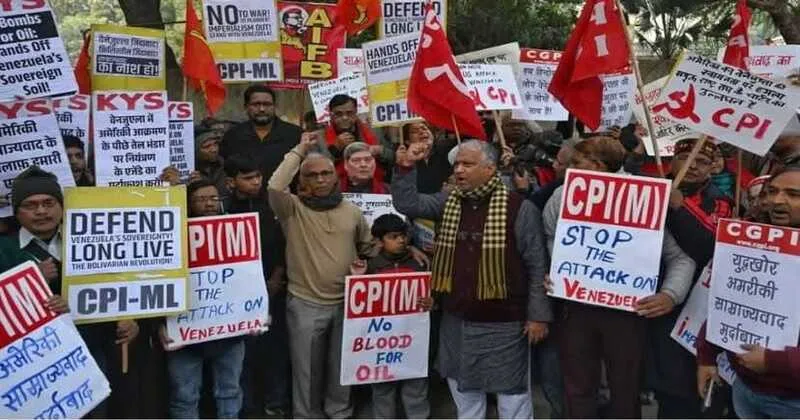
This selective outrage has become increasingly visible. The left ecosystem in India has aggressively campaigned on the Palestine issue, staging protests against Israel and accusing it of grave human rights violations. It has also echoed narratives portraying Kashmir as a site of “genocide”, often criticised for exaggeration or misinformation. The same groups have reacted strongly to US involvement in Venezuela. But when it comes to China, there is not even a token statement of concern. The demolition of the Yayang Church has become a powerful symbol of this hypocrisy. The church, long known as a centre of underground Christian worship, was flattened under the watch of hundreds of armed police. Visuals circulated online show the church’s cross and roof being torn down by bulldozers, while authorities sealed off the area, evacuated nearby residents, and banned photography or video recording.
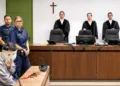
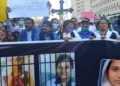
Following the demolition, police launched what church members describe as a manhunt. Among those detained were leaders of the Early Rain Covenant Church, including Li Yinqiang and his wife Zhang Xinyue. In Chengdu, nine people were detained in swift raids on church offices and private homes. Four, including the church leader and his spouse, remain in custody. The church alleges that no formal charges have been filed and no clear reasons given for the arrests, heightening fears of arbitrary detention.
International protests have erupted against Beijing’s attempt to impose ideological conformity on places of worship. One of the most controversial measures involves forcing churches to fly the national flag and replacing images of Christ with portraits of Xi Jinping. Western human rights organisations argue that this is not a regulation but enforced political indoctrination. Even the United Nations has warned that the policy of “sinicisation”, the subordination of religion to Communist Party ideology, violates fundamental human rights.
Since 2015, the Xi administration has openly pursued this agenda, tightening surveillance and control over all faiths. In the past year alone, priests have reportedly been banned from preaching live on social media or conducting online religious classes for children. In December, nearly 100 church members were arrested in Wenzhou. Bob Fu, founder of China Aid, has warned that the Chinese state is systematically trying to eliminate all churches that do not fully comply with party dictates. “Independent churches are being targeted precisely because they refuse to subordinate faith to ideology,” said Bob Fu. Yet in India, the self-styled champions of minority rights appear unmoved. Social media users have begun mocking this silence: “Don’t those who lit candles for churches in Manipur see the bulldozers in China?” the question goes. In short, the concern for minorities, loudly advertised at home, begins to look like a carefully staged drama aimed at vote-bank politics rather than a principled stand.
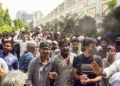
The same drama is unfolding on the Iran Issue. In Tehran, the Khomeini-led Islamic regime is killing protesters despite warnings from the international community. Yet the left-wing leadership and Islamic activists in India remain silent. While repression unfolds openly in Iran, the Left and the Islamists have not uttered a single word against the killings. The reason for this silence is that Iran is ruled by a Shia Islamic regime, and the people who are being killed also belong to the Shia, and since the majority of Muslims in India are Sunni, the left-wing leadership avoids speaking up.
The contradiction is more exposed when compared with Venezuela. During the Venezuelan episode, the Left in India loudly chanted against the United States. In Iran, too, the United States is the principal adversary, but there is no protest, no slogan, and no outrage from the same groups. The Left that once shouted against the US during the Venezuelan coup is now silent on Iran, even though the geopolitical alignment remains identical. This exposes a pattern of selective internationalism where human rights matter only when it suits a chosen narrative, and disappear when mass killings or human rights violations happen under a regime that fits their ideological preferences.