India 2026: A brand new global playbook
August 5, 2026
  • Read Ecopy
  • Circulation
  • Advertise
  • Careers
  • About Us
  • Contact Us
Android AppiPhone AppArattai
Organiser
  • ‌
  • Bharat
    • Assam
    • Bihar
    • Chhattisgarh
    • Jharkhand
    • Maharashtra
    • View All States
  • World
    • Asia
    • Europe
    • North America
    • South America
    • Africa
    • Australia
  • Editorial
  • International
  • Opinion
  • RSS @ 100
  • More
    • Op Sindoor
    • Analysis
    • Sports
    • Defence
    • Politics
    • Business
    • Economy
    • Culture
    • Special Report
    • Sci & Tech
    • Entertainment
    • G20
    • Azadi Ka Amrit Mahotsav
    • Vocal4Local
    • Web Stories
    • Education
    • Employment
    • Books
    • Interviews
    • Travel
    • Law
    • Health
    • Obituary
  • Subscribe
    • Subscribe Print Edition
    • Subscribe Ecopy
    • Read Ecopy
  • ‌
  • Bharat
    • Assam
    • Bihar
    • Chhattisgarh
    • Jharkhand
    • Maharashtra
    • View All States
  • World
    • Asia
    • Europe
    • North America
    • South America
    • Africa
    • Australia
  • Editorial
  • International
  • Opinion
  • RSS @ 100
  • More
    • Op Sindoor
    • Analysis
    • Sports
    • Defence
    • Politics
    • Business
    • Economy
    • Culture
    • Special Report
    • Sci & Tech
    • Entertainment
    • G20
    • Azadi Ka Amrit Mahotsav
    • Vocal4Local
    • Web Stories
    • Education
    • Employment
    • Books
    • Interviews
    • Travel
    • Law
    • Health
    • Obituary
  • Subscribe
    • Subscribe Print Edition
    • Subscribe Ecopy
    • Read Ecopy
Organiser
  • Home
  • Bharat
  • World
  • Operation Sindoor
  • Editorial
  • Analysis
  • Opinion
  • Culture
  • Defence
  • International Edition
  • RSS @ 100
  • Magazine
  • Read Ecopy
Home International Edition India Foreign Policy

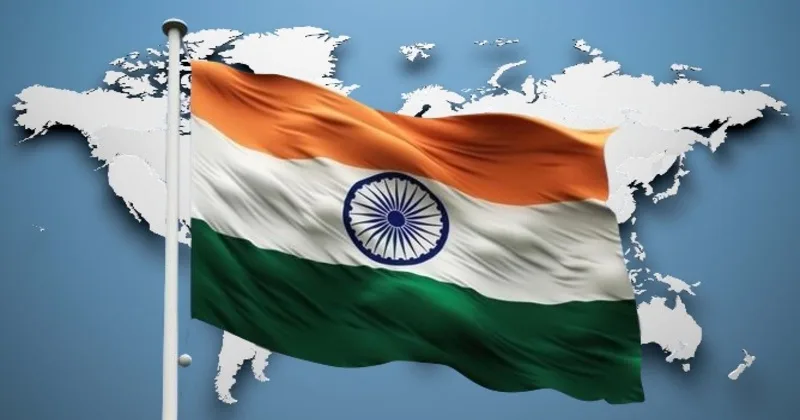
India 2026: A brand new global playbook

As India enters 2026, the shape of its new global playbook is clear. It is a strategy rooted in openness without deep alignment, engagement without dependency and pragmatism without abandoning long-term goals. India is unlikely to adopt rigid stances. Instead, it will continue to evaluate partnerships issue by issue but guided by economic self-interest

Ameya KulkarniAmeya Kulkarni
Jan 11, 2026, 03:00 pm IST
in Foreign Policy, Bharat, World, Analysis, India
Follow on Google News
Diplomatic book of India for 2026

Diplomatic book of India for 2026

FacebookTwitterWhatsAppTelegramEmail

As India steps into 2026, its external posture shows a change from alignment-driven foreign policy to a more fluid, interest-based global playbook. The choices India made through 2025 point to a country adapting to an increasingly fragmented and multipolar world order, where rigid alliances may offer diminishing returns and economic resilience depends on diversification, pragmatism and patience.

India’s evolving approach to trade, energy security, labour mobility and geopolitical engagement signals a willingness to absorb short-term friction in pursuit of long-term national interest.

India’s play in an emerging multipolar world

The global system India is navigating today is markedly different from the one that shaped its earlier economic diplomacy. The erosion of a rules-based multilateral order, growing protectionism in advanced economies and the rise of transactional geopolitics have created both risks and openings. In response, India has revised its posture to remain open to multiple centres of power without becoming overly dependent on any single partner.

This recalibration does not imply ideological neutrality or strategic ambiguity for its own sake. Rather, it reflects an understanding that economic growth, energy security and employment generation require flexibility. India’s diplomacy in 2025 demonstrated that it is prepared to make calculated departures from established expectations if those expectations clash with domestic economic priorities.

Energy security and the assertion of economic autonomy

One of the clearest illustrations of this approach was India’s continued purchase of discounted Russian oil despite the imposition of tariffs by the US and other external pressures. Instead of fully aligning with Western energy sanctions, India prioritised inflation control and fiscal stability at home. This decision underscored a broader principle guiding India’s new playbook — external partnerships are valuable but they cannot come at the cost of domestic economic vulnerability.

By maintaining access to affordable energy, India insulated its economy from global price volatility and protected its manufacturing and transport sectors. The episode also showed to other partners that India would assess global norms through the lens of national interest rather than automatic compliance.

Going beyond the US

While the United States still remains India’s largest and most consequential partner, 2025 marked a conscious effort to reduce over-reliance on a single market. India accelerated trade negotiations with multiple countries and regional blocs, seeking to expand export destinations and secure alternative supply chains. This diversification strategy reflects both opportunity and caution. India seeks opportunities in tapping emerging and middle-income markets while it remains cautious due to increasing protectionist tendencies in advanced economies.

In 2025, limited easing of restrictions on travel and trade between India and China reflected this pragmatic turn. India appears to recognise that complete economic decoupling from China is neither feasible nor desirable, particularly in a world where supply chains are being re-wired rather than dismantled. At the same time, the opening has been deliberate and controlled, ensuring that security sensitivities and competition remain firmly managed.

Engaging unlikely partners

India’s strengthening of trade relations with Afghanistan further illustrates its willingness to pursue economic interests in complex political environments. By focusing on trade and connectivity rather than political endorsement, India demonstrated a compartmentalised approach to diplomacy. It separated economic engagement from broader political issues debates when necessary.

Similarly, India’s handling of its relationship with Bangladesh in 2025 revealed a calculated patience. Instead of reactive diplomacy in the face of political uncertainty and intense turmoil, India adopted a measured posture, indicating that long-term economic and strategic stability in the neighbourhood outweighs short-term issues. This restraint reinforces India’s image as a status-quo power seeking predictability rather than disruption in its immediate region.

Labour mobility in a more restrictive world

The tightening of US immigration policies, particularly restrictions affecting H-1B visas, posed a direct challenge to Indian workers and the broader services economy. In response, India sought alternative labour mobility arrangements with countries such as Russia and Japan. While these markets cannot match the scale or dynamism of the US ecosystem, the move reflects an important shift in thinking.

By diversifying destinations for its workforce, India is attempting to reduce exposure to policy shocks in any single country. These labour mobility pacts also align with India’s broader objective of positioning its human capital as a global resource, even as traditional gateways become more restrictive.

Also Read: Umar Khalid: Islamist with agenda of radicalising Khilafat in Bharat; Has links with NYC Mayor Zohran Mamdani

What the new playbook means for 2026

As India enters 2026, the shape of its new global playbook is clear. It is a strategy rooted in openness without deep alignment, engagement without dependency and pragmatism without abandoning long-term goals. India is unlikely to adopt rigid stances. Instead, it will continue to evaluate partnerships issue by issue but guided by economic self-interest.

For India’s economy and trade, this approach offers resilience in an uncertain world. Diversified markets, flexible diplomacy and a willingness to engage across geopolitical divides can help sustain growth even as global conditions remain volatile. The challenge will lie in managing contradictions such as balancing partnerships with autonomy and economic openness with security concerns.

If 2025 was the year India rewrote its global playbook, 2026 will be the year which will test that playbook. In a multipolar world order in flux with little stability, India’s ability to remain nimble and patient could prove to be one of its economic strengths.

Topics: geopoliticsMulti-alignmentPragmatismIndiadiplomacyforeign policyEconomy
ShareTweetSendShareSend
✮ Subscribe Organiser YouTube Channel. ✮
✮ Join Organiser's WhatsApp channel for Nationalist views beyond the news. ✮
Previous News

Panch Prans: A Case for Environmental Conservation

Next News

Operation Hawkeye Strike: US conducts strikes across Syria on ISIS targets

Related News

India-China border trade resumes after 6 years; Himalayan routes of Nathu La, Shipki La & Lipulekh signal reset in ties

West Asia Conflict: Stranded Sikhs in Iran land in India; Express gratitude to PM Modi and MEA for safe evacuation

Representative Image

Youth Power: Not anyone’s pawn, but the engine of a developed India

India's Ambassador to China Vikram Doreswami interacted with the Indian diaspora during the Open House event(File Photo)

Indian diaspora in China flags anti-India hate & abuse on social media; Embassy reaffirms to counter misinformation

As per the reports, Russia is considering to settle payments with Bangladesh via Indian rupees

Russia Pushes Rupee trade with Bangladesh to bypass US sanctions; A leverage for Indian currency in cross-border trade

Triple Joy at CWG 2026: Asmita Dey, Harsh Singh clinch Gold; Yamini Maurya claims Silver

Load More

Latest News

(Left) PPP Chairman Bilawal Bhutto Zardari (Right) Pakistan PM Shehbaz Sharif (This is an AI generated image)

PoJK Polls: PPP Chairman Bilawal Bhutto Zardari says,”PM Shehbaz’s days are numbered, alleges widespread rigging”

Representative Image

India creates healthcare history: Crosses 20,000 organ transplants in a year, emerges global leader donor transplants

Beyond the Noise: Why Bharat’s Gen Z must not be defined by street anarchy

Koukoor Dargah in Medchal district, Telangana

Telangana: Police arrest Nazar in Medak after wife alleges he posed as an orphan, used fake Hindu name to marry her

Seva Bharati karyakartas engaged in relief and rescue operations across flood-hit districts in Kerala.

Keralam Floods: Seva Bharati steps up relief and rescue operations across flood-hit districts

WA Groups under radar over Delhi Police as they probe CJP Protest

‘Chalo Sansad’ Probe Expands: Leaked WhatsApp chats reveal pre-planning to use Briar, BitChat if net was disrupted

Pakistan PM Shahbaz Sharif (Right)

Pakistan reportedly blocks Al Jazeera after PoJK election coverage, accuses network of “yellow journalism”

Bird-eye view of the Excavated remains at Sarnath (Source-Archaeological Survey of India)

Sarnath included in UNESCO World Heritage Site: Timeless message, lately recognition

US-based report exposes the reality of PoJK, raises serious questions over democracy, human rights and autonomy

Orphanage owner 'Brother' Mathew Albin

Keralam: Orphanage owner ‘Brother’ Mathew Albin arrested in sexual assault case filed by woman employee in Alappuzha

Load More
  • Privacy
  • Terms
  • Cookie Policy
  • Refund and Cancellation
  • Delivery and Shipping

© Bharat Prakashan (Delhi) Limited.
Tech-enabled by Ananthapuri Technologies

  • Home
  • Search Organiser
  • Bharat
    • Assam
    • Bihar
    • Chhattisgarh
    • Jharkhand
    • Maharashtra
    • View All States
  • World
    • Asia
    • Africa
    • North America
    • South America
    • Europe
    • Australia
  • Editorial
  • Operation Sindoor
  • Opinion
  • Analysis
  • Defence
  • Culture
  • Sports
  • Business
  • RSS @ 100
  • Entertainment
  • More ..
    • Sci & Tech
    • Vocal4Local
    • Special Report
    • Education
    • Employment
    • Books
    • Interviews
    • Travel
    • Health
    • Politics
    • Law
    • Economy
    • Obituary
  • Subscribe Magazine
  • Read Ecopy
  • Advertise
  • Circulation
  • Careers
  • About Us
  • Contact Us
  • Policies & Terms
    • Privacy Policy
    • Cookie Policy
    • Refund and Cancellation
    • Terms of Use

© Bharat Prakashan (Delhi) Limited.
Tech-enabled by Ananthapuri Technologies