India 2026: A brand new global playbook
June 24, 2026
  • Read Ecopy
  • Circulation
  • Advertise
  • Careers
  • About Us
  • Contact Us
Android AppiPhone AppArattai
Organiser
  • ‌
  • Bharat
    • Assam
    • Bihar
    • Chhattisgarh
    • Jharkhand
    • Maharashtra
    • View All States
  • World
    • Asia
    • Europe
    • North America
    • South America
    • Africa
    • Australia
  • Editorial
  • International
  • Opinion
  • RSS @ 100
  • More
    • Op Sindoor
    • Analysis
    • Sports
    • Defence
    • Politics
    • Business
    • Economy
    • Culture
    • Special Report
    • Sci & Tech
    • Entertainment
    • G20
    • Azadi Ka Amrit Mahotsav
    • Vocal4Local
    • Web Stories
    • Education
    • Employment
    • Books
    • Interviews
    • Travel
    • Law
    • Health
    • Obituary
  • Subscribe
    • Subscribe Print Edition
    • Subscribe Ecopy
    • Read Ecopy
  • ‌
  • Bharat
    • Assam
    • Bihar
    • Chhattisgarh
    • Jharkhand
    • Maharashtra
    • View All States
  • World
    • Asia
    • Europe
    • North America
    • South America
    • Africa
    • Australia
  • Editorial
  • International
  • Opinion
  • RSS @ 100
  • More
    • Op Sindoor
    • Analysis
    • Sports
    • Defence
    • Politics
    • Business
    • Economy
    • Culture
    • Special Report
    • Sci & Tech
    • Entertainment
    • G20
    • Azadi Ka Amrit Mahotsav
    • Vocal4Local
    • Web Stories
    • Education
    • Employment
    • Books
    • Interviews
    • Travel
    • Law
    • Health
    • Obituary
  • Subscribe
    • Subscribe Print Edition
    • Subscribe Ecopy
    • Read Ecopy
Organiser
  • Home
  • Bharat
  • World
  • Operation Sindoor
  • Editorial
  • Analysis
  • Opinion
  • Culture
  • Defence
  • International Edition
  • RSS @ 100
  • Magazine
  • Read Ecopy
Home International Edition India Foreign Policy

India 2026: A brand new global playbook

As India enters 2026, the shape of its new global playbook is clear. It is a strategy rooted in openness without deep alignment, engagement without dependency and pragmatism without abandoning long-term goals. India is unlikely to adopt rigid stances. Instead, it will continue to evaluate partnerships issue by issue but guided by economic self-interest

Ameya KulkarniAmeya Kulkarni
Jan 11, 2026, 03:00 pm IST
in Foreign Policy, Bharat, World, Analysis, India
Follow on Google News
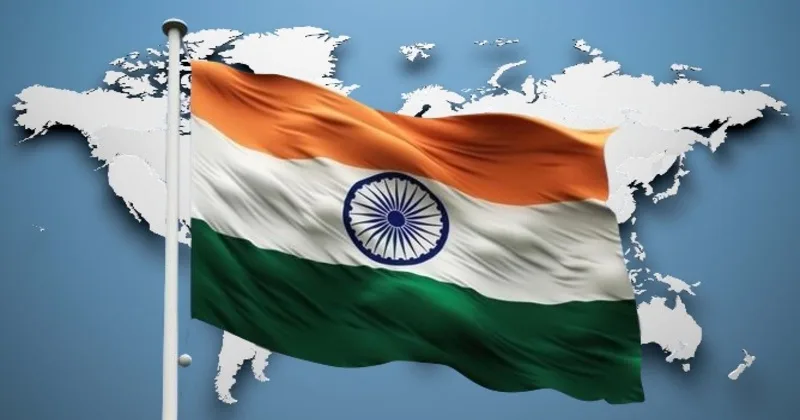
Diplomatic book of India for 2026

Diplomatic book of India for 2026

FacebookTwitterWhatsAppTelegramEmail

As India steps into 2026, its external posture shows a change from alignment-driven foreign policy to a more fluid, interest-based global playbook. The choices India made through 2025 point to a country adapting to an increasingly fragmented and multipolar world order, where rigid alliances may offer diminishing returns and economic resilience depends on diversification, pragmatism and patience.

India’s evolving approach to trade, energy security, labour mobility and geopolitical engagement signals a willingness to absorb short-term friction in pursuit of long-term national interest.

India’s play in an emerging multipolar world

The global system India is navigating today is markedly different from the one that shaped its earlier economic diplomacy. The erosion of a rules-based multilateral order, growing protectionism in advanced economies and the rise of transactional geopolitics have created both risks and openings. In response, India has revised its posture to remain open to multiple centres of power without becoming overly dependent on any single partner.

This recalibration does not imply ideological neutrality or strategic ambiguity for its own sake. Rather, it reflects an understanding that economic growth, energy security and employment generation require flexibility. India’s diplomacy in 2025 demonstrated that it is prepared to make calculated departures from established expectations if those expectations clash with domestic economic priorities.

Energy security and the assertion of economic autonomy

One of the clearest illustrations of this approach was India’s continued purchase of discounted Russian oil despite the imposition of tariffs by the US and other external pressures. Instead of fully aligning with Western energy sanctions, India prioritised inflation control and fiscal stability at home. This decision underscored a broader principle guiding India’s new playbook — external partnerships are valuable but they cannot come at the cost of domestic economic vulnerability.

By maintaining access to affordable energy, India insulated its economy from global price volatility and protected its manufacturing and transport sectors. The episode also showed to other partners that India would assess global norms through the lens of national interest rather than automatic compliance.

Going beyond the US

While the United States still remains India’s largest and most consequential partner, 2025 marked a conscious effort to reduce over-reliance on a single market. India accelerated trade negotiations with multiple countries and regional blocs, seeking to expand export destinations and secure alternative supply chains. This diversification strategy reflects both opportunity and caution. India seeks opportunities in tapping emerging and middle-income markets while it remains cautious due to increasing protectionist tendencies in advanced economies.

In 2025, limited easing of restrictions on travel and trade between India and China reflected this pragmatic turn. India appears to recognise that complete economic decoupling from China is neither feasible nor desirable, particularly in a world where supply chains are being re-wired rather than dismantled. At the same time, the opening has been deliberate and controlled, ensuring that security sensitivities and competition remain firmly managed.

Engaging unlikely partners

India’s strengthening of trade relations with Afghanistan further illustrates its willingness to pursue economic interests in complex political environments. By focusing on trade and connectivity rather than political endorsement, India demonstrated a compartmentalised approach to diplomacy. It separated economic engagement from broader political issues debates when necessary.

Similarly, India’s handling of its relationship with Bangladesh in 2025 revealed a calculated patience. Instead of reactive diplomacy in the face of political uncertainty and intense turmoil, India adopted a measured posture, indicating that long-term economic and strategic stability in the neighbourhood outweighs short-term issues. This restraint reinforces India’s image as a status-quo power seeking predictability rather than disruption in its immediate region.

Labour mobility in a more restrictive world

The tightening of US immigration policies, particularly restrictions affecting H-1B visas, posed a direct challenge to Indian workers and the broader services economy. In response, India sought alternative labour mobility arrangements with countries such as Russia and Japan. While these markets cannot match the scale or dynamism of the US ecosystem, the move reflects an important shift in thinking.

By diversifying destinations for its workforce, India is attempting to reduce exposure to policy shocks in any single country. These labour mobility pacts also align with India’s broader objective of positioning its human capital as a global resource, even as traditional gateways become more restrictive.

Also Read: Umar Khalid: Islamist with agenda of radicalising Khilafat in Bharat; Has links with NYC Mayor Zohran Mamdani

What the new playbook means for 2026

As India enters 2026, the shape of its new global playbook is clear. It is a strategy rooted in openness without deep alignment, engagement without dependency and pragmatism without abandoning long-term goals. India is unlikely to adopt rigid stances. Instead, it will continue to evaluate partnerships issue by issue but guided by economic self-interest.

For India’s economy and trade, this approach offers resilience in an uncertain world. Diversified markets, flexible diplomacy and a willingness to engage across geopolitical divides can help sustain growth even as global conditions remain volatile. The challenge will lie in managing contradictions such as balancing partnerships with autonomy and economic openness with security concerns.

If 2025 was the year India rewrote its global playbook, 2026 will be the year which will test that playbook. In a multipolar world order in flux with little stability, India’s ability to remain nimble and patient could prove to be one of its economic strengths.

Topics: geopoliticsMulti-alignmentPragmatismIndiadiplomacyforeign policyEconomy
ShareTweetSendShareSend
✮ Subscribe Organiser YouTube Channel. ✮
✮ Join Organiser's WhatsApp channel for Nationalist views beyond the news. ✮
Previous News

Panch Prans: A Case for Environmental Conservation

Next News

Operation Hawkeye Strike: US conducts strikes across Syria on ISIS targets

Related News

UAE President Sheikh Mohamed bin Zayed Al Nahyan and Prime Minister Narendra Modi(File Photo)

UAE to buy BrahMos & Akashteer: Big win for India’s defence ecosystem to seal regional security amid West Asia crisis

United States Trade Representative Jamieson Greer and Union Commerce and Industry Minister Piyush Goyal

India-US Trade Agreement: Historic deal enters final stretch as USTR Jamieson Greer heads to New Delhi

Universities Adopt ‘Bharat’ on Degrees and Certificates

Madhya Pradesh: ‘Bharat’ replaces ‘India’ on degrees as academic institutions reclaim ancient identity

Representative Image

Europe’s Supremacy: A manufactured narrative imposed via colonial power is counterd by India’s civilizational memory

Yoga Day celebrations in Shanghai, China

International Yoga Day: Global celebrations echo the message of health, well-being and timeless ancient Indian wisdom

The Alchemy of Autarky: How India rewrote its economic destiny

Load More

Latest News

Punjab CM Bhagwat Mann

Bhagwant Mann Video Row: Gurugram police claim Punjab officers paid Rs 10 lakh to tailor forensic report

France’s annual music festival turns into night of fear amid alleged syringe attacks, sexual assaults & street violence

France Music Festival Violence: Women stabbed, drugged and sexually assaulted; 243 arrests made

Can Karnataka bypass SIR rules? Residence certificate move sparks citizenship debate

Karnataka SIR Controversy: Residence certificate plan unlikely to pass ECI’s voter verification test

The US Ambassador to India Sergio Gor and Tamil Nadu Chief Minister Joseph Vijay; The tweet of BJP Tamil Nadu State Secretary Ashvathaman.

BJP Tamil Nadu urges Jaishankar to intervene over US Ambassador’s ‘two nations’ remark after meeting CM Joseph Vijay

Puri Rath Yatra 2026: Authorities finalise crowd management plan

Puri Rath Yatra 2026 in Odisha: Massive security, healthcare and transport arrangements finalised

Karnataka's Gruha Lakshmi scheme faces scrutiny after CAG flags 19,000 beneficiaries linked to one account

Karnataka: Gruha Lakshmi scheme under scanner; CAG flags 19,000 beneficiaries linked to same bank account

Pesticides linked to cancer and environmental harm remain in use on Indian farms, sparking fresh concerns about food safety

Toxic Harvest? Why cancer-linked pesticides continue to be used across Indian farms despite global concerns

Gem-quality diamonds found during exploration in Chhattisgarh's Mahasamund

From Panna to Mahasamund: Could Chhattisgarh be India’s next diamond frontier?

External Affairs Minister S Jaishankar

Kanishka Bombing Anniversary: Jaishankar reaffirms India’s commitment to combat terrorism in all its forms

Rani Durgawati

Remembering Rani Durgavati: A woman can be a mother, an empress and an embodiment of an immortal resolve

Load More
  • Privacy
  • Terms
  • Cookie Policy
  • Refund and Cancellation
  • Delivery and Shipping

© Bharat Prakashan (Delhi) Limited.
Tech-enabled by Ananthapuri Technologies

  • Home
  • Search Organiser
  • Bharat
    • Assam
    • Bihar
    • Chhattisgarh
    • Jharkhand
    • Maharashtra
    • View All States
  • World
    • Asia
    • Africa
    • North America
    • South America
    • Europe
    • Australia
  • Editorial
  • Operation Sindoor
  • Opinion
  • Analysis
  • Defence
  • Culture
  • Sports
  • Business
  • RSS @ 100
  • Entertainment
  • More ..
    • Sci & Tech
    • Vocal4Local
    • Special Report
    • Education
    • Employment
    • Books
    • Interviews
    • Travel
    • Health
    • Politics
    • Law
    • Economy
    • Obituary
  • Subscribe Magazine
  • Read Ecopy
  • Advertise
  • Circulation
  • Careers
  • About Us
  • Contact Us
  • Policies & Terms
    • Privacy Policy
    • Cookie Policy
    • Refund and Cancellation
    • Terms of Use

© Bharat Prakashan (Delhi) Limited.
Tech-enabled by Ananthapuri Technologies