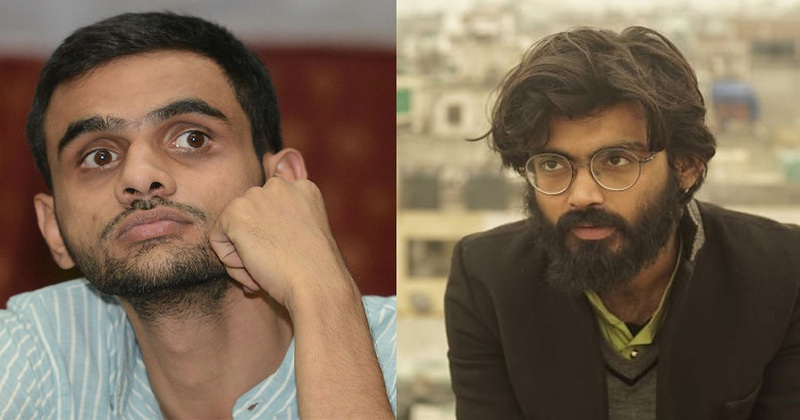
The Supreme Court’s January 5, 2026 ruling in the Delhi riots conspiracy case marks one of the most consequential interventions by the judiciary in recent years on the fraught question of liberty versus security. Given by Justice Aravind Kumar, the judgment does far more than deny bail to two high-profile accused. It reconstructs the 2020 violence in North-East Delhi as the end product of a layered, premeditated design and, in doing so, recalibrates how courts must approach claims of personal liberty in cases involving alleged terror conspiracies.
At its core, the verdict rejects a narrative that has dominated public discourse for years, that the riots were a spontaneous breakdown of law and order following protests against the Citizenship Amendment Act (CAA). Instead, the Court accepts the prosecution’s central thesis: that what unfolded in February 2020 was the execution of a plan conceived months earlier, with clearly identified ideological drivers, operational facilitators, and a vertical chain of command.
Why the Court Rejected the ‘Spontaneity’ Argument
The legal pivot in the case lies in how the Court classified the violence. If the riots were spontaneous, the legal response would largely fall within conventional criminal law governing public disorder. If they were planned, however, the Unlawful Activities (Prevention) Act, 1967, becomes applicable, triggering its stringent bail restrictions.
The Court found the prosecution’s timeline “structurally persuasive.” According to the material placed on record, the architecture of the alleged conspiracy emerged immediately after the Union Cabinet approved the Citizenship Amendment Bill on December 4, 2019. Within hours, a WhatsApp group titled “Muslim Students of JNU” was created. In the following days, pamphlets began circulating that invoked highly emotive references to Kashmir and the Babri Masjid, symbols with a long history of communal mobilisation.
Weeks later, Sharjeel Imam delivered speeches at Jamia Millia Islamia calling for Delhi to be “choked” through sustained traffic blockades, or chakka jams, to disrupt essential supplies such as milk and water. The Court held that these developments were not isolated acts of dissent but cumulative evidence of planning.
“Spontaneity,” the judgment implicitly argues, does not explain why petrol bombs, acid bottles, and stones were allegedly stockpiled weeks in advance, or why children from minority schools were evacuated before violence broke out. These are not the hallmarks of an impulsive protest; they are indicators of foresight.
One of the most closely watched aspects of the judgment is its treatment of Umar Khalid’s role. Khalid’s defence leaned heavily on a seemingly simple fact: he was not physically present in North-East Delhi when the riots erupted. The Supreme Court dismantled this argument with precision.
Justice Aravind Kumar held that conspiracy law does not require physical presence at the scene once the plan has been set in motion. On the contrary, the Court observed that Khalid’s absence strengthened the prosecution’s case by placing him firmly in the role of a coordinator rather than a street-level participant.
Drawing from speech transcripts, digital communication trails, and contemporaneous strategic discussions, the Court concluded that Khalid functioned as an ideological architect. His status as a former JNU student activist, the judgment subtly notes, endowed him with a level of authority and reach that local organisers did not possess. When such an individual issues a call for disruption, the Court reasoned, followers execute it on the ground.
Sharjeel Imam’s case posed a different legal challenge. Imam has consistently argued that he never called for violence. The Supreme Court accepted that his speeches may not contain explicit exhortations to riot. Yet it held that conspiracy can operate through indirection.
In one of the judgment’s most significant observations, the Court noted that a conspirator may outwardly disavow violence while deliberately creating conditions where violence becomes inevitable. Planning prolonged road blockades, mobilising women and children to deter police action, and invoking communally charged symbols were not neutral acts, the Court said. They were steps that made confrontation foreseeable.
In effect, the Court applied a doctrine of “structural foreseeability.” When consequences are anticipated or ought reasonably to be anticipated, disclaimers of violent intent lose their legal force. You cannot, the Court held, design a strategy that predictably leads to disorder and later plead innocence because violence was not verbally endorsed.
Why the Delay Argument Failed
Perhaps the most compelling argument advanced by the appellants was prolonged arrests. Khalid and Imam have spent years in custody, the trial has not formally commenced, and nearly 1,000 witnesses are cited. Under Article 21 of the Constitution, long pre-trial detention raises serious concerns.
The Supreme Court did not dismiss these concerns lightly. Instead, it dismantled the argument methodically. Examining trial court order sheets, the Bench found that significant delays were attributable to the defence itself, adjournment requests, disputes over document formats, and disagreements on witness sequencing.
The judgment drew heavily from Tasleem Ahmed v. State (NCT of Delhi), a related case in which both the trial court and the Delhi High Court recorded their frustration at defence-induced delays. The principle that emerged was stark: an accused cannot participate in delaying proceedings and then invoke that delay as grounds for bail.
Media coverage often portrays Section 43D(5) of the UAPA as an outright prohibition on bail. The Supreme Court clarified that this is legally inaccurate. The provision requires the Court to assess whether there are reasonable grounds to believe that the accusations are prima facie true.
At the bail stage, the Court is not weighing guilt. It is assessing plausibility. In Khalid and Imam’s case, the prosecution presented evidence of:
Creation and management of coordination WhatsApp groups
Pamphlets designed to evoke communal mobilisation
Speeches outlining disruption strategies before violence
Participation in closed-door meetings discussing escalation
Digital records dating back to December 2019
Witness statements placing them at the apex of the conspiracy
Taken together, the Court held, this material crossed the threshold of prima facie credibility.
One of the most consequential aspects of the ruling appears almost understated. Justice Aravind Kumar articulated a clear distinction between principal conspirators and facilitators, even within the same FIR.
Umar Khalid and Sharjeel Imam, the Court said, stand on a “qualitatively different footing” from accused such as Gulfisha Fatima, Meeran Haider, Saleem Khan, Shifa-ur-Rehman, and Shadab. While the latter were described as local facilitators or executors, Khalid and Imam were characterised as ideological drivers.
This differentiation mattered at the bail stage. Detaining a local organiser does not serve the same preventive purpose as detaining a central node in a network capable of reactivation and witness influence. Proportionality, the Court emphasised, remains intrinsic to bail jurisprudence even under UAPA.
It is on this reasoning that five accused were granted bail, albeit under exceptionally strict conditions.
Buried deep in the judgment is a crucial safeguard. The Court allowed Khalid and Imam to renew their bail pleas after protected witnesses are examined or after one year, whichever comes first.
This clause signals conditional deference to UAPA’s stringent regime. The message to prosecutors is equally clear: progress the trial, or constitutional scrutiny will intensify.
The Supreme Court’s refusal to grant bail to Umar Khalid and Sharjeel Imam is not a rejection of liberty, it is a reassertion of role-based accountability. By framing the Delhi riots as a conspiracy rather than a protest gone awry, the Court has elevated intent, planning, and command responsibility over activist rhetoric.