Sardar Chiranjeev Singh: The First Sikh Pracharak of the RSS
August 5, 2026
  • Read Ecopy
  • Circulation
  • Advertise
  • Careers
  • About Us
  • Contact Us
Android AppiPhone AppArattai
Organiser
  • ‌
  • Bharat
    • Assam
    • Bihar
    • Chhattisgarh
    • Jharkhand
    • Maharashtra
    • View All States
  • World
    • Asia
    • Europe
    • North America
    • South America
    • Africa
    • Australia
  • Editorial
  • International
  • Opinion
  • RSS @ 100
  • More
    • Op Sindoor
    • Analysis
    • Sports
    • Defence
    • Politics
    • Business
    • Economy
    • Culture
    • Special Report
    • Sci & Tech
    • Entertainment
    • G20
    • Azadi Ka Amrit Mahotsav
    • Vocal4Local
    • Web Stories
    • Education
    • Employment
    • Books
    • Interviews
    • Travel
    • Law
    • Health
    • Obituary
  • Subscribe
    • Subscribe Print Edition
    • Subscribe Ecopy
    • Read Ecopy
  • ‌
  • Bharat
    • Assam
    • Bihar
    • Chhattisgarh
    • Jharkhand
    • Maharashtra
    • View All States
  • World
    • Asia
    • Europe
    • North America
    • South America
    • Africa
    • Australia
  • Editorial
  • International
  • Opinion
  • RSS @ 100
  • More
    • Op Sindoor
    • Analysis
    • Sports
    • Defence
    • Politics
    • Business
    • Economy
    • Culture
    • Special Report
    • Sci & Tech
    • Entertainment
    • G20
    • Azadi Ka Amrit Mahotsav
    • Vocal4Local
    • Web Stories
    • Education
    • Employment
    • Books
    • Interviews
    • Travel
    • Law
    • Health
    • Obituary
  • Subscribe
    • Subscribe Print Edition
    • Subscribe Ecopy
    • Read Ecopy
Organiser
  • Home
  • Bharat
  • World
  • Operation Sindoor
  • Editorial
  • Analysis
  • Opinion
  • Culture
  • Defence
  • International Edition
  • RSS @ 100
  • Magazine
  • Read Ecopy
Home Bharat

Sardar Chiranjeev Singh: The First Sikh Pracharak of the RSS and a bridge between Panth and Rashtra

Sardar Chiranjeev Singh’s life answers, once and for all, a question deliberately distorted by separatists: Sikh identity is not threatened by Bharat; it is fulfilled by it. His journey—from a shakha where he was first called “ji” to becoming the Sangh’s first Sikh pracharak—stands as a reminder that Bharat’s strength lies not in fragmentation, but in civilisational unity

Siddhartha DaveSiddhartha Dave
Jan 4, 2026, 06:00 pm IST
inBharat, RSS News, Culture, RSS in News, Punjab
Follow on Google News
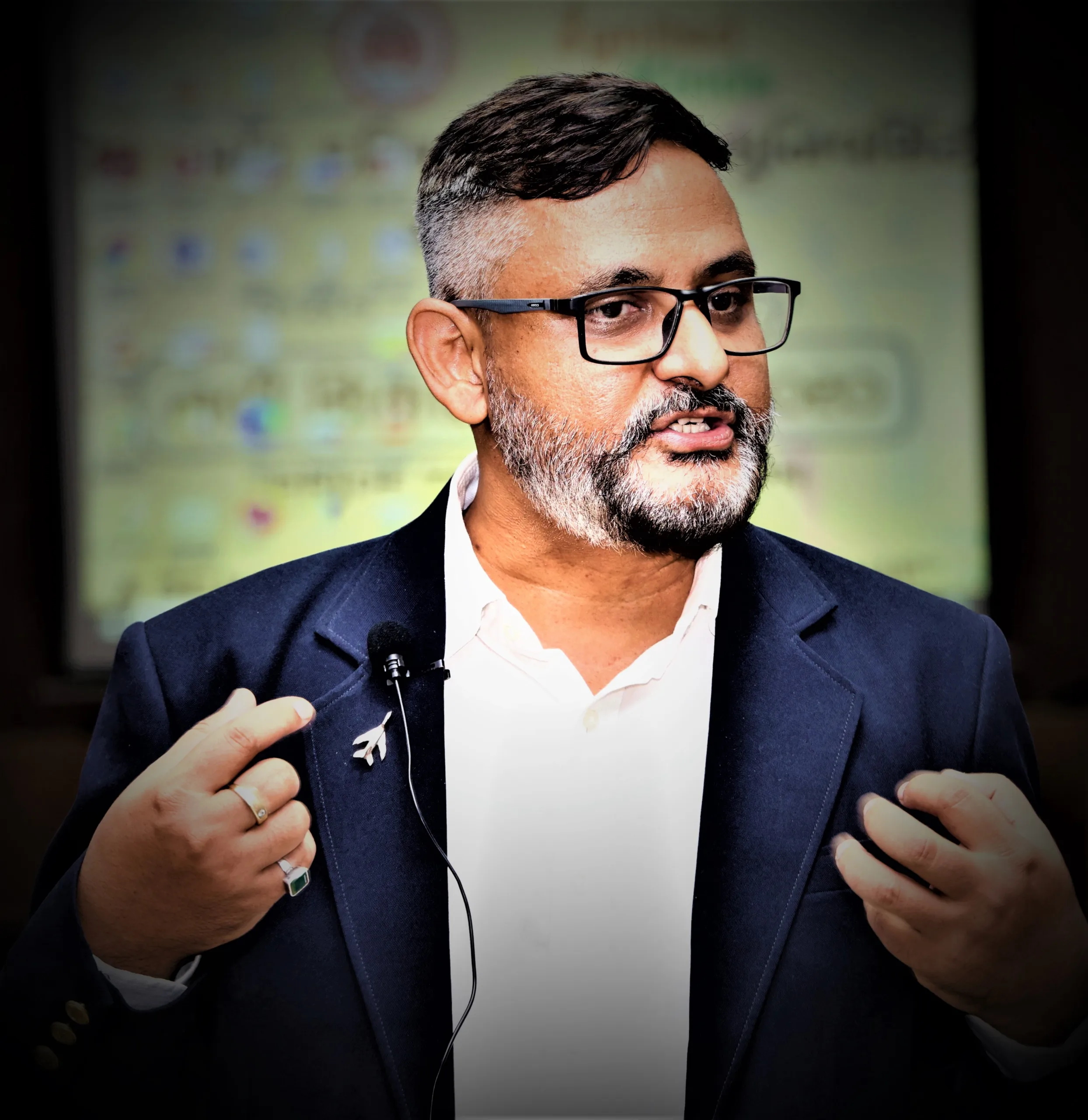
Sardar Chiranjeev Singh, the First Sikh Pracharak of the RSS

Sardar Chiranjeev Singh, the First Sikh Pracharak of the RSS

Facebook
Twitter
WhatsAppTelegramEmail

In the long and often misunderstood history of Sikh–Hindu relations in the post-Independence Bharat, few figures embody civilisational unity as organically as Sardar Chiranjeev Singh, the Rashtriya Swayamsevak Sangh’s first Sikh pracharak. His life stands as a living rebuttal to the artificial binaries imposed by colonial historiography, separatist propaganda and ideological distortions that sought to fracture the Panth from the Rashtra.

Born on October 1, 1930 in Patiala, Sardar Chiranjeev Singh emerged not merely as a pracharak, but as a civilisational bridge—someone who instinctively understood that Sikh identity and Bharatiya civilisational consciousness are not oppositional, but complementary. His life’s work was anchored in this conviction.

A name blessed for long life—and a life that blessed thousands

Sardar Chiranjeev Singh was born to Shri Harkaran Das (Tarlochan Singh), a farmer and Smt. Dwarka Devi (Joginder Kaur), a government school teacher. Before him, two sons had been born but could not survive. His mother, in anguish and hope, prayed not only at Gurudwaras but also at temples, seeking divine blessings for a long life for her child. Thus, the name Chiranjeev—“one who lives long”—was chosen.

What she could not have imagined was that her son would not only live long, but would dedicate his entire life to showing countless others the path of national service, discipline and unity.

The ‘Ji’ that changed his life

In 1944, while studying in Class VII, young Chiranjeev accompanied his friend Ravi to an RSS shakha for the first time. The games, discipline and prayer impressed him—but what left the deepest mark was something deceptively simple. Everyone addressed him as “Chiranjeev ji”.

For the first time, he experienced a space where age, religion and background dissolved into mutual respect. The universal use of “ji” symbolised an egalitarian Bharatiya ethos. He was the only Sikh in the shakha, yet he never felt like an outsider. From that day onward, the shakha became his second home.

By 1946, he had attended the Prathamik Shiksha Varg. He went on to complete all three major Sangh Shiksha Vargas by 1952, qualifying himself for the pracharak life.

Imprisoned for the nation

Barely had he completed his initial training when the assassination of Mahatma Gandhi led to a nationwide ban on the RSS. Like thousands of swayamsevaks, Sardar Chiranjeev Singh participated in the Satyagraha against this unjust proscription. He was imprisoned for two months, marking the beginning of a life where personal sacrifice was routine, not exceptional.

Had he chosen otherwise, he could have become a school teacher. Instead, inspired by senior pracharaks like Babu Shrichand ji, he formally became a pracharak in 1953.

Punjab’s roaming pracharak

Over the decades, Sardar Chiranjeev Singh served across Malerkotla, Sangrur, Patiala, Ropar and Ludhiana—as tehsil, district, vibhag and sah-sambhag pracharak. Ludhiana remained his karmabhoomi for 21 years. He taught in Sangh Shiksha Vargas for nearly two decades and served four times as Mukhya Shikshak.

In 1984, amid Punjab’s darkest phase of terrorism, he was entrusted with the responsibility of Organising Secretary of the Vishwa Hindu Parishad, Punjab, a role he carried till 1990. Speaking later, VHP’s current Working President Alok Kumar recalled that during those violent years, it was the Sangh—and leaders like Chiranjeev Singh—who taught swayamsevaks not to blame the Sikh community for the crimes of terrorists, reinforcing social harmony when hatred was easy.

Saving Punjabi from the politics of division

One of Sardar Chiranjeev Singh’s most far-sighted interventions came during the linguistic tensions preceding the 1961 Census. Sections of Arya Samaj leaders were urging Punjabi Hindus to declare Hindi as their mother tongue, intensifying social bitterness during the Punjabi Suba movement.

Recognising the danger, Chiranjeev Singh approached Guruji M.S. Golwalkar. Guruji personally travelled to Punjab and made an unequivocal statement: all residents of Punjab—Sikhs, Hindus and Muslims—must declare Punjabi as their mother tongue. The effect was immediate and healing. Punjabi was rescued from becoming a sectarian weapon and restored as a shared cultural bond.

Following this guidance, Vidya Bharati schools across Punjab began prioritising Punjabi education. Platforms like the Punjab Kalyan Forum were created to nurture social cohesion.

Also Read: Telangana: IIGH round table focuses on public finance, welfare delivery

National Sikh Sangat: Healing after 1984

The brutal anti-Sikh pogroms of 1984 shook the national conscience. For many nationalists, the massacre of Sikhs—historical defenders of Dharma—was unbearable. It was in this moral crisis that the need for a strong, nationalist Sikh platform was felt.

After intense deliberation, the Rashtriya Sikh Sangat was established in 1986 on the sacred land of Amritsar, on Guru Nanak Dev ji’s Prakash Purab. Renowned scholar Sardar Shamsher Singh became its first president, with Chiranjeev Singh as General Secretary. After Shamsher Singh’s demise in 1990, Chiranjeev Singh assumed the presidency.

Under his leadership, Sikh Sangat emerged as a confident nationalist platform—unapologetic about Sikh–Hindu civilisational unity.

A global voice of Sikh–Hindu unity

Chiranjeev Singh travelled extensively across Bharat and abroad—England, Canada, Germany, the United States—addressing Sikh and Hindu audiences alike. Events like the Khalsa Sirjana Yatra (Patna, 1999) and participation in the World Religion Conference in New York (2000) expanded Sangat’s reach globally. Former Sarsanghchalak K.S. Sudarshan played a key role in providing ideological clarity to this effort.

A birthday gift that became a research legacy

In 2015, on his 85th birthday, his autobiography “Ihi Janam Tumhare Lekhe” was released in Delhi by RSS Sarsanghchalak Mohan Bhagwat. After the release, RSS Sarsanghchalak Mohan Bhagwat handed him a bag, saying it was a small gift from the Sangh. Inside was ₹85 lakh in cash.

Visibly moved, Chiranjeev Singh immediately announced that the amount would be used for research on Sikh history. The funds were routed through Keshav Smarak Samiti and later entrusted to the Bhai Mani Singh Gurmat Research and Studies Trust—a final testament to his lifelong commitment to scholarship and truth.

The Pracharak as mentor

When he passed away on 20 November 2023, among those who visited his family was then Haryana Chief Minister Manohar Lal Khattar, who openly acknowledged Chiranjeev Singh as his mentor. In truth, generations of pracharaks and swayamsevaks were shaped by his guidance.

The unusually long tribute messages issued by Sarsanghchalak Mohan Bhagwat and Sarkaryavah Dattatreya Hosabale reflected the depth of his contribution.

A legacy beyond false binaries

Rashtriya Sikh Sangat today stands as a platform of nationalist Sikhs who take pride—not offence—in their Hindu civilisational roots. Through seminars on Zafarnama, exhibitions on Sikh martyrdom, translations of Guru Gobind Singh ji’s writings and its monthly magazine Sangat Sansar, it continues Chiranjeev Singh’s mission.

Sardar Chiranjeev Singh’s life answers, once and for all, a question deliberately distorted by separatists: Sikh identity is not threatened by Bharat; it is fulfilled by it. His journey—from a shakha where he was first called “ji” to becoming the Sangh’s first Sikh pracharak—stands as a reminder that Bharat’s strength lies not in fragmentation, but in civilisational unity.

In remembering him, we remember not just a man, but an idea whose time has come again.

Topics: RSSPunjabBharatcivilisationSardar Chiranjeev SinghRashtriya Swayamsevak Sangh(RSS)Sikh Pracharak
Siddhartha Dave
Siddhartha Dave
Siddhartha Dave is an alumnus of the United Nations University in Tokyo and a former Lok Sabha Research Fellow. He writes on foreign affairs and national security. [Read more]
Share
Tweet
SendShareSend
✮ Subscribe Organiser YouTube Channel. ✮
✮ Join Organiser's WhatsApp channel for Nationalist views beyond the news. ✮
Previous News

Manipur: Meitei bodies slam Kuki groups communication with UN & US; Termed it as sovereignty threat in memorandum to PM

Next News

India is actively preparing to bid for the 2036 Olympics: Prime Minister Modi

Related News

Dr Manmohan Vaidya, Member of the Akhil Bharatiya Karyakarini of the RSS during an interaction programme with young doctors on the theme "Role of Youth in the Reawakening of the Nation"

Bharat’s ‘Swa’ is rooted in spirituality, which binds society together: Dr Manmohan Vaidya

Ex-JNU Prof Nivedita Menon continues her anti-Bharat rant

Bharat is a “manhus desh”: Ex-JNU Professor Nivedita Menon continues her anti-India rants, sparking massive outrage

formal launch of Sangh Prarthana: Gita Ke Pariprekshay Mein, authored by Dr Markandeya Ahuja and published by Suruchi Prakashan, was held at the Vichar Vinimay Nyas Auditorium, Keshav Kunj, Jhandewalan, New Delhi, on August 3, 2026

‘Sangh Prarthana: Gita Ke Pariprekshay Mein’ unveiled by RSS Sah-Sarkaryavah Dr Krishna Gopal in Delhi

How RSS karyakartas helped Dadra & Nagar Haveli get independence (This is an AI generated image)

Beyond Independence: How RSS karyakartas helped free Dadra and Nagar Haveli from Portuguese rule

The third Sarsanghchalak of the RSS Balasaheb Deoras (Image source: https://archives.vsktelangana.org/)

Balasaheb Deoras’ letters to Indira Gandhi during Emergency: RSS stood between the dictatorship and democracy

(Left) Sanket Upadhyay (Right) Veteran BBC journalist Rehan Fazal

Veteran Journalist Rehan Fazal claims BBC India blocked RSS coverage, raising questions over editorial neutrality

Load More

Latest News

SDPI National General Secretary Riyaz Parangipete

Karnataka Hate Speech Case: SDPI’s Riyaz Parangipete convicted in 11-year-old case, PFI links back in focus

Press breifing by Adilabad SP Akhil Mahajan, IPS

Telangana: Bangladeshi nationals arrested in Adilabad; police expose cross-border burglary network active since 2015

India’s laws allow police to use proportionate force against unlawful assemblies, subject to legal safeguards

Use of Force by Police: Understanding the law beyond the controversy

I.I.M.U.N. founder Rishabh Shah (Left), RSS Sarsanghchalak Dr Mohan Bhagwat (Right)

‘Not the first time’: RSS Sarsanghchalak Dr Bhagwat returns to I.I.M.U.N. to engage with Gen Z & Gen Alpha in Mumbai

Varanasi is set to welcome a spectacular cricket stadium blending modern sports infrastructure with Kashi’s timeless spiritual identity (AI generated image)

Varanasi: Bhagwan Shiva-inspired cricket stadium set to blend Kashi’s spiritual heritage with modern sporting grandeur

Prabodh Jnana Kendra successfully concluded its National Research Conference-cum-Camp

Greater Noida: National Research Conference 2026 brings together scholars to explore Bharat’s civilisational thought

Dr Manmohan Vaidya, Member of the Akhil Bharatiya Karyakarini of the RSS during an interaction programme with young doctors on the theme "Role of Youth in the Reawakening of the Nation"

Bharat’s ‘Swa’ is rooted in spirituality, which binds society together: Dr Manmohan Vaidya

Pakistan Tightens Media Censorship: Foreign Journalists Need NOC to Report Beyond Major Cities (This image is generated by AI)

Pakistan moves to silence global media after PoJK crackdown: NOCs mandatory for foreign journalists

Meta faces IT Committee scrutiny over Prime Minister Modi’s video removal, child safety and opaque algorithms (AI generated image)

Meta’s Algorithms Under Scanner: From PM Modi’s video row to child safety, IT panel seeks apology from Zuckerberg

‘Heavens will not fall’: Calcutta HC slams objections to singing Vande Mataram in Madrasas

Load More
  • Privacy
  • Terms
  • Cookie Policy
  • Refund and Cancellation
  • Delivery and Shipping

© Bharat Prakashan (Delhi) Limited.
Tech-enabled by Ananthapuri Technologies

  • Home
  • Search Organiser
  • Bharat
    • Assam
    • Bihar
    • Chhattisgarh
    • Jharkhand
    • Maharashtra
    • View All States
  • World
    • Asia
    • Africa
    • North America
    • South America
    • Europe
    • Australia
  • Editorial
  • Operation Sindoor
  • Opinion
  • Analysis
  • Defence
  • Culture
  • Sports
  • Business
  • RSS @ 100
  • Entertainment
  • More ..
    • Sci & Tech
    • Vocal4Local
    • Special Report
    • Education
    • Employment
    • Books
    • Interviews
    • Travel
    • Health
    • Politics
    • Law
    • Economy
    • Obituary
  • Subscribe Magazine
  • Read Ecopy
  • Advertise
  • Circulation
  • Careers
  • About Us
  • Contact Us
  • Policies & Terms
    • Privacy Policy
    • Cookie Policy
    • Refund and Cancellation
    • Terms of Use

© Bharat Prakashan (Delhi) Limited.
Tech-enabled by Ananthapuri Technologies